


Boston Dynamics Atlas Humanoid Robot Adds Autonomous Battery Swapping for Industrial Automation
 10 August 2026 05:38 PM
Summary:Boston Dynamics’ Atlas humanoid robot introduces autonomous battery swapping technology, enabling faster recovery and longer industrial operation with less human intervention.
Boston Dynamics’ Atlas humanoid robot is moving closer to real-world industrial deployment with a new autonomous battery replacement capability designed to reduce downtime in factory environments.

The production version of Atlas can independently return to a charging station, remove a depleted battery, install a new one, and resume operations in less than three minutes. This technology addresses a major challenge for humanoid robots: maintaining continuous operation during long industrial shifts.
Atlas is designed for manufacturing and logistics applications, combining advanced mobility, artificial intelligence, and robotic manipulation. The humanoid robot stands approximately 6 feet 2 inches tall, weighs about 198 pounds, and can handle sustained loads of around 66 pounds, with higher short-duration lifting capability.
Equipped with tactile sensing in its hands and a 360-degree vision system, Atlas is built to perform complex industrial tasks such as material handling, repetitive assembly support, and factory logistics. Its autonomous battery swapping system allows companies to reduce interruptions caused by conventional charging cycles.
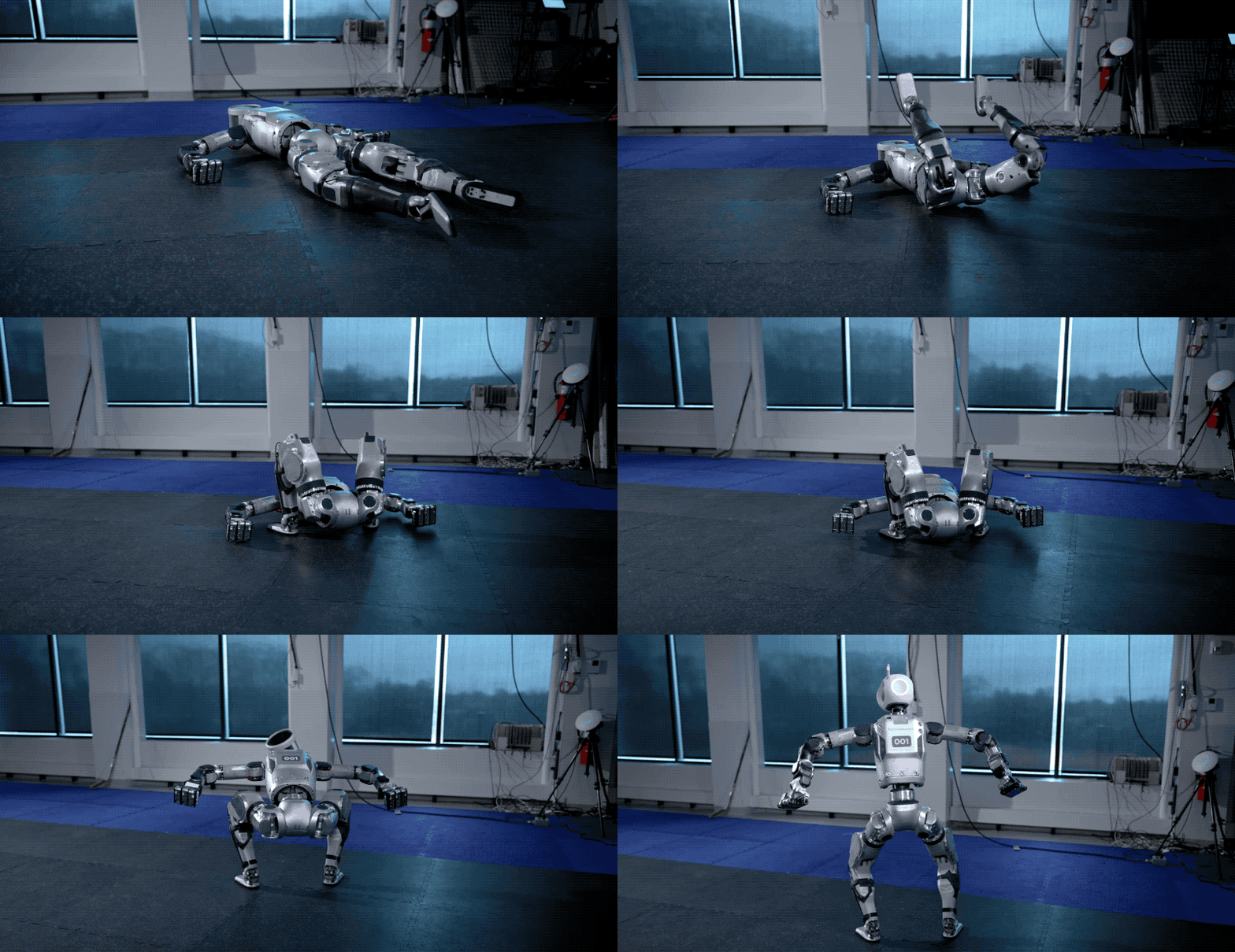
Boston Dynamics is also developing Atlas with AI capabilities through collaboration with Google DeepMind, aiming to improve robot learning and task adaptability. New skills developed for one robot can potentially be deployed across entire robot fleets, creating a software-driven approach to industrial automation.
While humanoid robots still face challenges in reliability, cost, and large-scale deployment, Atlas demonstrates a key shift from experimental robotic platforms toward autonomous machines designed for continuous industrial work. The combination of self-maintenance, AI learning, and human-like mobility could accelerate the adoption of humanoid robots in future factories.