


OG-1 Construction Robot Finishes Walls 3× Faster With $20M Funding
 19 October 2026 05:38 PM
Summary: As construction companies seek to improve productivity and address labor shortages, the OG-1 autonomous robot offers a new approach to wall finishing, reportedly completing the work three times faster than a human crew through AI-driven navigation and automated tools.
Construction sites are increasingly becoming a testing ground for autonomous robotics, as developers seek to automate labor-intensive tasks without disrupting existing workflows. OG-1 is one such system, designed to automate drywall finishing and painting. Its compact wheeled base fits through standard doorways, while an extendable structure reaches heights of up to 14 feet, allowing it to work on tall walls and ceilings.
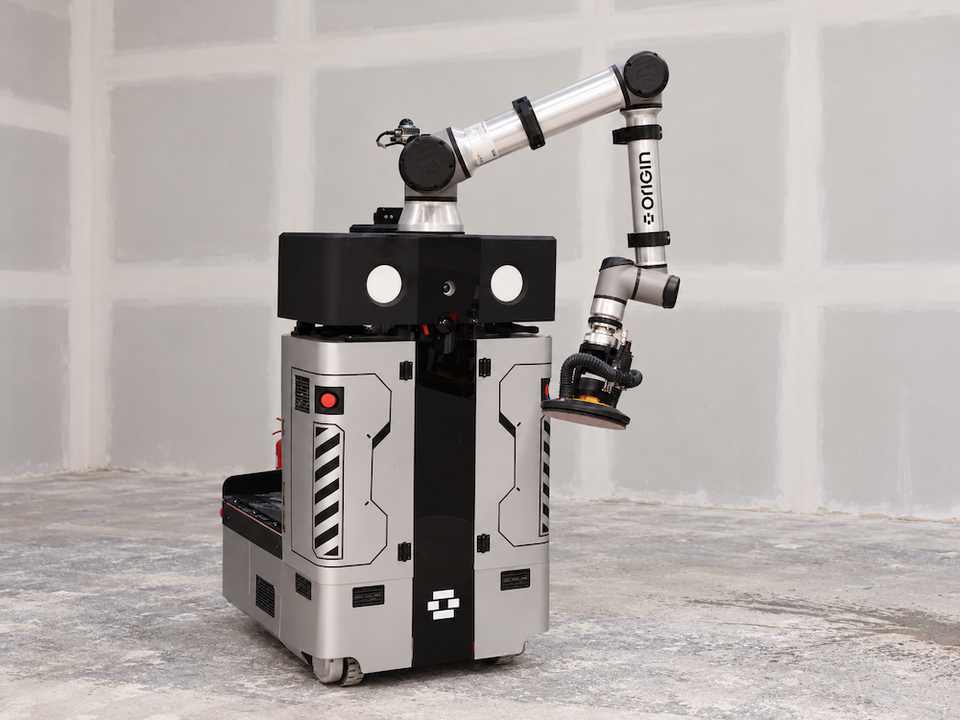
The robot reportedly finishes walls three times faster than a human crew over a complete shift, including setup, tool changes, material replacement and maintenance. It can recognize 200 types of job-site objects, navigate around windows and doors, handle corners and ceilings, and inspect its own work. After an operator maps the workspace and selects a work zone, OG-1 can perform tasks autonomously alongside other trades without requiring a cordoned-off area.
Its core technology is a Construction Action Model (CAM), which combines workflow reasoning, action planning and motion control to translate construction tasks into physical actions. Training relies primarily on data collected from real deployments, laboratory demonstrations and high-fidelity simulations based on actual site scans.
Unlike humanoid robots, OG-1 uses a stable three-wheeled base, a counterbalanced structure, a lift and a robotic arm. This design prioritizes stability and operational efficiency rather than energy-intensive balance control. Future applications could include drywall taping, stud installation, drilling and conduit work, enabled by interchangeable tools that allow one platform to perform multiple tasks.
OG-1 is offered through a robots-as-a-service model, allowing contractors to deploy the technology without purchasing the machine upfront. Reported customer savings start at 20%, although actual results will depend on labor costs, site conditions and utilization rates. The system aims to address labor shortages, improve finishing consistency and reduce project delays.
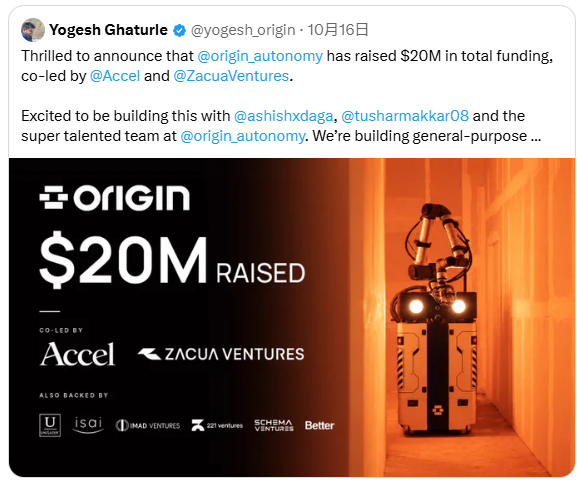
With $20 million in funding, the project plans to expand its robot fleet and launch pilot deployments across the United States and Europe. While construction robotics remains a small part of the global building industry, systems such as OG-1 demonstrate how autonomous machines could move beyond isolated tasks toward more flexible, AI-driven construction workflows.