

Product Description
Integrated MBR Wastewater Treatment System
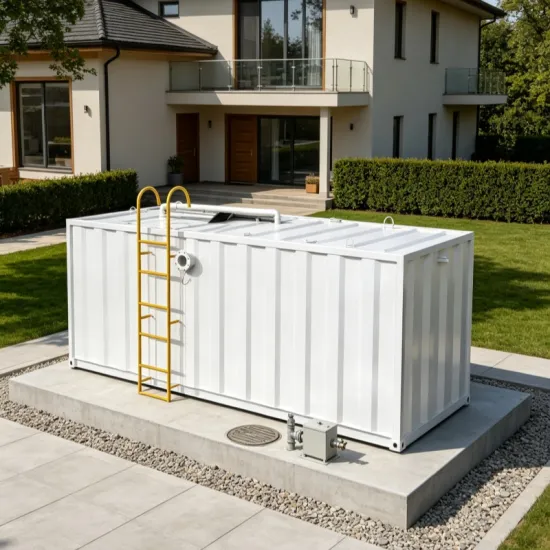
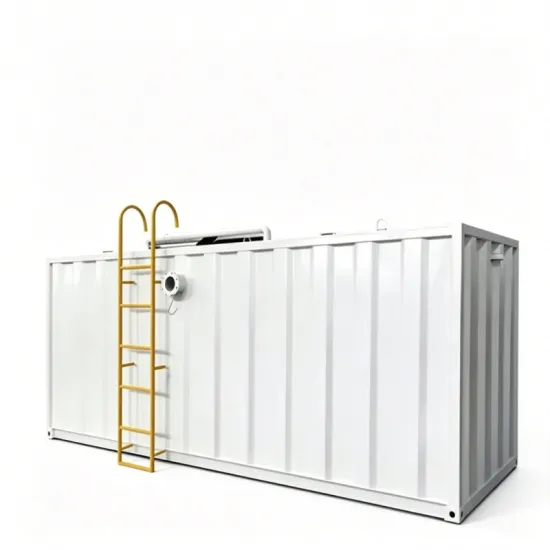
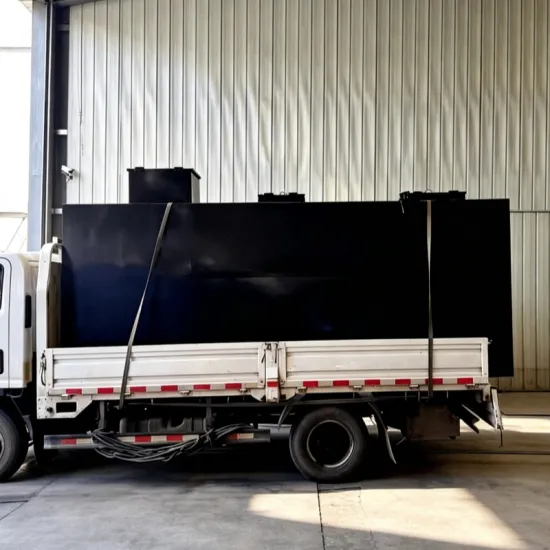
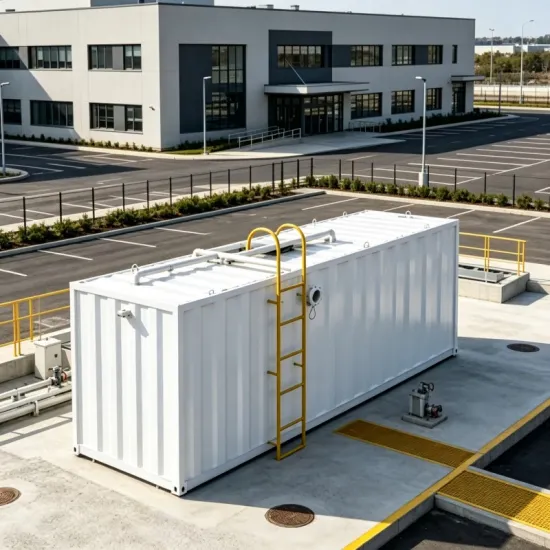
The STP-MBR-3 integrates biological treatment and membrane filtration into a compact wastewater treatment unit. It is designed for domestic sewage treatment in residential communities, rural areas, and small commercial facilities. The system helps remove organic pollutants and suspended solids, producing treated water for discharge or potential non-potable reuse, subject to applicable water quality requirements.
Key Features
1. Membrane-Based Filtration
The 0.1 μm membrane filtration system helps retain suspended solids and microorganisms, supporting consistent effluent quality.
2. Compact Integrated Structure
Multiple treatment stages are combined within one system to simplify equipment layout and site planning.
3. Automatic Control System
Integrated control functions support routine operation and process management, depending on the selected configuration.
4. Integrated Treatment Process
Pre-treatment, biological treatment, membrane separation, and disinfection work together to treat domestic wastewater.
5. Project-Based Configuration
Treatment capacity, materials, and control options can be configured according to project requirements and site conditions.
Product parameters
Wastewater Treatment Capacity | 0.3/0.5/1/3/5/7/10/20 m³/day |
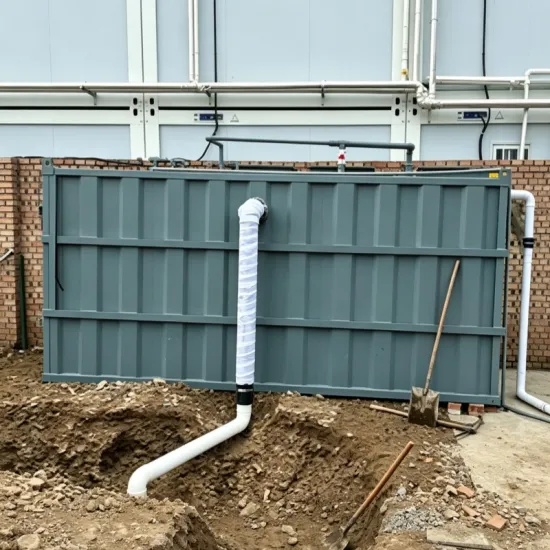
Installation Method | Underground / Above-ground |
1m³/D Dimensions | 2*1*1.5m |
3m³/D Dimensions | 3*1.5*1.5m |
Treatment Process | MBR (Membrane Bioreactor) |
Installation Type | Integrated (All-in-One Design) |
Model | Treatment Capacity | Suitable Population | Application Scenario |
STP-MBR-1 | 1 m³/day | 5 people | Single villa, private house, small farm, remote cabin |
STP-MBR-3 | 3 m³/day | 15 people | Small homestay, 2-3 cabins, small campsite |
STP-MBR-5 | 5 m³/day | 25 people | Small resort, cabin camp, farmhouse eco-lodge |
STP-MBR-10 | 10 m³/day | 50 people | Boutique hotel, eco resort, holiday village |
STP-MBR-15 | 15 m³/day | 75 people | Medium resort, larger campsite, mu building accommodation |
STP-MBR-20 | 20 m³/day | 100 people | Large homestay project, eco tourism park, small community |
From Wastewater Collection to Reuse
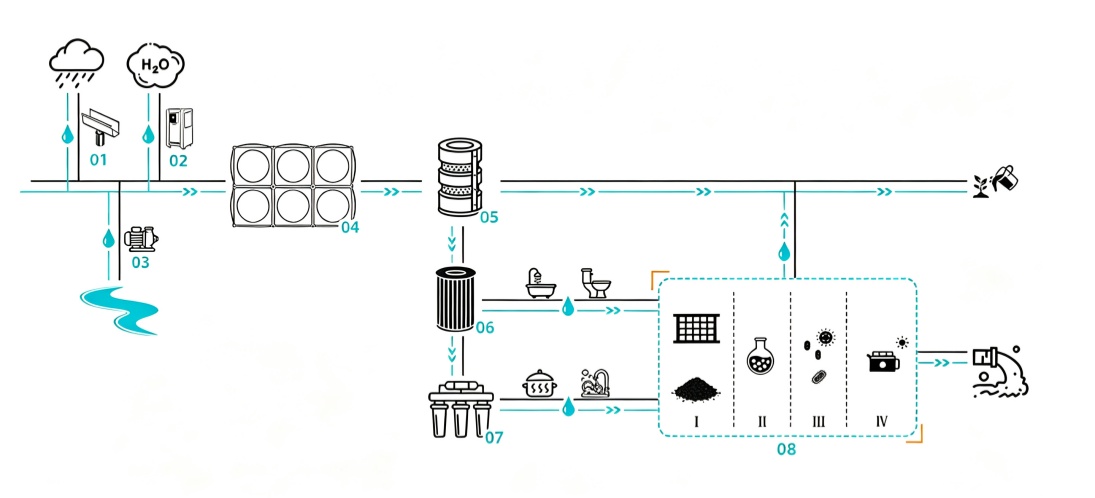
Integrated Water Management for Project Applications
The wastewater treatment unit can be incorporated into a wider site water system, connecting building drainage, wastewater collection, treatment, and the final discharge or reuse point. The overall layout can be planned according to site conditions, water demand, drainage arrangements, and applicable discharge requirements.
From Wastewater Collection to Reuse
How the MBR Wastewater Treatment System Works
The system combines pre-treatment, biological treatment, membrane separation, and disinfection in a coordinated process. Wastewater passes through successive treatment stages to reduce organic pollutants and suspended solids before the treated water is discharged or directed to an appropriate reuse application.
Treatment Process
Influent → Pre-treatment → Hydrolysis Acidification → Biological Treatment → MBR Membrane Filtration → Disinfection → Reuse / Discharge
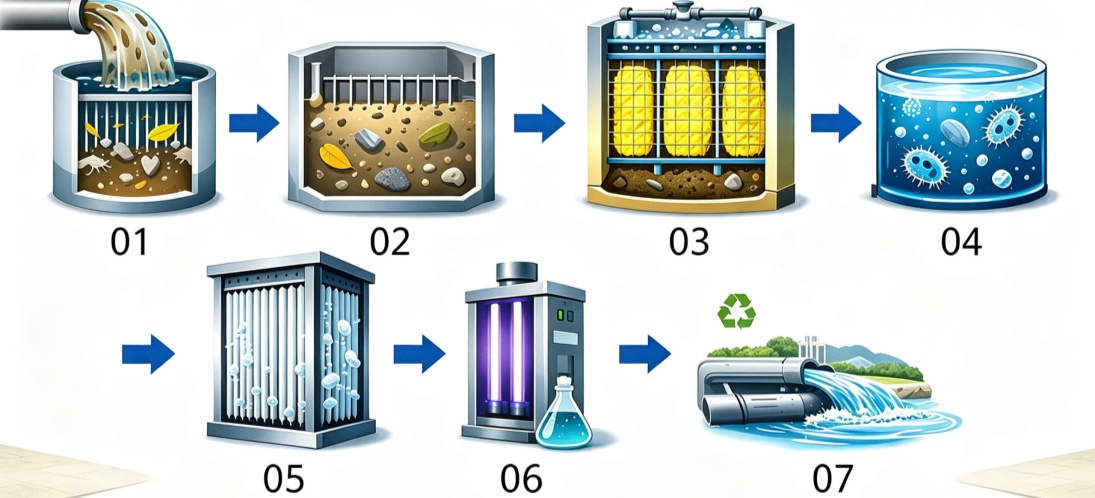
01. Influent
Raw domestic wastewater enters the treatment system.
02. Pre-treatment
Coarse debris and larger suspended solids are removed.
03. Hydrolysis Acidification
Complex organic matter is broken down into more biodegradable compounds.
04. Biological Treatment
Microorganisms degrade organic pollutants in the wastewater.
05. MBR Membrane
Membrane filtration separates suspended solids and retains microorganisms.
06. Disinfection
The selected disinfection process reduces pathogens in the treated water.
07. Treated Water
The final effluent is directed to an appropriate discharge point or suitable non-potable reuse application.
Application Cases
Suitable for residential communities, rural areas, remote sites, and small commercial facilities, supporting domestic wastewater treatment and water reuse.
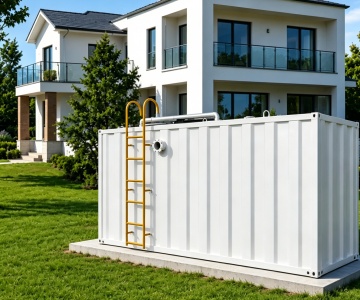
Residential Communities
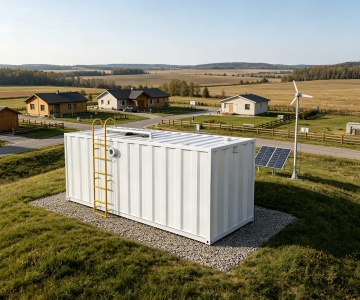
Rural & Remote Settlements
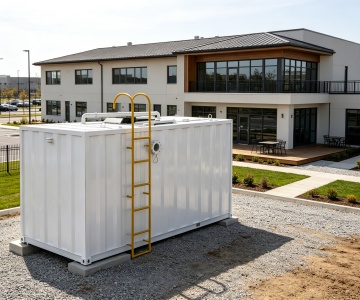
Small Commercial Facilities
Project Configuration & Support
System configuration can be discussed according to wastewater volume, influent characteristics, required effluent quality, available installation space, and local discharge regulations. Options may include treatment capacity, equipment materials, and control arrangements, subject to the manufacturer's available configurations.
Before equipment selection, project teams should confirm the design flow, influent quality, target effluent standards, site conditions, and scope of supply to ensure the system meets the intended application.
Contact Us
Email:joywithin-abby@ttbridge.com
Address:No.12 Factory Site, Guohuai Street, Zhengzhou, Henan Province, China