


Summary: As industrial automation expands, wheeled humanoid-like robots are emerging as a practical alternative to bipedal systems, offering longer operating times, higher payload capacity, and lower deployment costs.
While bipedal humanoid robots continue to attract public attention, wheeled humanoid-like robots are increasingly gaining traction in industrial and service applications where efficiency, reliability, and cost-effectiveness are critical. Industry analysts estimate that wheeled humanoid and mobile manipulation platforms now represent approximately 65% of the global humanoid robotics market, valued at around $1.6 billion.
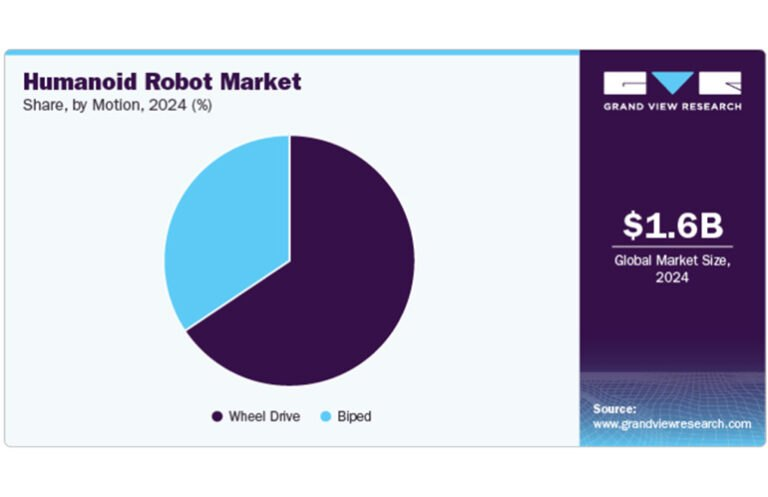
Unlike traditional humanoids, which require complex balance control and energy-intensive locomotion, wheeled autonomous mobile robots (AMRs) equipped with robotic arms provide a simpler approach to mobile manipulation. These systems combine autonomous navigation with dexterous handling capabilities, making them well-suited for warehouses, manufacturing facilities, hospitality venues, and logistics operations.
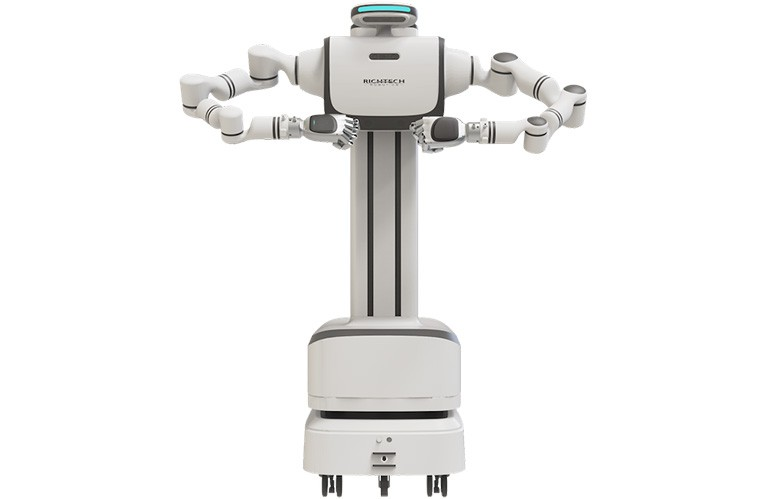
Several robotics companies are pursuing this design philosophy, developing robots that prioritize practical deployment over human-like mobility. Examples include mobile service robots for food delivery, logistics transport, cleaning operations, and customer-facing applications. Recent developments have expanded these capabilities with the introduction of dual-arm wheeled robots capable of performing more sophisticated manipulation tasks.
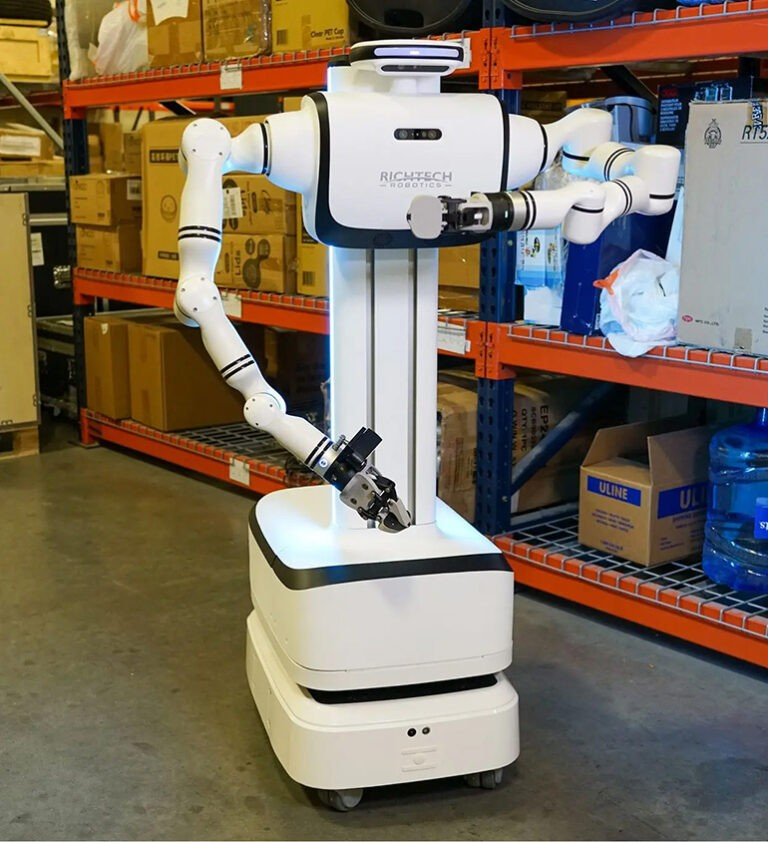
A key advantage of wheeled platforms is energy efficiency. Compared with bipedal robots, which must continuously maintain balance while walking, wheeled systems can operate for more than four hours on a single charge, carry heavier payloads, and navigate indoor environments with lower power consumption. These characteristics improve operational uptime and reduce deployment costs, making them attractive for commercial users.
The latest generation of mobile manipulators integrates advanced artificial intelligence technologies, including AI vision systems, LiDAR-based simultaneous localization and mapping (SLAM), real-time obstacle avoidance, natural language processing, and edge computing. Powered by high-performance processors and trained using simulation environments, these robots can make autonomous decisions without constant cloud connectivity and adapt to complex industrial settings.
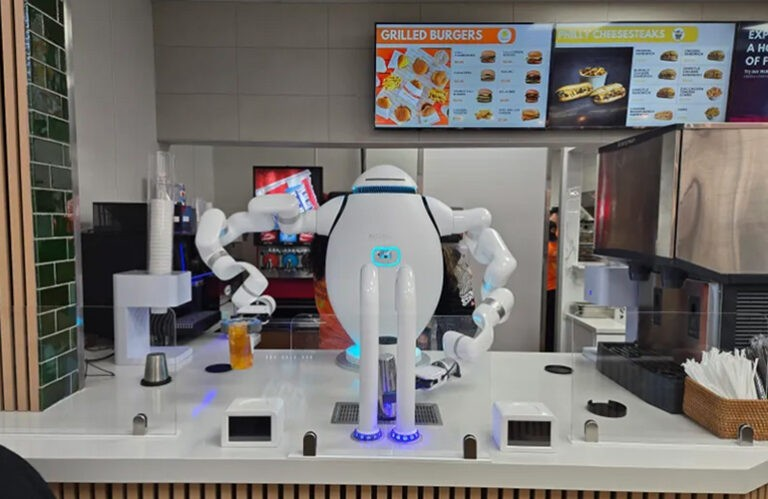
Many robotics providers are also adopting Robot-as-a-Service (RaaS) business models alongside direct sales, allowing customers to deploy automation with lower upfront investment. Looking ahead, companies plan to leverage operational data collected by robot fleets to develop Data-as-a-Service (DaaS) offerings that support AI training and analytics.
As the robotics industry matures, the debate between legs and wheels increasingly centers on practical engineering trade-offs. While humanoid robots remain a symbol of technological advancement, wheeled mobile manipulators are proving to be a scalable and commercially viable solution for real-world automation challenges.
The article is sourced from the internet

