


Abstract:A vine-inspired soft robot with pneumatic hoses enables gentle, versatile handling of fragile, heavy, or awkward objects, with potential applications in healthcare and industry.
Researchers from MIT and Stanford University have unveiled a vine-inspired robotic system designed to handle objects with delicate precision. Unlike traditional rigid robots, this system uses pneumatic hoses that extend and retract autonomously to wrap around and secure items, creating a “closed-loop” grasping mechanism.
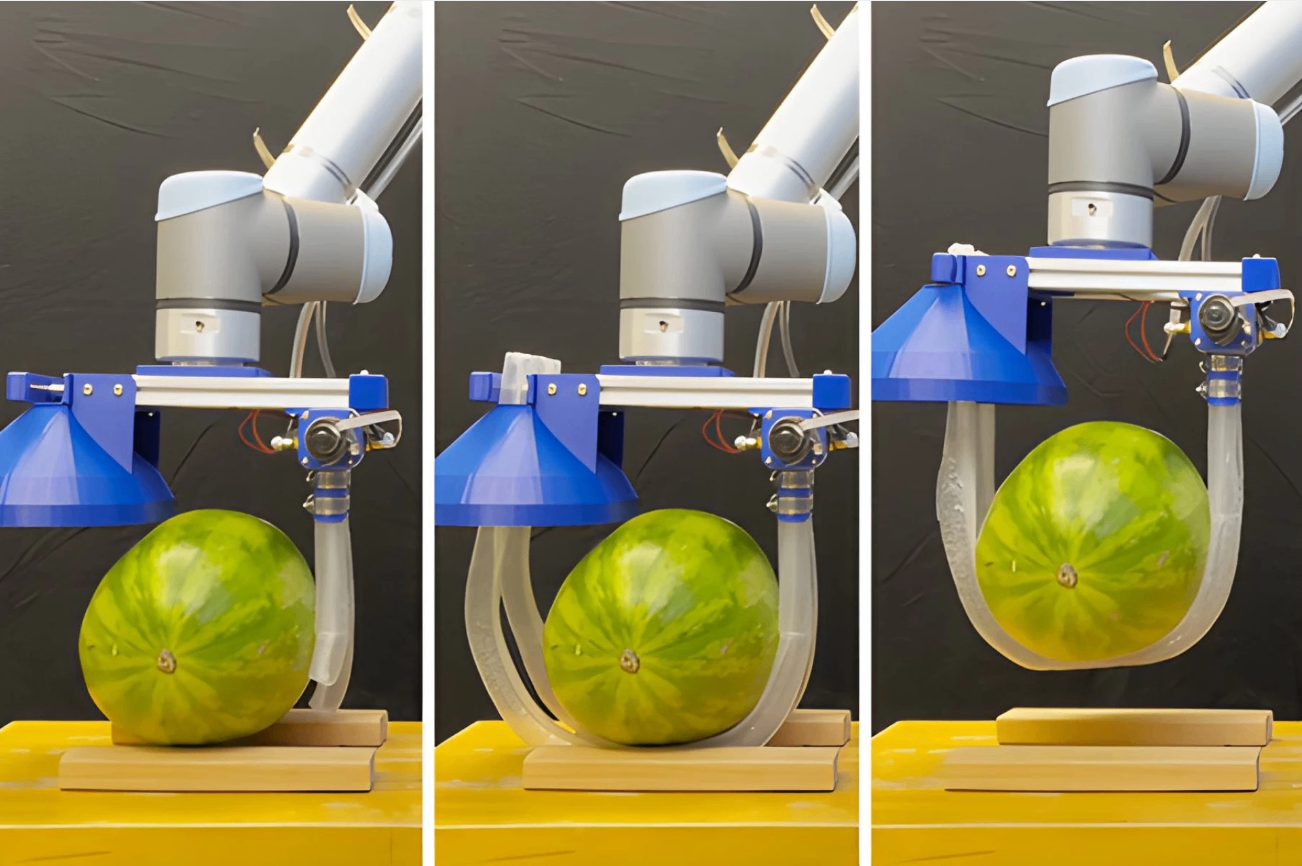
The vine-like robot can handle heavy and oddly shaped objects like watermelons - and human beings
The soft, morphing arms allow the robot to perform tasks that require gentleness and versatility. Tests demonstrated its ability to lift round objects, navigate cluttered environments, handle fragile items like glass vases, move heavy or irregular objects such as watermelons, and even manage groups of items simultaneously.
A major potential application lies in healthcare, where the robot could assist in transferring patients in hospitals and eldercare facilities. The pneumatic hoses can maneuver under patients, reducing strain on caregivers and minimizing discomfort compared to traditional lifting methods that rely on turning patients and using sheets or winches.
The design leverages topological transformations—switching between open and closed loops—to optimize performance at different stages of manipulation, achieving strong, gentle, and versatile grips. Researchers emphasize that this capability allows the robot to handle tasks that combine precision, force, and care in ways previous robots could not.
Beyond healthcare, the team envisions applications in heavy industry, including automating crane operations at ports and warehouses. By combining soft robotics with adaptive, vine-like mechanisms, the technology promises a safer, more flexible, and cost-effective approach for a wide range of tasks.
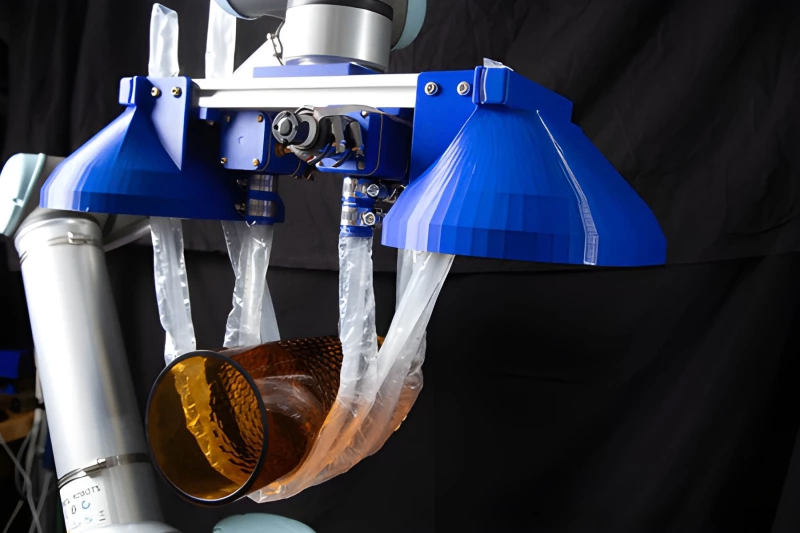
Thanks to its soft morphing arms, the robot can also handle gentle tasks like lifting and moving a fragile glass vase
This material is obtained from online sources.

