


Abstract:The TRON 2 is a modular embodied AI platform supporting three reconfigurable modes—dual-arm, wheeled-leg, and bipedal—for versatile manipulation, terrain mobility, and stair climbing in research and industrial applications. Its integrated vision-language-action (VLA) software stack, open SDK, Sim2Real support, and built-in safety redundancies enable full data pipeline management and easy adaptation to diverse robotic tasks.
The TRON 2 is a modular embodied AI platform designed for research and industrial application development. It can be configured in three ways, allowing for transitions among a dual-armed biped, a wheeled-leg form, and a sole-feet setup, depending on specific task requirements.
The platform is ideal for research laboratories requiring a test bed that can be easily modified to support various modalities and projects.
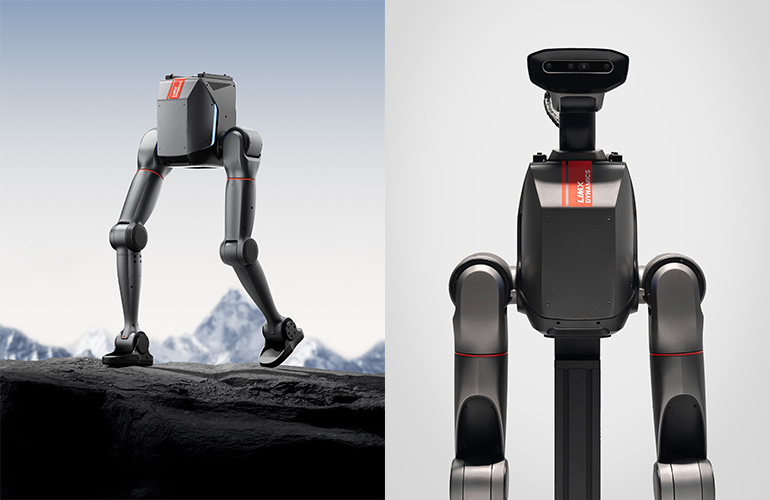
TRON 2 architecture allows multiple configurations
The TRON 2 system is built on a modular hardware architecture that supports three primary modes:
Dual-arm configuration: Used for manipulation tasks
Wheeled-leg configuration: Optimized for all-terrain mobility and increased payload transport
Bipedal (sole feet) configuration: Designed for terrain-specific locomotion, such as stair climbing
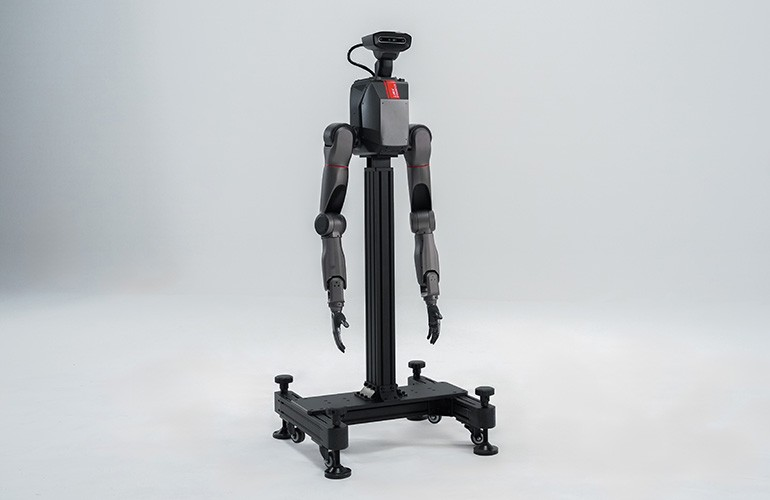
Manipulator Specifications
Each robotic arm in the TRON 2 system features seven degrees of freedom (DoF) and a spherical wrist design.
Reach: 70 cm (27.6 in.) workspace
Payload: 10 kg (22 lb.) dual-arm capacity
Latency: 50 ms teleoperation latency
Perception: A front-facing camera provides visual coverage of the arm’s workspace for manipulation, control, and data collection.
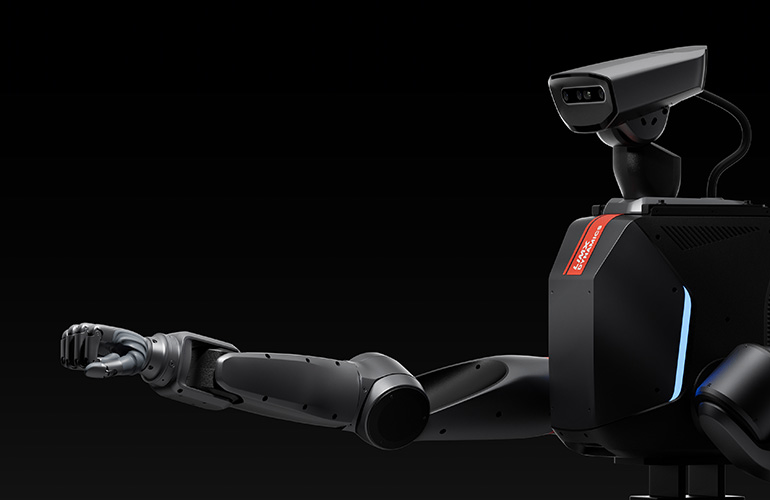
TRON 2 mobility and load capacity is variable
The system’s mobility varies by configuration:
Wheeled-leg mode: TRON 2 supports a 30 kg (66.1 lb) payload and includes an auto-recharging function. It employs adaptive control for traversing non-uniform terrain.
Bipedal mode: The robot employs visual-based motion planning to navigate stairs.
Power and payload metrics: The system features an increase in maximum payload and an 80% boost in battery capacity compared to previous iterations.
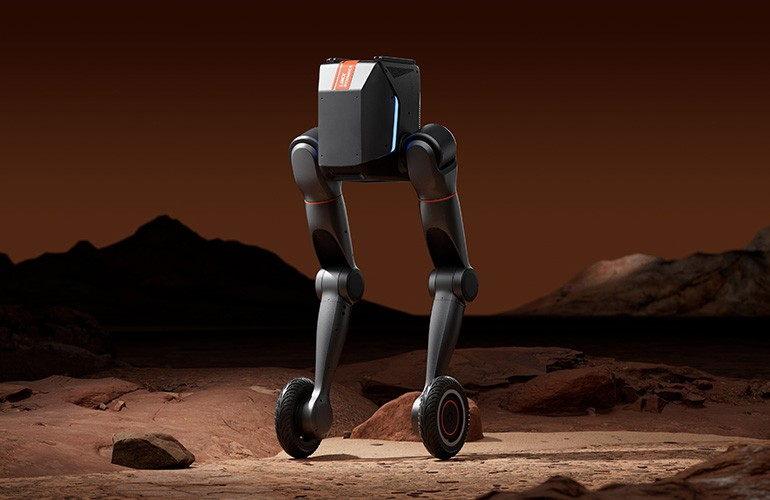
Safety and redundancy systems
To manage hardware risks, TRON 2 includes:
Active safety boundaries: Algorithmic constraints prevent self-collision and equipment damage.
Dual redundant power: In the event of power loss, the system is designed to fold the arms into a secure position to prevent damage to the manipulators or the environment.
Software stack integrates with VLA platform
The TRON 2 is positioned as an integrated vision-language-action (VLA) platform. The robot‘s software environment is designed to handle the full data pipeline, including:
Data Management: Tools for collection, cleaning, annotation, training, and inference.
Developer SDK: A fully open SDK with high- and low-level interfaces. It supports full Python development workflows and is compatible with ROS1 and ROS2.
Sim2Real support: Provided URDF files facilitate development in simulators, including NVIDIA Isaac Sim, MuJoCo, and Gazebo.
Pre-loaded models: The system includes tutorials for algorithms such as ACT and Pi0.5, supported by 1,000+ real-world datasets.
Source: Online Public Resources

