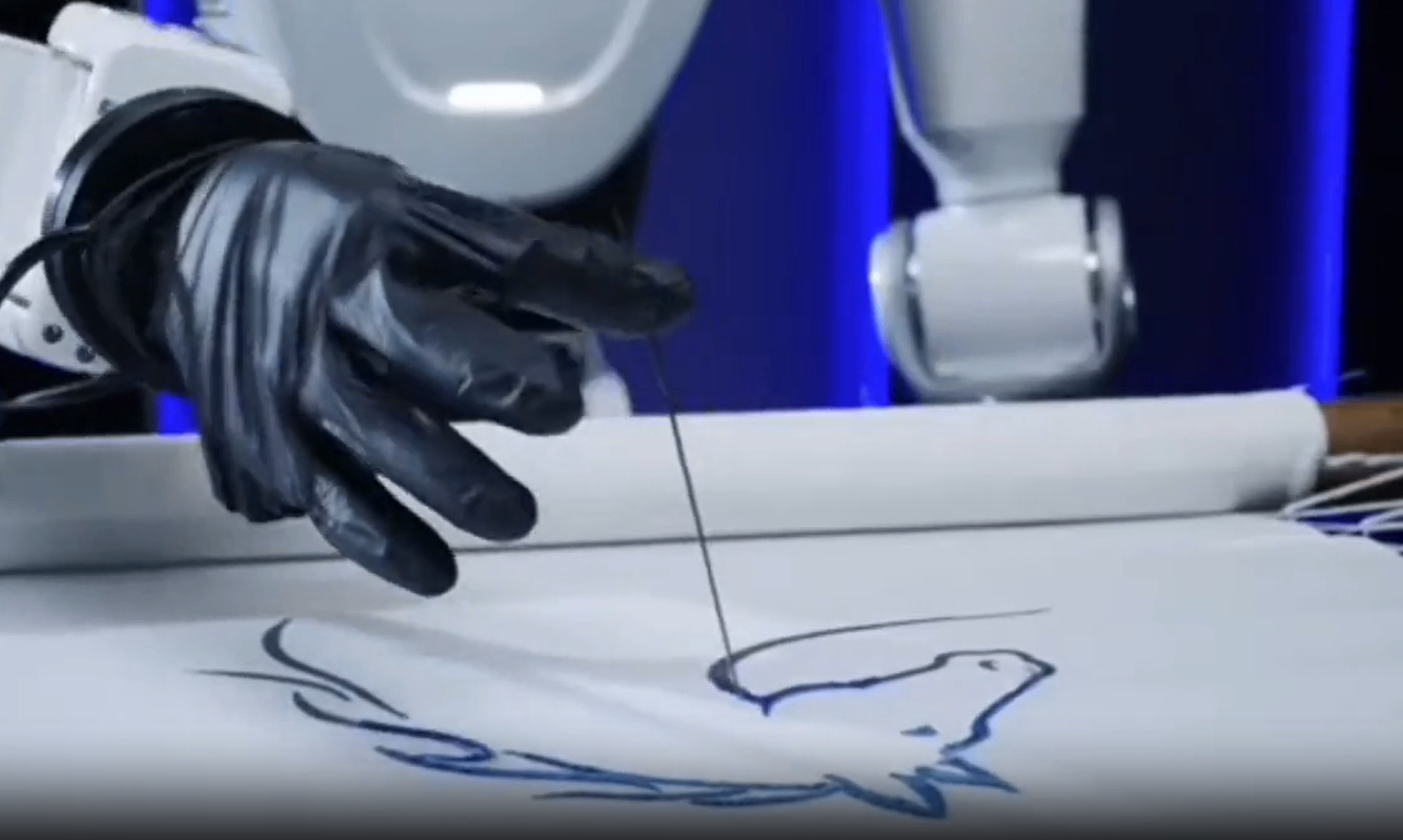
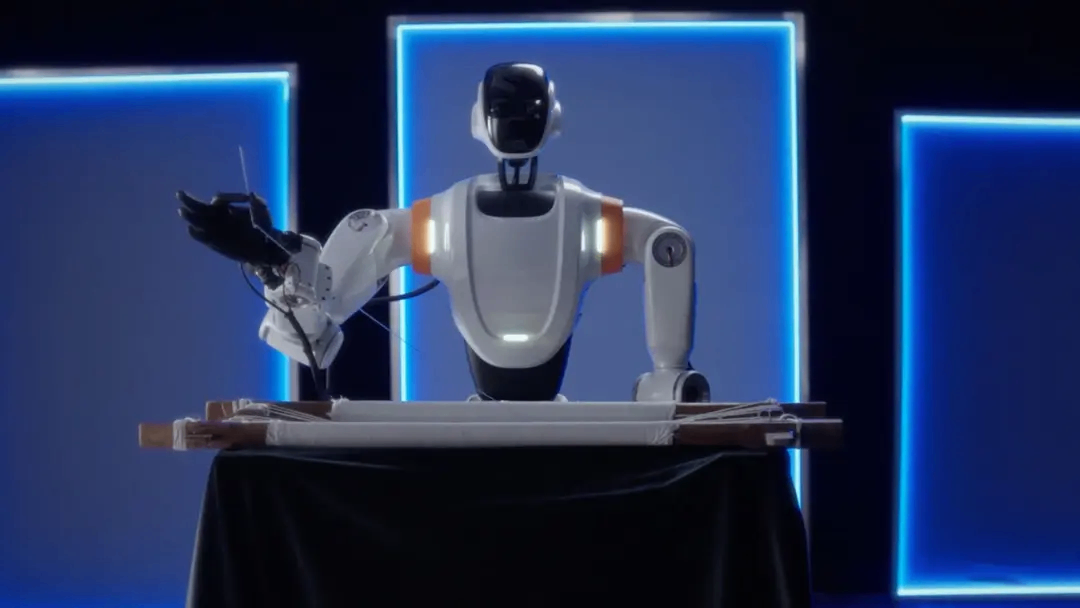
On December 22nd, a humanoid robot publicly demonstrated performing hand embroidery at an event, marking a milestone breakthrough in the field of embodied artificial intelligence. As a task requiring extremely high precision and stability, the automation of hand embroidery was previously considered unattainable by the industry.
Hand embroidery demands extremely high precision and stability, making its automation previously considered unattainable by the industry.
In the demonstration, the humanoid robot, using its two hands working in tandem, successfully completed core actions such as threading the needle and embroidering markings, and even manipulated soft, flexible materials with sub-millimeter precision.
This performance not only validates the robot's fine motor coordination and material manipulation capabilities but also breaks the traditional perception that precise manual operations cannot be automated.
From an industrial application perspective, ultra-precision manipulation has long been a technological weakness of industrial robots, directly limiting the automation of high-precision, intensive processes such as complex wire harness assembly. This technological breakthrough by the humanoid robot not only improves its precision operation capabilities but also provides a feasible path for automation upgrades in related high-precision manufacturing fields, which has significant practical industrial implications.
By overcoming this barrier, robots can now take on work previously reserved for skilled human hands.
A long-standing automation barrier falls
Hand embroidery may appear niche, but it represents one of the hardest problems in robotics.
The task combines precise vision, adaptive force control, and coordinated movement of both hands while dealing with flexible materials that constantly change shape. Small errors can snap a thread or miss a stitch entirely.
During the live demonstration, the humanoid robot completed the process smoothly, demonstrating stability throughout. This performance highlighted a level of embodied intelligence not previously demonstrated in public settings. The ability to carry out such tasks reliably is seen as a foundation for broader industrial use.
By mastering these movements, the same robotic system can be extended to other complex jobs. Tasks such as assembling intricate electrical components or handling soft materials in manufacturing now appear more achievable.