


Summary:A new vine-inspired soft robotic arm developed by MIT and Stanford can safely grasp and lift fragile, irregular, or heavy objects, opening new possibilities for industrial automation, disaster response, and field robotics.
Handling fragile, irregularly shaped, or difficult-to-reach objects remains one of the most persistent challenges in robotics. Traditional robotic grippers often rely on rigid claws or suction systems that can struggle with delicate items or complex environments. Researchers from MIT and Stanford University have now introduced a novel alternative: a soft robotic arm inspired by the way climbing vines wrap around their surroundings.
AI generated image
The system uses inflatable tubes that extend by everting outward, similar to a vine growing toward a support structure. Once deployed, the flexible robotic arms can maneuver through tight spaces, navigate around obstacles, and gently coil beneath and around a target object. A locking mechanism then secures the loop, while a motorized winch retracts the structure to lift the load in a controlled manner.
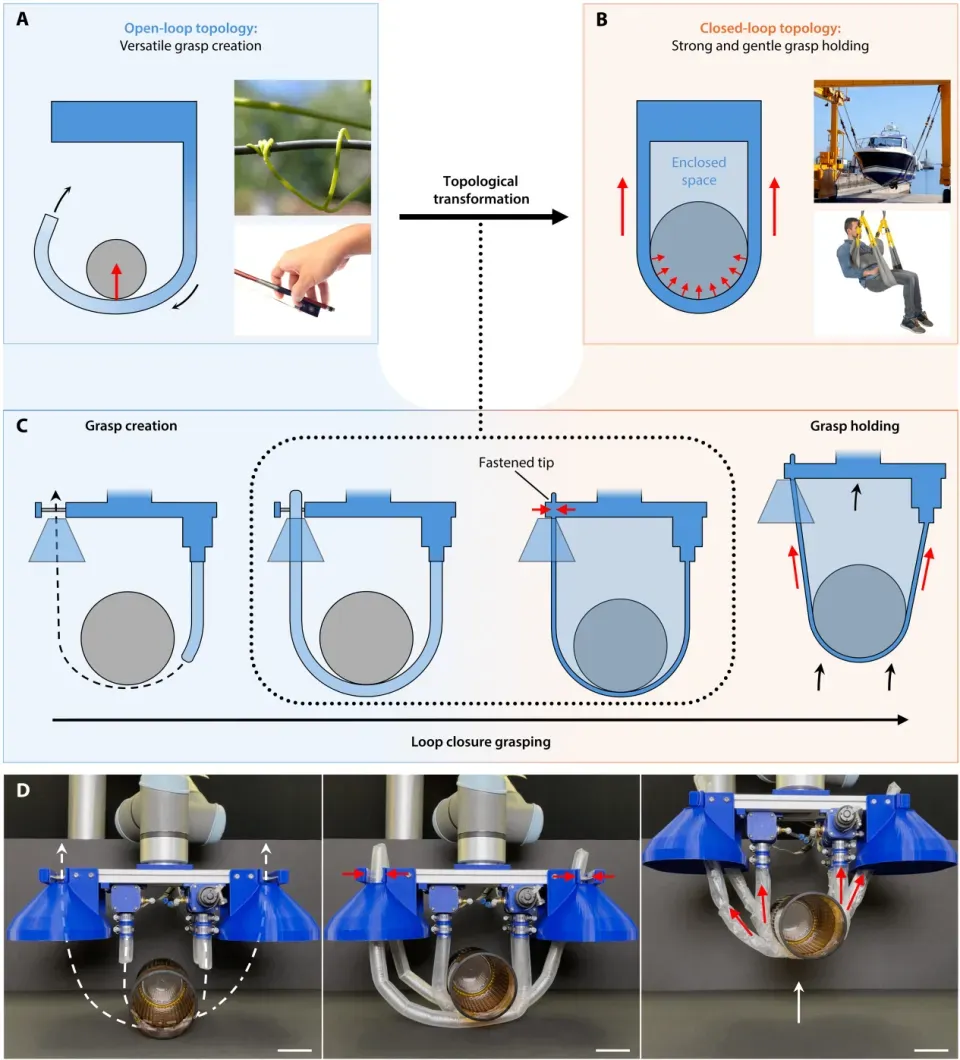
Unlike conventional robotic grippers that apply concentrated pressure at specific contact points, the new design distributes forces evenly across the object's surface. This sling-like lifting approach allows the robot to handle a wide range of items, including fragile glassware, agricultural products, bulky industrial components, and even human patients, while minimizing the risk of damage.
Researchers have demonstrated both a compact version that can be mounted on existing robotic platforms and a larger system capable of lifting a person from a bed. The technology also showed an ability to retrieve objects hidden within cluttered environments, a task that remains difficult for many rigid robotic systems.
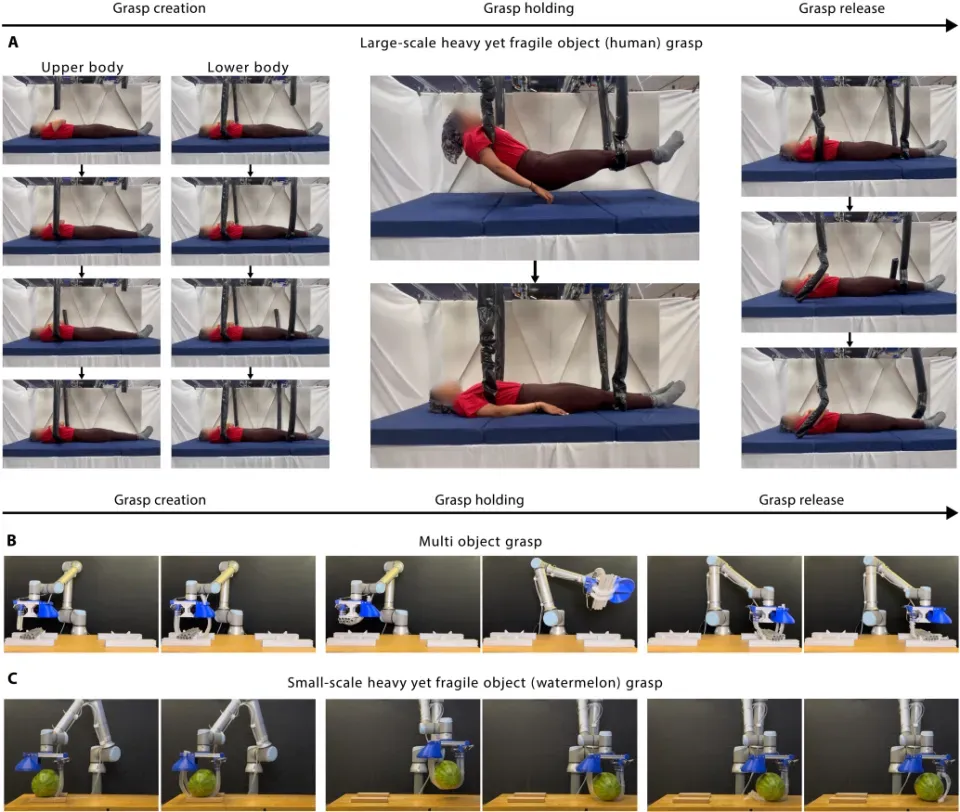
Beyond healthcare applications, the innovation could have significant implications for industrial automation, warehouse logistics, disaster response, and defense operations. Robots equipped with soft, adaptive gripping systems may be better suited for handling hazardous materials, recovering sensitive equipment, or operating in confined spaces where conventional robotic arms lack the flexibility required.
As industries continue to seek safer and more versatile automation solutions, vine-inspired soft robotics may represent an important step toward machines that interact with the physical world with greater adaptability and precision.

