


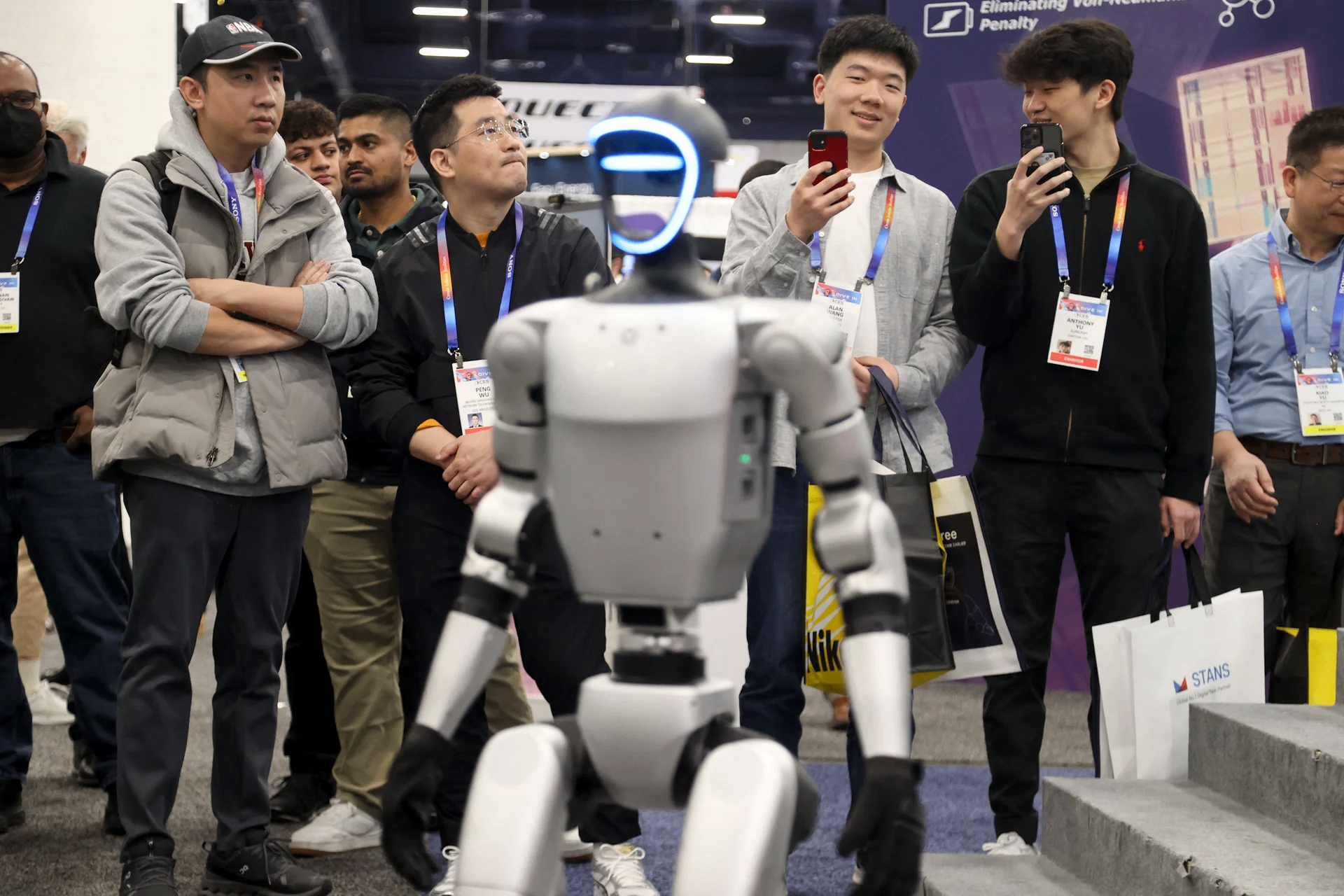
CES once focused almost entirely on consumer electronics. However, with the continuous expansion of the technology industry and the rise of artificial intelligence as a hot keyword among tech companies, the show has evolved into a much larger, more comprehensive technology event.
Strictly speaking, consumer electronics remains the core theme of the show—after all, the ultimate audience for chips, robotics, and automotive technology is still the consumer. But for mainstream consumers, the various chip and feature names that tech companies will be launching in early January at the Las Vegas Convention Center and along the Las Vegas Strip are nothing more than a jumble of incomprehensible letters.
This doesn't mean the show lacks exciting products. Brands like Samsung, Sony, and LG will all be present, showcasing their next generation of high-end televisions equipped with ultra-high-definition OLED screens, and these screens are surprisingly large. (Samsung is expected to showcase its 98-inch "The Frame" TV, which simulates the appearance of a framed artwork when not in use.) The home appliance sector will also see numerous upgrades, such as LG's new robotic vacuum cleaner. Its charging dock can be installed under the kitchen sink, cleverly concealed when not in use, and can automatically connect to the home's water and drainage systems to perform floor cleaning and steam mopping functions.
Robotics technology will continue to permeate more new scenarios (in fact, this will be one of the core themes of this year's exhibition). Lawn-mowing robots and pool-cleaning robots will receive further functional upgrades, and one robotic vacuum cleaner will even be equipped with retractable mechanical legs to help it easily traverse small steps. In addition, Roborock, which launched a robotic arm last year capable of picking up items such as pet toys and dirty socks, is expected to showcase its new Qrevo Curv 2 robotic vacuum cleaner, equipped with a retractable mop that can clean hardwood floors without wetting carpets.
Behind the dazzling array of technical jargon, chipmakers like AMD, Qualcomm, and Intel will showcase their new products, almost all optimized for better adaptation to AI applications, applicable to laptops, smartphones, and other technological devices.
Of course, AI will be a ubiquitous topic in the first week of January. Major industry news is likely to come from AMD CEO Lisa Su's keynote address, where she is expected to "share her vision for future AI solutions—covering all scenarios from the cloud to the enterprise, edge devices, and end devices." Lenovo CEO Yang Yuanqing will speak at the Sphere venue in Las Vegas, discussing how AI is reshaping the way people live, play, and work. Caterpillar CEO Joe Creed is also expected to address related topics in his keynote address.
During the exhibition, numerous eye-catching products will be showcased: Hypershell exoskeleton devices help hikers and cyclists exercise more efficiently and effortlessly; wearable pet devices not only monitor pet health but also help owners locate their pets when they sneak out of the backyard like Houdini; and there will be a new generation of over-the-counter hearing aids, including a product from Elehear that uses artificial intelligence to help users better hear the sounds of the world around them.
LEGO will also return to the CES stage after eight years, showcasing its new products.
As always, CES is a mixed bag: there are products that attract a lot of attention but remain at the prototype stage, as well as products that chase current technological trends. But there are also unpolished gems among them, products that have the potential to completely change people's daily lives in the future. And this is precisely the charm that draws people back to Las Vegas every January.

