


Abstract:This new bin picking solution integrates 3D vision and AI directly onto a robotic arm, enabling real-time adaptation in unstructured environments with an average processing time under 1 second and a success rate of up to 95%. It simplifies deployment by requiring only one camera per robot, reducing hardware costs while maintaining high performance across various production environments.
On December 30, 2025, a new generation of bin picking technology was introduced for discrete manufacturing and assembly lines. This solution integrates 3D vision and AI inference directly onto a robotic arm, offering enhanced adaptability to unstructured environments through a real-time closed-loop approach.
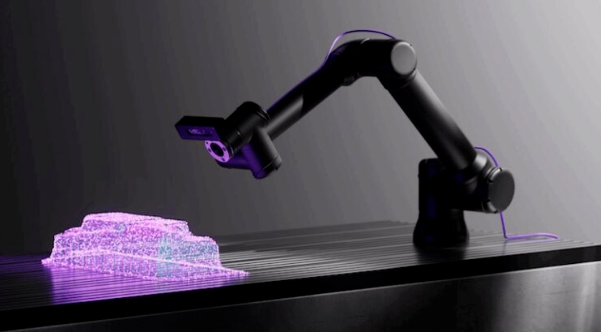
The key innovation is the "on-arm 3D camera" system, where the camera is mounted directly on the robot. This setup, combined with a self-developed AI guidance model, allows the robot to continuously perceive and adjust its movements in real time, eliminating the need for fixed cameras, complex calibrations, and preset picking points that are often vulnerable to variations such as shifting bin positions or lighting conditions.
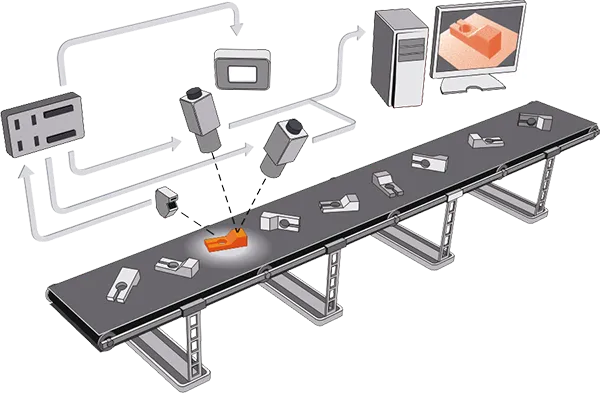
This solution improves efficiency, achieving an average single-grab processing time of under 1 second and a success rate of up to 95%. The system follows a three-step process: First, it identifies any graspable side of an object, rather than seeking a perfect grip. Next, it reanalyzes the target after the initial grip ("in-hand localization"). Finally, it continuously optimizes the trajectory during handling to ensure precise placement.
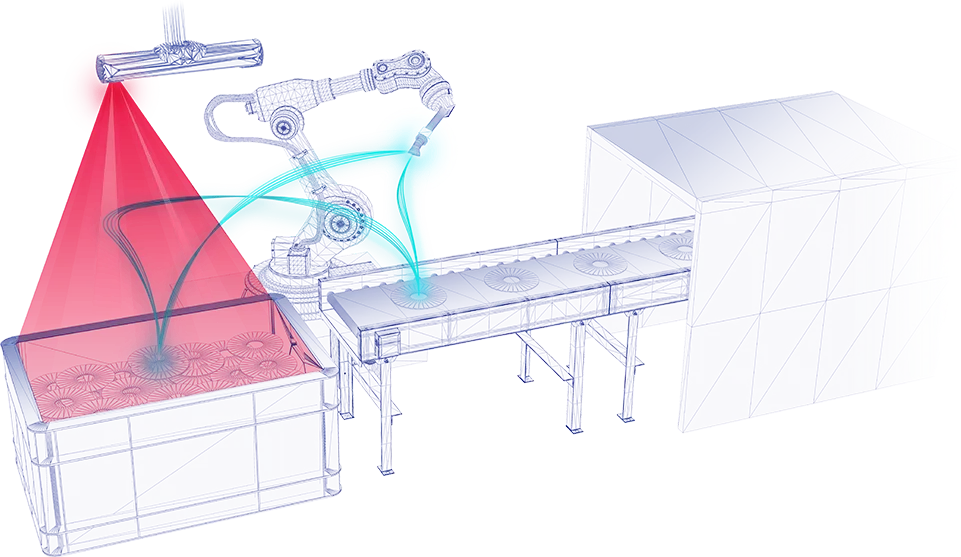
One major advantage of the system is its cost-effectiveness. Only one camera is required per robot, rather than one per bin, simplifying deployment across various workstations. The system has already been deployed in several factories, maintaining high uptime and throughput performance.
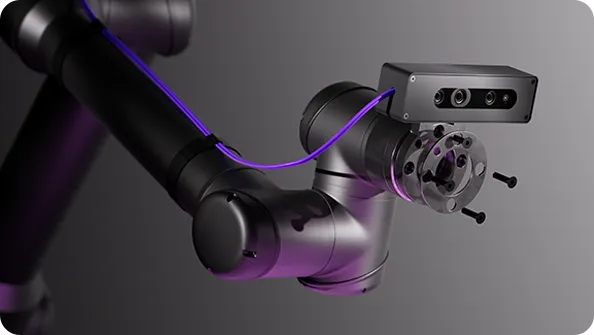
The solution operates on an NVIDIA hardware platform, using AI for real-time posture estimation and trajectory correction. This enables stable performance across different part geometries and operating conditions, while minimizing computational load.
Traditional bin picking systems are often too rigid for real-world conditions. In contrast, this solution allows robots to "see, grasp, and adjust" in real time, offering a more flexible and autonomous approach to manufacturing tasks.

