


Summary:A new biomimetic facial robot developed under a self-supervised learning framework has demonstrated highly realistic lip-syncing with speech and music, marking a significant step toward more natural human–robot emotional interaction and reducing the “uncanny valley” effect.
On January 15, 2026, a groundbreaking research achievement led by Chinese scientist Dr. Hu Yuhang was featured on the cover of the top international journal *Science Robotics*. This research resulted in a biomimetic facial robot that, through innovative self-supervised learning technology, successfully achieved highly realistic lip-syncing with human speech and singing, providing a key technological path to overcome the bottleneck of emotional interaction in humanoid robots and break through the "uncanny valley" effect.
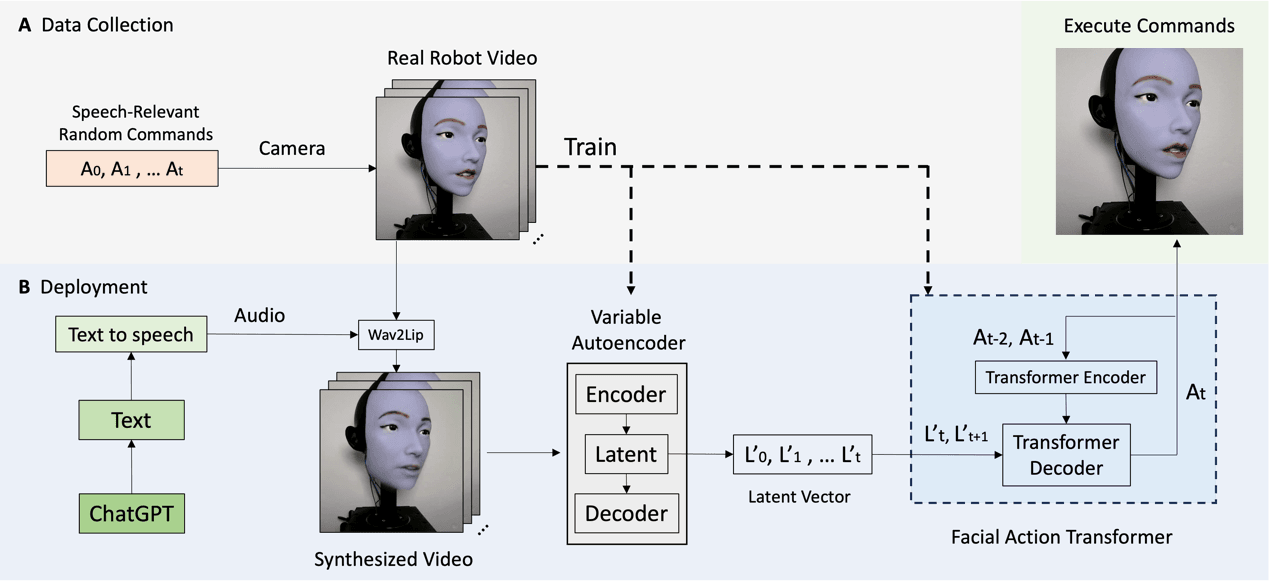
This research, led by Dr. Hu Yuhang, founder of Foresight Morphology Technology and a PhD from Columbia University, focuses on a humanoid robot equipped with a highly biomimetic facial system. The robot's face is covered with flexible silicone skin, closely resembling human skin in both touch and visual appearance. More than 20 high-precision micro-motors are embedded beneath the skin, providing the hardware foundation for the delicate actuation of lip movements. The core of its ability to achieve natural lip-syncing is an innovative self-supervised "vision-motion" learning framework—the robot observes its own state in real time through a mirror, autonomously constructing a facial motion transformer model. This allows for precise control of lip movements without the need for extensive manual data annotation, successfully achieving self-modeling capabilities for the robot's facial movements.
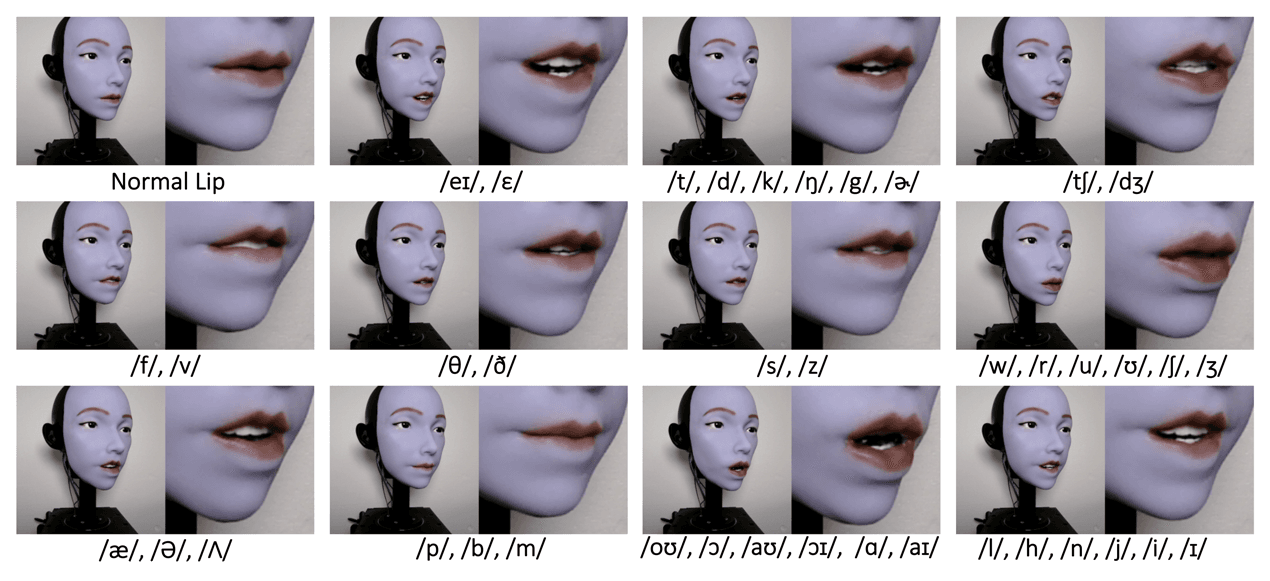
Rigorous testing data confirms the superiority of this technology. Experiments show that in multilingual environments including English, Chinese, and Spanish, the robot maintains fluent and precise lip-sync, whether in coherent daily conversations or following the rhythm of complex music, demonstrating strong cross-language and cross-scenario generalization capabilities. The research team also objectively points out that the current system still has room for optimization. For example, when presenting special phonemes such as the B sound requiring complete lip closure and the W sound with obvious lip rounding, the realism can still be improved. However, thanks to the characteristics of its self-supervised learning architecture, the system has the potential for continuous iterative learning and self-optimization.
"Facial expressions, especially lip movements, are one of the core shortcomings in the current development of humanoid robots," said Dr. Hu Yuhang. As robot applications gradually extend to emotion-driven fields such as education and companionship, natural facial expressions and speech synchronization have become a basic requirement. According to research by Academician Yang Huayong's team at Zhejiang University, facial expressions carry approximately 55% of emotional information, and anthropomorphic facial expression interaction can significantly enhance user trust and interaction affinity. This research not only has significant academic value but also provides a practical solution to this industry pain point through technological innovation.
Industry experts believe that the breakthrough is of profound significance. In the context of the major trend of AI-driven upgrades in robot interaction, realistic lip-sync technology will significantly reduce the awkwardness of human-computer interaction, helping humanoid robots better integrate into human society. In the future, with continuous technological optimization, these bionic robots are expected to play an important role in scenarios such as educational assistance, multilingual translation, and companionship for special needs groups, propelling human-computer emotional interaction into a new, more natural, and deeper stage.

