


Summary: Researchers have developed a detachable robotic hand that combines multi-angle grasping with autonomous crawling mobility, overcoming the limitations of traditional robotic manipulators. With a symmetrical five- or six-finger design, the system demonstrates advanced dexterity and potential applications in industrial automation, disaster response, and robotic exploration.
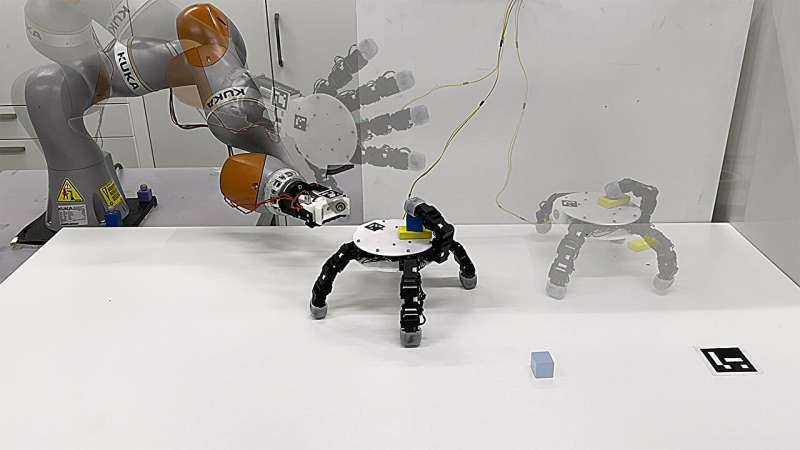
Resembling a whimsical invention straight out of the Addams Family, scientists have developed a detachable robotic hand that boasts dual capabilities: crawling independently and grabbing objects from multiple angles. This innovative design overcomes key limitations of traditional robotic hands, enabling tasks like retrieving out-of-reach items and handling multiple objects simultaneously—opening up promising applications in industrial, service, and exploratory robotics fields.
The findings of this breakthrough research are published in the prestigious journal Nature Communications, highlighting its significance in advancing robotic technology.
Traditional robotic hands are typically engineered to mimic the human hand, long regarded as the gold standard for dexterity. However, their inherent asymmetric structure—allowing grasping from only one side—and limited reach have long restricted their functionality in specific scenarios. These constraints make it challenging for conventional robotic hands to grasp multiple objects at once, access tight or confined spaces, or perform tasks that require flexible positioning.
To address these limitations, researcher Xiao Gao and his team have developed two distinct versions of the detachable robotic hand: a five-fingered model and a six-fingered model, each featuring a palm with a diameter of 16 centimeters. A key innovation of both designs is their symmetrical architecture, which enables the hand to grasp objects from both sides—a game-changer for flexibility.
Additionally, the hand can detach from its arm-mounted base and crawl independently, expanding its range of motion and accessibility.
In experimental tests, the researchers demonstrated the robotic hand’s impressive capabilities: it can retrieve up to three objects sequentially and reattach to its base while maintaining a secure grip on the items. The hand successfully held a variety of everyday objects, including a cardboard tube, a rubber ball, a whiteboard marker, and a tin can—showcasing its versatility in handling different shapes, sizes, and textures. Furthermore, it can replicate 33 different human grasp types and support objects weighing up to two kilograms, highlighting its strength and dexterity.
Looking ahead, the research team plans to explore additional potential applications for this technology. A primary focus will be on leveraging the hand’s detachable and crawling features to access confined spaces—such as narrow industrial pipelines, disaster-stricken areas, or remote exploratory sites—and perform complex tasks that are currently difficult or dangerous for humans or traditional robots.

