


Abstract:All-liquid energy storage technologies, including vanadium redox flow batteries and liquid air storage, are rapidly advancing to support renewable energy integration, grid stability, and industrial applications. With breakthroughs in cost reduction and large-scale deployment, these systems are crucial for enhancing energy flexibility and driving innovation in various sectors.
All-liquid energy storage technologies, including vanadium redox flow batteries, liquid air, and liquid carbon dioxide storage, are advancing rapidly with key breakthroughs in cost reduction, component localization, and large-scale deployment. These systems are crucial for addressing the intermittency of renewable energy, offering long-duration storage that smooths power fluctuations and improves renewable energy utilization. For instance, the Three Gorges Xinjiang Jimsar Vanadium Redox Flow Battery project in China has boosted photovoltaic utilization by over 10%, while a liquid air storage project in the UK has supported large-scale wind power integration.
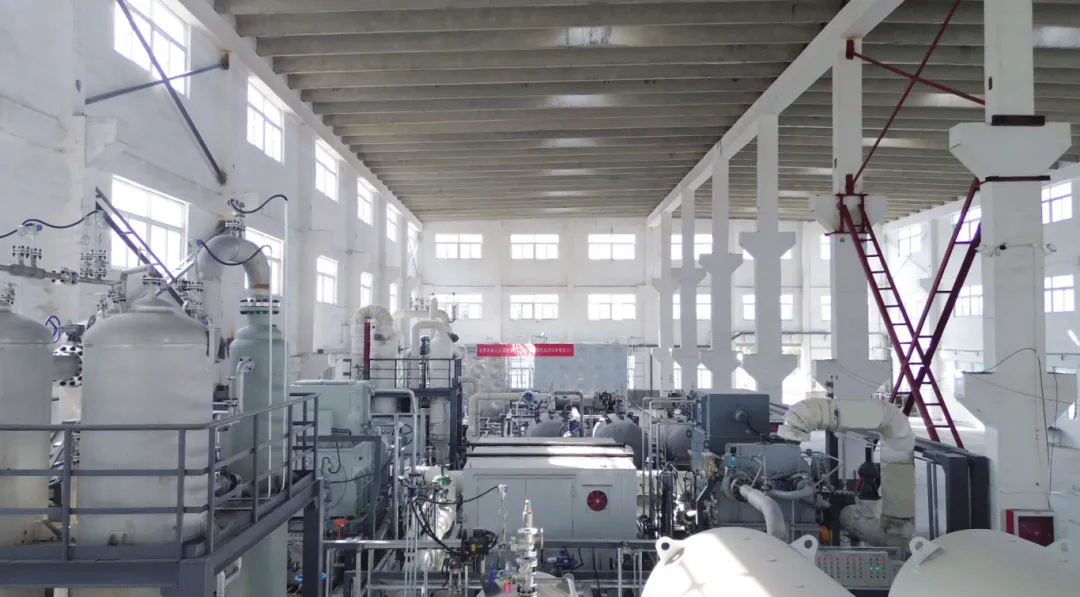
The world’s first megawatt-scale all-liquid carbon dioxide energy storage system
These technologies are also essential for grid stability, supporting peak shaving, valley filling, and emergency backup. Notable projects such as the Golmud liquid air station in China and the "Grid Stability Island" in the UK demonstrate how liquid air storage enhances grid resilience and stability. New business models like "capacity leasing" and "virtual power plants" are emerging, which optimize grid efficiency and reliability.
The warming liquid expands a thousand times as it returns to its original state of air. The massive increase in volume and pressure is sufficient to drive a turbine, and deliver electricity to the grid.
The growth of all-liquid energy storage has also driven innovation in equipment manufacturing and the chemical sector. Companies like Certain Company in China have localized high-end ion-exchange membranes, reducing costs, while European firms lead in developing advanced liquid air storage technologies. In the chemical sector, the rise of flow batteries is stimulating vanadium resource development and new materials for liquid carbon dioxide storage.
Beyond energy, all-liquid energy storage is finding applications in industries and transportation. These systems offer backup power for energy-intensive industries and support electric vehicle charging infrastructure. For example, in Europe, energy storage systems are helping optimize energy costs for industrial parks while supporting transportation electrification.
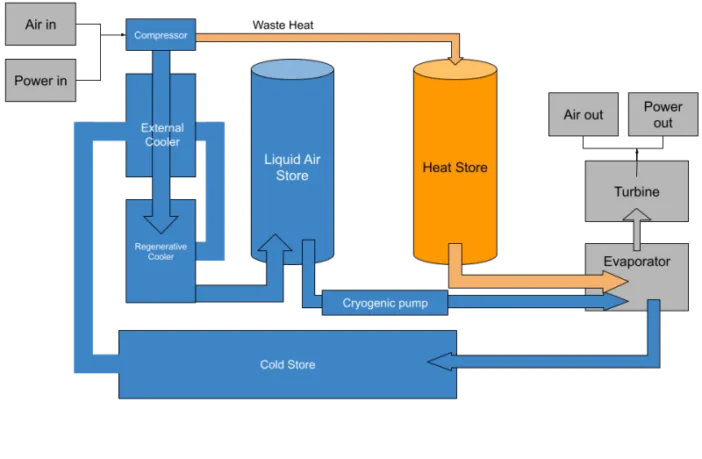
Diagram of Cryogenic Energy Storage System
However, the rise of all-liquid energy storage is intensifying competition with other technologies, such as iron-chromium and zinc-based batteries, driving innovation and cost reductions. Despite these advancements, the industry faces challenges in standardizing global safety and technical regulations. Major economies are working on establishing unified international standards.
In conclusion, all-liquid energy storage is transforming the global energy landscape, driving the integration of renewable energy, enhancing grid flexibility, and fostering industrial innovation. As technology progresses and costs decline, these systems will continue to play a pivotal role in shaping a cleaner, more sustainable energy future.

