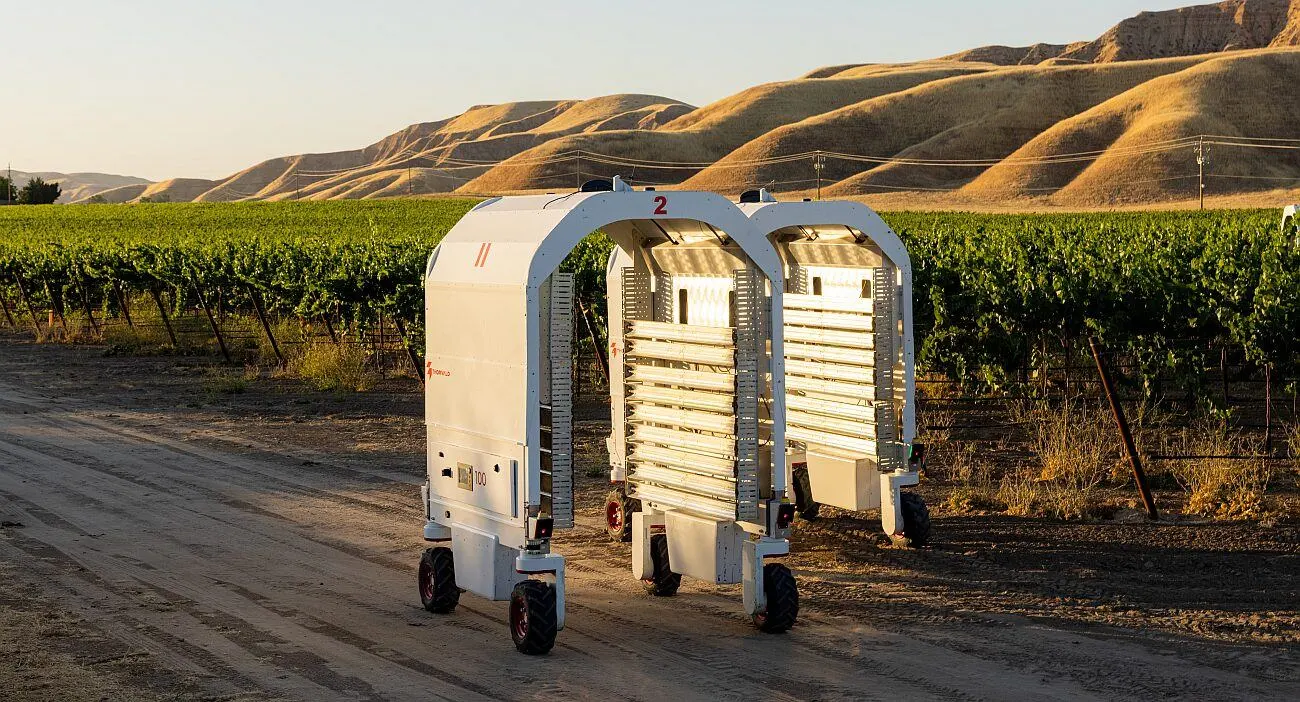
Summary:Norwegian agricultural robotics company Saga Robotics is advancing sustainable farming with autonomous UV-C robots that provide chemical-free crop protection, AI-driven monitoring, and a scalable Robots-as-a-Service model for vineyards.
A Norwegian innovation company specializing in agricultural robotics is accelerating the deployment of autonomous UV-C treatment systems in US vineyards, reflecting a broader shift toward non-chemical, data-driven crop protection. By combining robotics, UV-C light technology, and a service-based business model, this approach illustrates how precision agriculture is influencing both farming practices and the global robotics industry.
Impact on Agricultural Production
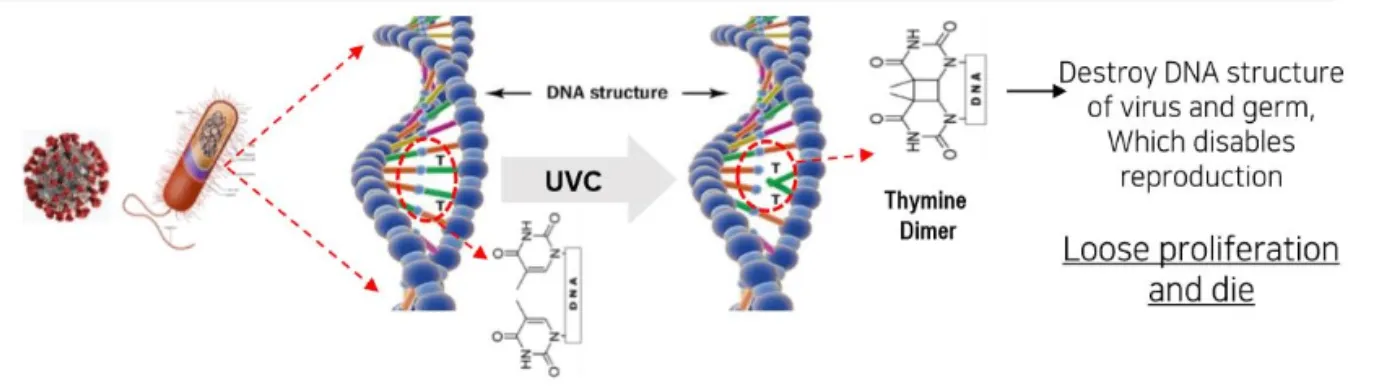
Powdery mildew remains one of the most damaging and costly diseases in viticulture, and resistance to conventional fungicides is increasingly common. UV-C treatment offers a fundamentally different mode of action by disrupting fungal DNA and cellular function, thereby inhibiting growth and reproduction. Applying UV-C light at night improves effectiveness by preventing sunlight-induced fungal repair mechanisms.
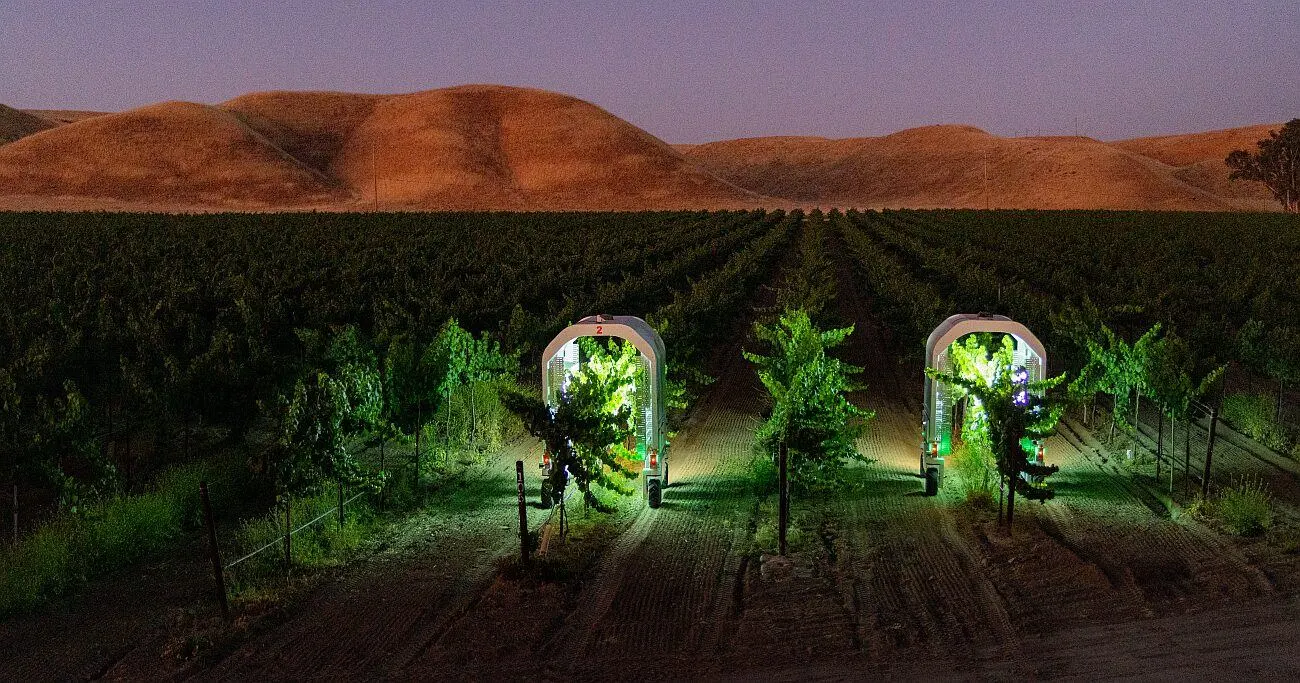
Thorvald system applies UV-C at night because sunlight—especially blue light—triggers a repair mechanism in fungi that can undo UV-C damage. Treating in darkness prevents this repair and makes the treatment more effective.
From an agricultural perspective, the impact is significant. Autonomous UV-C systems support reduced or chemical-free crop protection, aligning with organic, regenerative, and sustainability-driven farming models. They also help stabilize yields and improve crop quality while reducing dependence on manual labor and tractor-based operations, addressing labor shortages and rising operating costs in many agricultural regions.
The Robots-as-a-Service (RaaS) model further lowers adoption barriers by allowing growers to pay per treated area rather than investing in equipment upfront.
Implications for the Robotics Industry
For the robotics sector, this Norwegian-developed platform demonstrates how specialized, field-ready robots can achieve commercial traction. Instead of large, multi-row machines suited for open-field crops, the system focuses on compact, highly precise robots designed for vineyards and polytunnels, where navigation accuracy and adaptability are critical.
Beyond crop treatment, onboard cameras and sensors transform the robots into mobile data-collection platforms. Capabilities such as yield prediction, early disease detection, and vineyard monitoring create additional value for growers and diversify revenue streams for robotics providers.