


In a groundbreaking innovation, a team of researchers from Fudan University, led by Professors Peng Huisheng and Chen Peining, has successfully developed the world’s first fiber-based semiconductor chip. Published in the prestigious journal Nature on January 22, 2023, this achievement marks a significant leap forward in semiconductor technology, bridging the gap between rigid chips and flexible, fiber-based electronics. The new fiber chip opens the door to a host of advanced applications in emerging industries like smart textiles, brain-machine interfaces (BMIs), virtual reality (VR), and more.

A Revolutionary Leap from Rigid to Flexible Chips
Traditional chips are typically built on flat, rigid silicon wafers through photolithography processes. These chips are designed to handle high-density integrated circuits but come with limitations in terms of flexibility and scalability. Fudan University’s researchers have pioneered an entirely new approach by embedding circuits within flexible polymer fibers, creating a multi-layered winding structure that maximizes the internal space of the fiber, much like the spiral formation of sushi rolls. This breakthrough design allows for high-density integrated circuits in a flexible form.
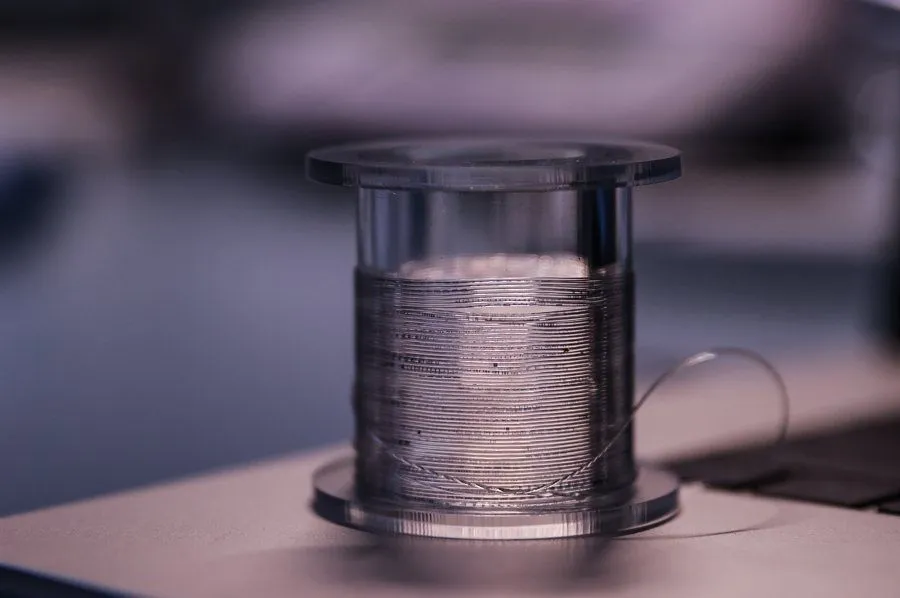
Rolls of "fiber chips"
Despite challenges presented by the soft, curved structure of fibers and the difficulty of working with polymer substrates during photolithography, the team successfully overcame these hurdles, achieving a 100,000-transistor density per centimeter.
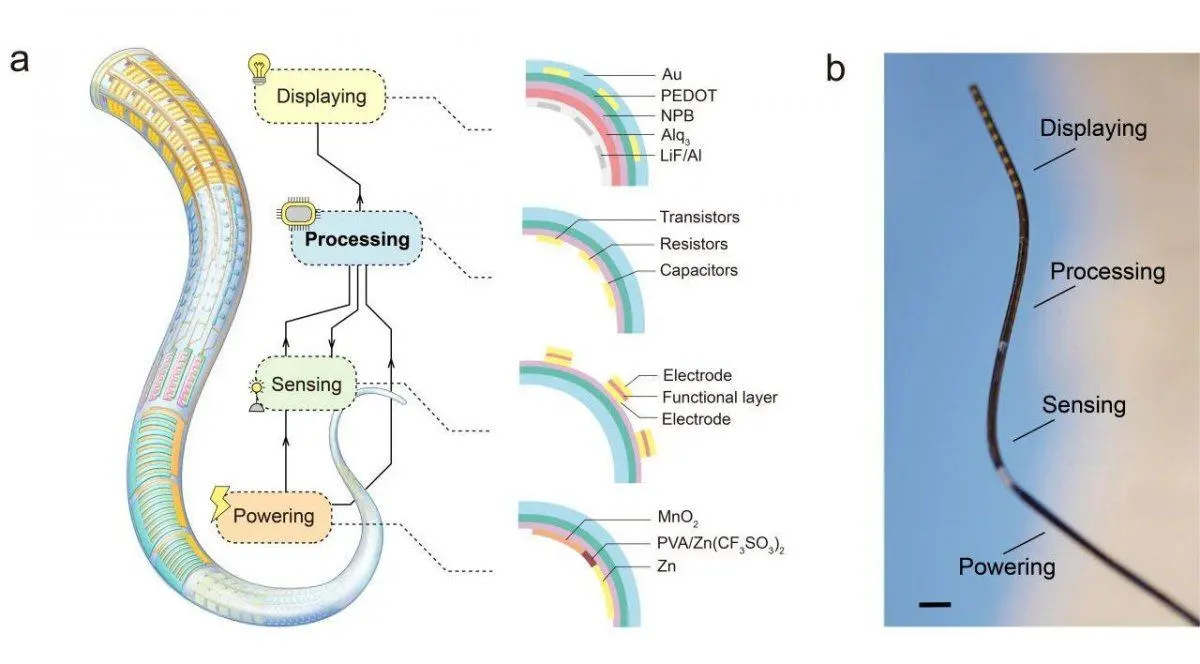
Key Features and Advantages of the Fiber-Based Chip
Unmatched Flexibility: Unlike traditional semiconductor chips that are rigid and brittle, this fiber-based chip is soft, stretchable, and highly durable. It can withstand extreme bending, stretching, and twisting without losing its functionality. This flexibility makes it ideal for applications in wearables, medical implants, and other dynamic environments.
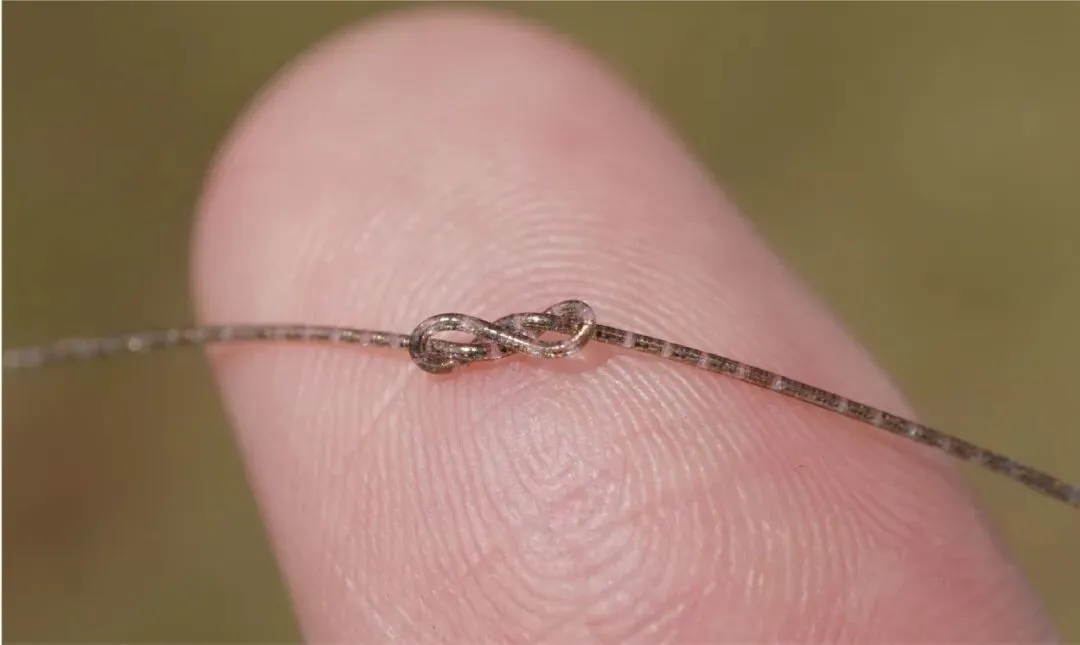
The soft "fiber chip" can even be knotted.
High Integration Density: The fiber chip achieves an impressive transistor density, allowing thousands of transistors to be integrated into just one millimeter of fiber. With the potential to scale up to one meter in length, the chip could accommodate millions of transistors, enabling processing power comparable to traditional computer processors.
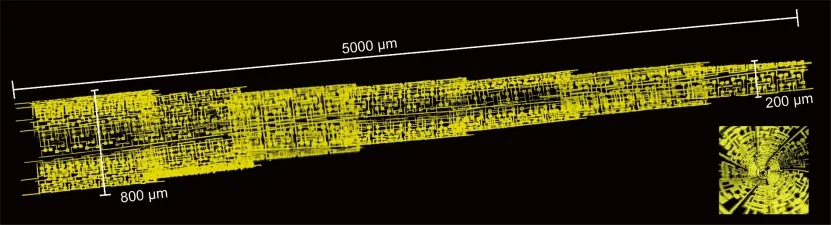
"Fiber Chip": Fluorescently labeled photograph of 3D reconstruction showing a multi-layered spiral-stacked structure
Precision Electronics Integration: The chip allows for precise integration of essential electronic components such as resistors, capacitors, diodes, and transistors. This enables the embedding of advanced functionalities like light emission, sensing, and even energy harvesting, making the fiber chip a self-contained system without the need for external devices.
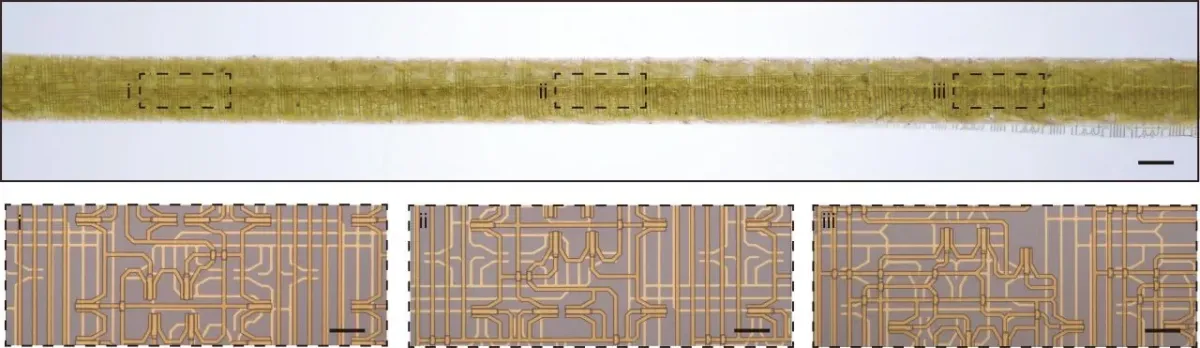
Optical photos of the "fiber chip" and its internal local circuits
Durability and Performance: Even after exposure to water, extreme temperature fluctuations, and physical stress like truck compression, the fiber chip maintains stable performance. Its robustness in harsh conditions further enhances its potential for a wide range of applications.
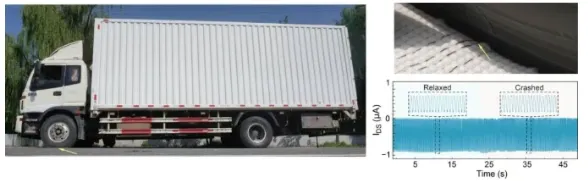
"Fiber chips" maintain stable performance when crushed by a truck
Exciting Applications Across Emerging Industries
The fiber-based chip is poised to revolutionize several sectors by providing innovative solutions for new and existing technologies:
1. Brain-Machine Interfaces (BMIs)
The fiber chip could help overcome the limitations of traditional BMI devices. Current neural probes require external processing modules, but the fiber-based chip can integrate high-density sensor-electrode arrays and signal processing circuits directly into fibers as thin as 50 micrometers. This ultra-thin, flexible design can seamlessly interface with brain tissue, offering a bio-compatible, comfortable, and more efficient solution for brain research and treating neurological diseases.
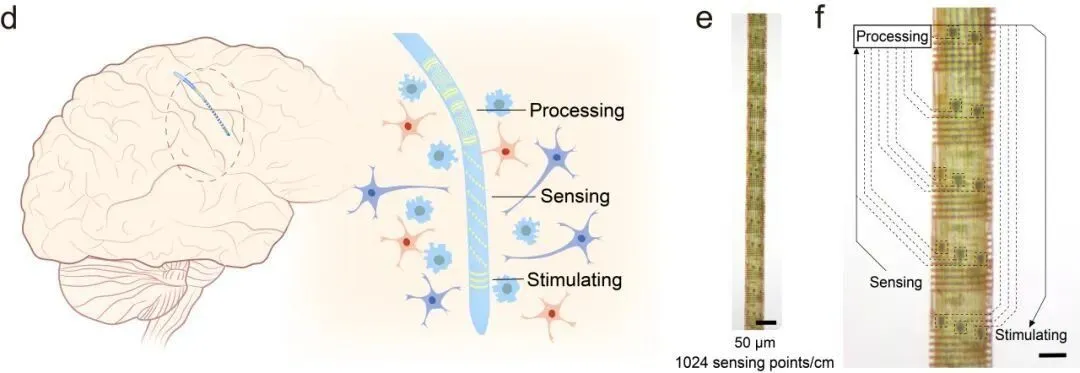
Schematic diagram of applications in the field of brain-computer interfaces and optical photographs of physical fiber systems
2. Smart Textiles
The fiber chip has the potential to turn ordinary fabrics into interactive, responsive textiles. With its ability to integrate high-density pixel arrays, a single fiber could display real-time data, such as health metrics or navigation information, directly on a shirt or sleeve. This functionality could eliminate the need for external devices like smartphones, creating garments that provide live feedback for a variety of applications, from fitness tracking to augmented reality (AR).
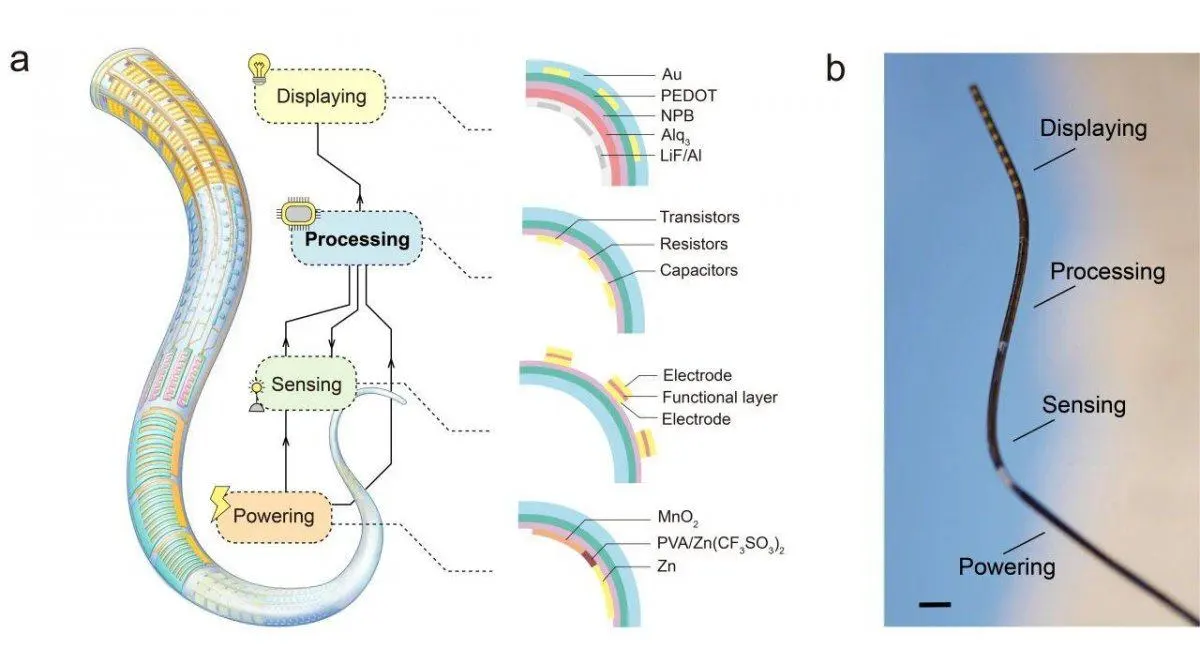
Schematic diagram and physical photo of realizing multi-functional integration on a single fiber
Realizing the information interaction function of touch display on a single fiber
3. Virtual Reality (VR)
In the field of virtual reality, the fiber chip could significantly enhance user experience by enabling the development of smart tactile gloves. Unlike traditional rigid sensors, fiber-based sensors can be woven into flexible, breathable fabrics that can mimic the sensation of touch. This technology could improve VR experiences such as remote surgery and virtual training, where real-time haptic feedback and precise force simulation are critical.
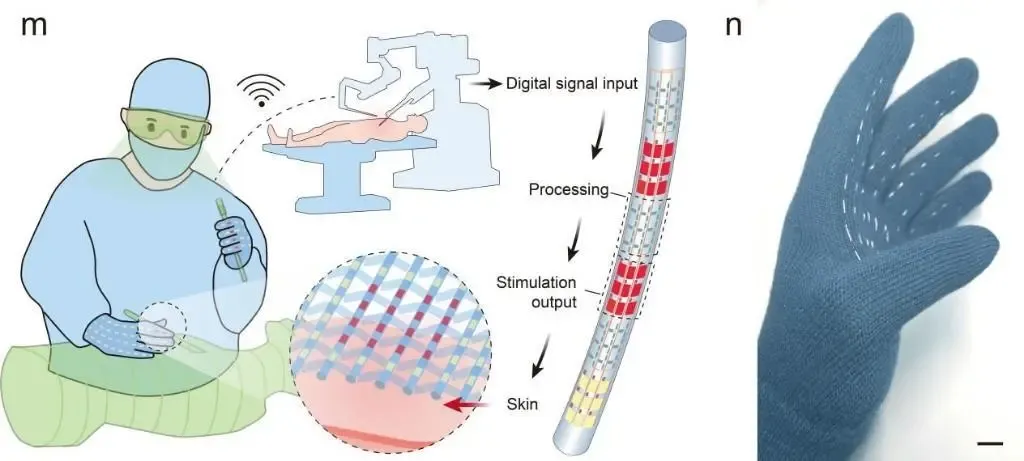
Schematic diagram and physical diagram of the application of 'fiber chip' in the field of virtual reality
Scalable Production and Future Growth
The fiber-based chip is compatible with existing photolithography processes used in the semiconductor industry, providing a clear path for scaling up production. The research team has already developed prototype devices and established standardized manufacturing processes for laboratory-scale production, setting the stage for widespread adoption of the technology.
Looking ahead, the team plans to strengthen collaboration across disciplines and industries to improve materials, manufacturing techniques, and integration density. This effort will be essential in bringing the fiber chip to the commercial market, with the potential to transform a variety of sectors ranging from healthcare to entertainment.
Professor Chen Peining of Fudan University remarked, “In the long run, we envision fiber-based electronics becoming as ubiquitous as smartphones and computers, enabling seamless information exchange in flexible forms.”
The Future of Fiber-Based Electronics
The introduction of the fiber-based chip marks a significant milestone in the evolution of flexible electronics. With its ability to combine high-density computing with the versatility of fiber materials, this technology is set to play a pivotal role in the development of next-generation wearables, medical devices, and smart textiles. As the technology continues to evolve, it is expected to drive innovations in fields such as wearable healthcare devices, augmented reality, and advanced human-computer interaction.
With its potential for widespread applications and high scalability, the fiber-based chip is likely to be a cornerstone of the next wave of electronics innovation.

