


Recent advancements in solar cell technology across Europe are setting new global standards for efficiency and commercialization, particularly in tandem solar cells, perovskite technologies, and space-grade photovoltaic systems. Notable contributions from the Fraunhofer Institute for Solar Energy Systems (ISE), research teams in the UK and Switzerland, and the European Space Agency (ESA) signal the emergence of next-generation photovoltaic solutions that promise higher efficiency, stability, and broader applications for solar energy.
Fraunhofer ISE's Tandem Solar Cell Records
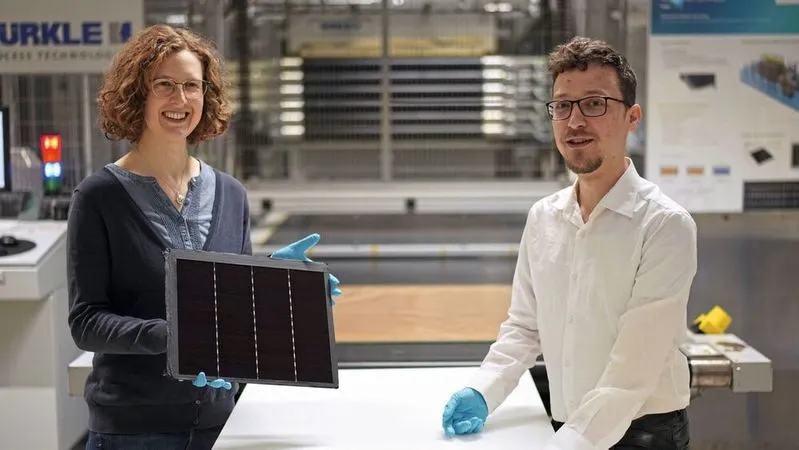
In February 2026, Fraunhofer ISE achieved two significant milestones in tandem solar cells:
| III-V Germanium Tandem Solar Cells (34.2% Efficiency) | III-V Silicon Tandem Solar Cells (31.3% Efficiency) |
A record 34.2% efficiency was reached using triple-junction III-V germanium cells optimized for the terrestrial solar spectrum, enhanced by antireflective nanostructures. This surpasses the theoretical limit of silicon-based solar cells (33.2%) due to the broader spectrum captured by the materials. | Combining III-V materials with silicon, this module achieved 31.3% efficiency, offering a balance of high performance and lower cost, making it suitable for commercial applications like electric vehicles and mobile electronics. |
Advancements in Perovskite Solar Cells
Parallel to the developments in tandem cells, perovskite solar cells have seen significant improvements in both efficiency and stability:
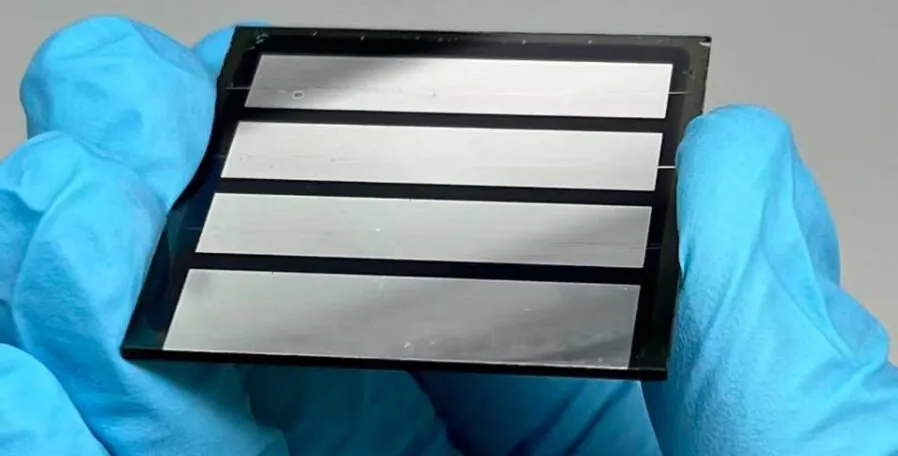
Perovskite solar cell; Photo: Xiaoming Chang/University of Manchester
University of Manchester’s Perovskite Solar Cells (25.4% Efficiency)
The University of Manchester achieved 25.4% efficiency, along with over 95% of initial efficiency retained after 1,000 hours of accelerated aging at 85°C. This breakthrough addresses long-standing stability issues and positions perovskites as a viable competitor to silicon-based modules.Empa's Perovskite Commercialization Efforts
In Switzerland, Empa is driving the commercialization of perovskite solar cells through scalable, low-cost printing processes. This initiative aims to make perovskite modules more affordable for mass-market applications.
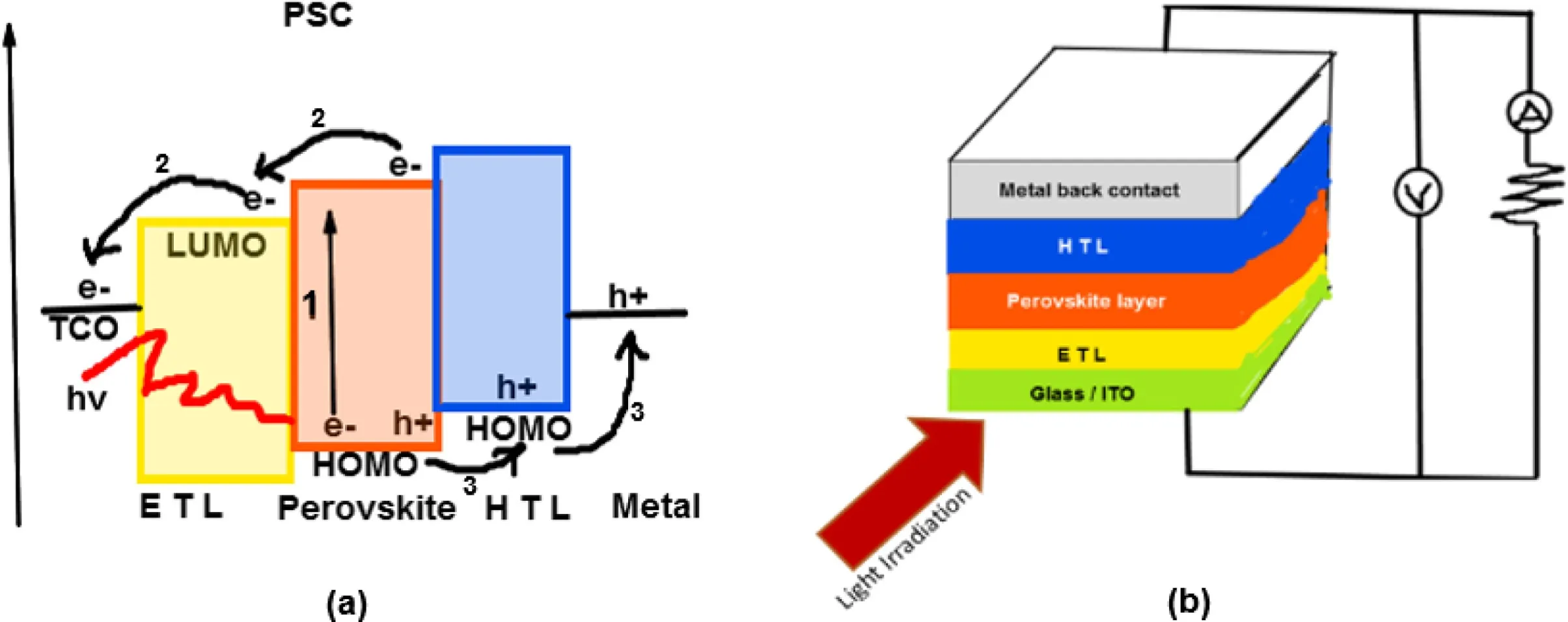
(a) Schematic working principle of PSC and (b) Circuit connection of the perovskite solar cell.
Space-Grade Solar Cells for Aerospace
The European Space Agency (ESA) has also made significant strides in developing space-grade solar cells:
ESA’s Vertical Multi-Junction Solar Cells (30.9% Efficiency)
Designed for extreme space conditions, ESA’s vertical multi-junction cells achieve an initial 30.9% efficiency, with a lifetime efficiency of 27.5%. These cells are crucial for European satellites and deep space missions.

Multi-junction solar cells for satellites.
High-Efficiency Silicon Solar Cells
Although tandem and perovskite technologies are gaining traction, traditional silicon-based solar cells continue to evolve:
Silicon Cell Optimizations (26%+ Efficiency)
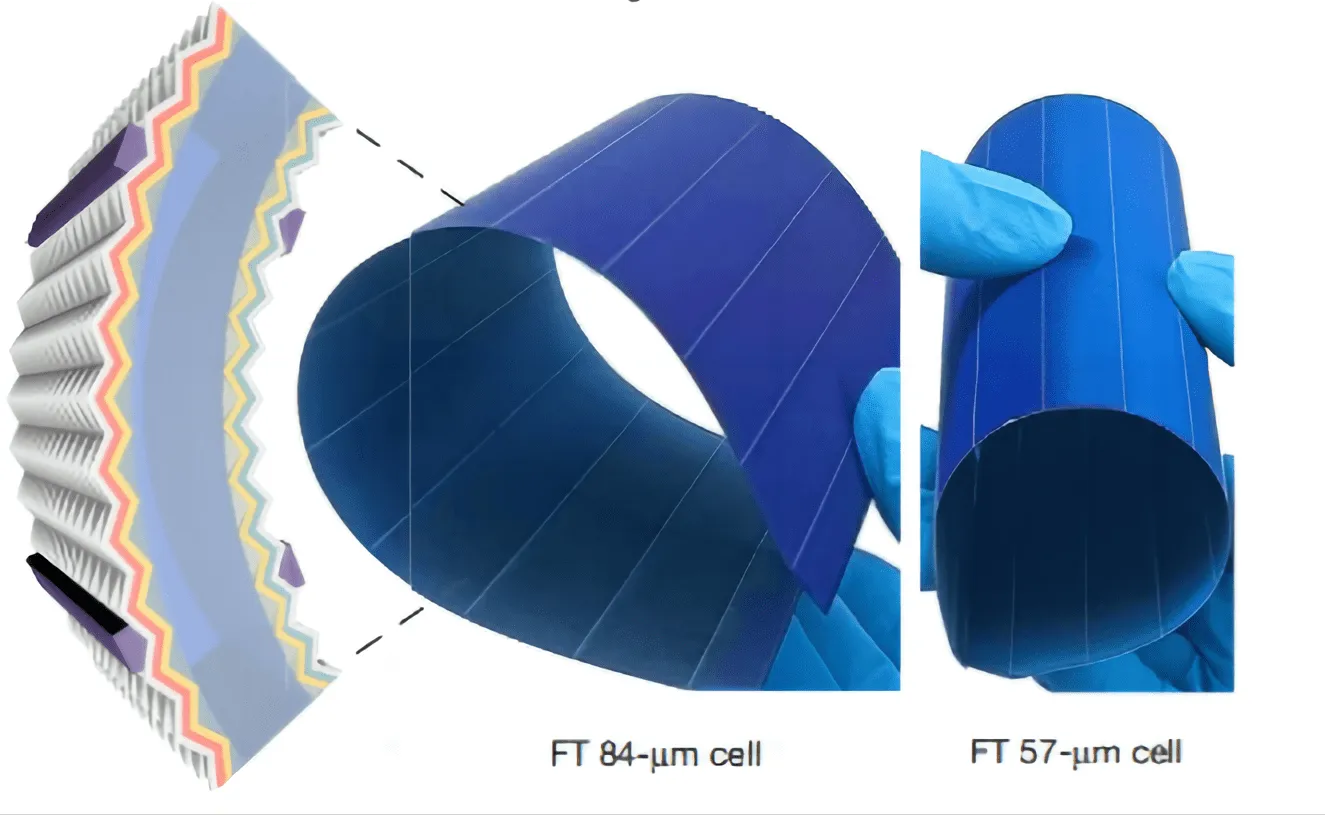
European researchers are optimizing silicon cells to exceed 26% efficiency through innovations like bifacial modules, silver-free designs, and thinner wafers, all aimed at reducing the levelized cost of electricity (LCOE).Silver-Free and Multi-Junction Designs
New approaches like silver-free technologies and multi-junction designs could enhance efficiency while lowering production costs, making silicon a more cost-effective solution.
Market Implications and Future Outlook
While new tandem and perovskite cells are not yet commercially viable due to high manufacturing costs, they have the potential for niche markets such as electric vehicles, aerospace, and mobile electronics. In the medium term, perovskite tandem cells are expected to play a key role in lowering the cost of high-efficiency solar cells, making them more accessible for widespread use.
 |  |  |
The continued development of tandem and perovskite technologies suggests that the next generation of solar energy systems is on the horizon. As costs decrease and production scales up, these innovations will shape the future of solar energy, offering new opportunities for a cleaner and more sustainable global energy system.

