


MIT researchers have unveiled a groundbreaking 3D-printing platform that can produce fully functional electric machines, like motors, in a single process. This innovation, introduced in February 2026, promises to revolutionize manufacturing by enabling on-site production of replacement motors, bypassing traditional supply chains and reducing downtime.
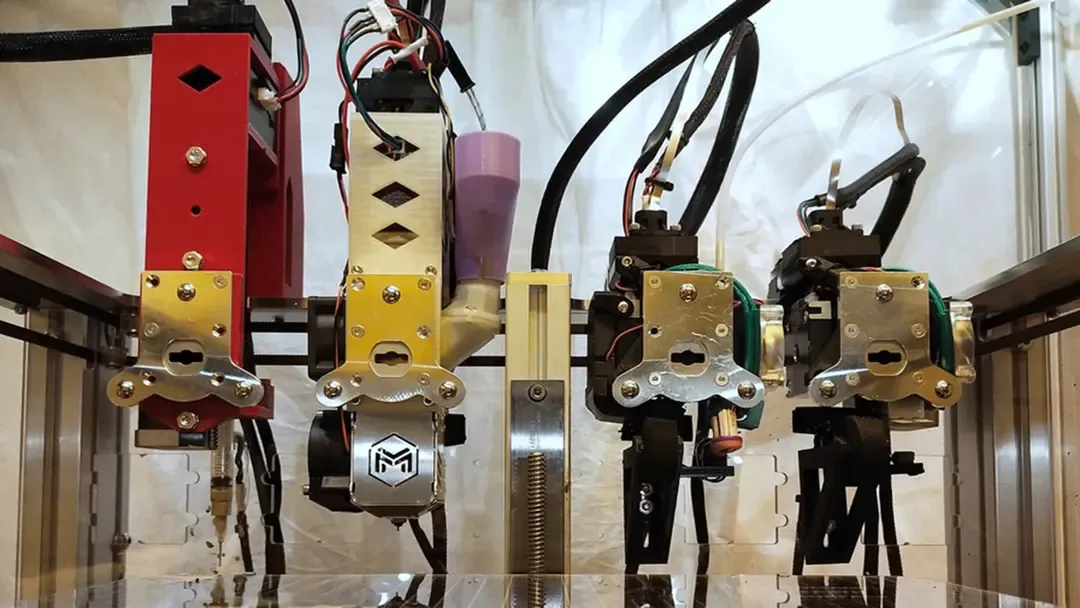
MIT’s 3D-printing platform could rapidly produce custom electronic components for robots, vehicles, and medical devices..
Core Technology: Multi-Material Extrusion for Complex Devices
The key to this breakthrough is MIT’s multi-material extrusion system, which can print devices using various materials simultaneously, including conductive, magnetic, and structural substances. This system involves four separate extruders to process different feedstocks, with some materials being extruded as filaments and others, like conductive inks, applied through pressure-driven systems.
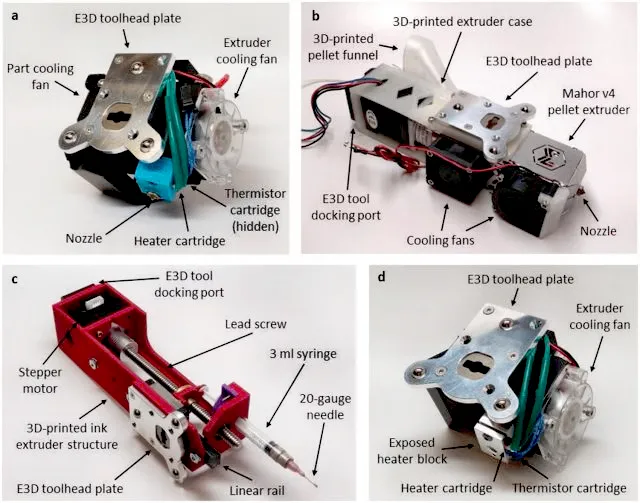
Tools integrated in the multi-modal, multi-material extrusion system developed in this work: E3DHemera filament extruder (a), Mahor v4 pellet extruder with custom 3D-printed parts for E3D ToolChangercompatibility (b), custom-built ink extruder (c), and heater for ink curing (d).
Precision Control: Ensuring Performance in Every Layer
A vital feature of the platform is its precision control, which uses sensors and a new control framework to align the extruders with high accuracy (within 5 microns) during the printing process. This ensures the performance of electric machines is not compromised by small misalignments.
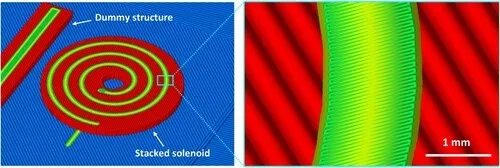 | Detail of the 3D-printing path followed by the extruders during silver ink printing. Each feature isidentified by a colour: conductive path (green), insulation layers (red), support (blue), curing trajectory (yellow) |
Printing a Linear Motor: A Proof of Concept
In a recent demonstration, MIT printed a working linear motor in just three hours using five materials: a high-temperature polymer for insulation, silver-based ink for electrical coils, composite materials for magnetic cores, neodymium-iron-boron for permanent magnets, and flexible materials for planar springs. The motor required minimal post-processing, with material costs estimated at $0.50, significantly cheaper than traditional motor manufacturing.
Performance: Exceeding Expectations
The printed motor outperformed traditional models, generating more actuation and demonstrating superior magnetic field strength and displacement. The motor’s maximum displacement reached 318 μm, with a resonance frequency of 41.6 Hz.
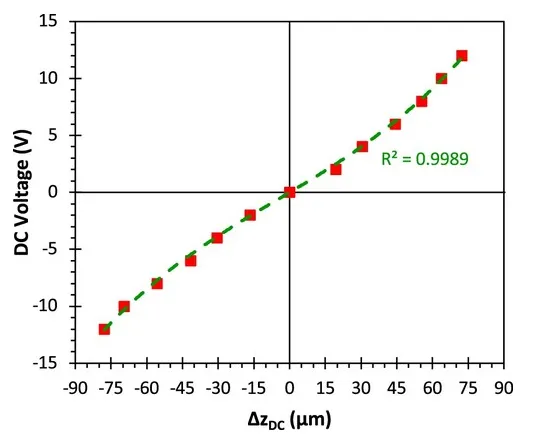
Applied DC bias voltage Vs. induced vertical displacement of the magnets placed at the centre of thefully 3D-printed linear motor. The dotted line is a cubic fit of the data.
Vision: Rethinking Electronics and Manufacturing
This platform has the potential to revolutionize manufacturing by enabling on-site production of electric machines, reducing reliance on global supply chains. MIT's team aims to integrate the magnetization process into the printing workflow and expand the platform’s capabilities to include rotary motors and more complex devices.
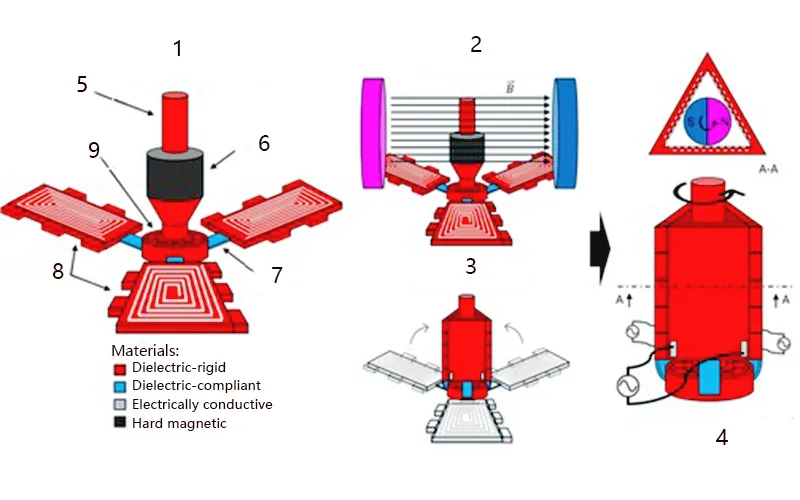
1.Single-step 3D printing 2. Magnetization of hard magnet 3.Guided folding 4. Monolithically 3D-printed electric motor 5. Shaft 6. Hard magnet 7.Compliant joints 8. Multi-layer coils 9.Bearing |
Industry Impact: Reducing Downtime and Enabling On-Site Production
The platform could significantly reduce downtime in industries dependent on complex electromechanical systems. By printing motors and components on-demand, manufacturers could cut downtime by up to 80%. Additionally, this technology enables rapid prototyping and custom production, benefiting industries like robotics, aerospace, and medical devices.

