


A recent demonstration showcases a brain model based on a real biological connectome controlling a physics-based body in a closed loop. This highlights a growing area of neuroscience that is moving from static brain maps to digital systems where the brain, body, and environment interact.
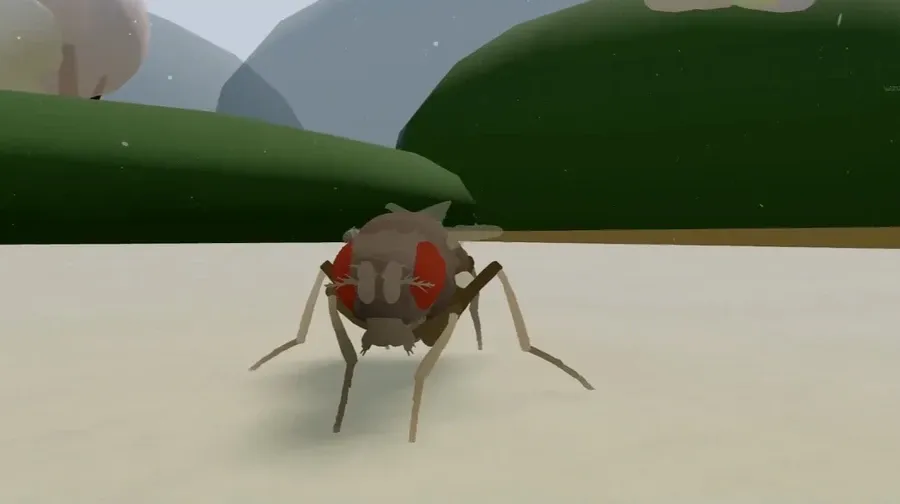
At the center of the work is the fruit fly, Drosophila melanogaster, a small yet complex organism used widely in neuroscience. Despite having a much smaller brain than mammals, the fruit fly's brain supports behaviors like navigation, feeding, and grooming, making it a practical starting point for simulating biological brain systems.
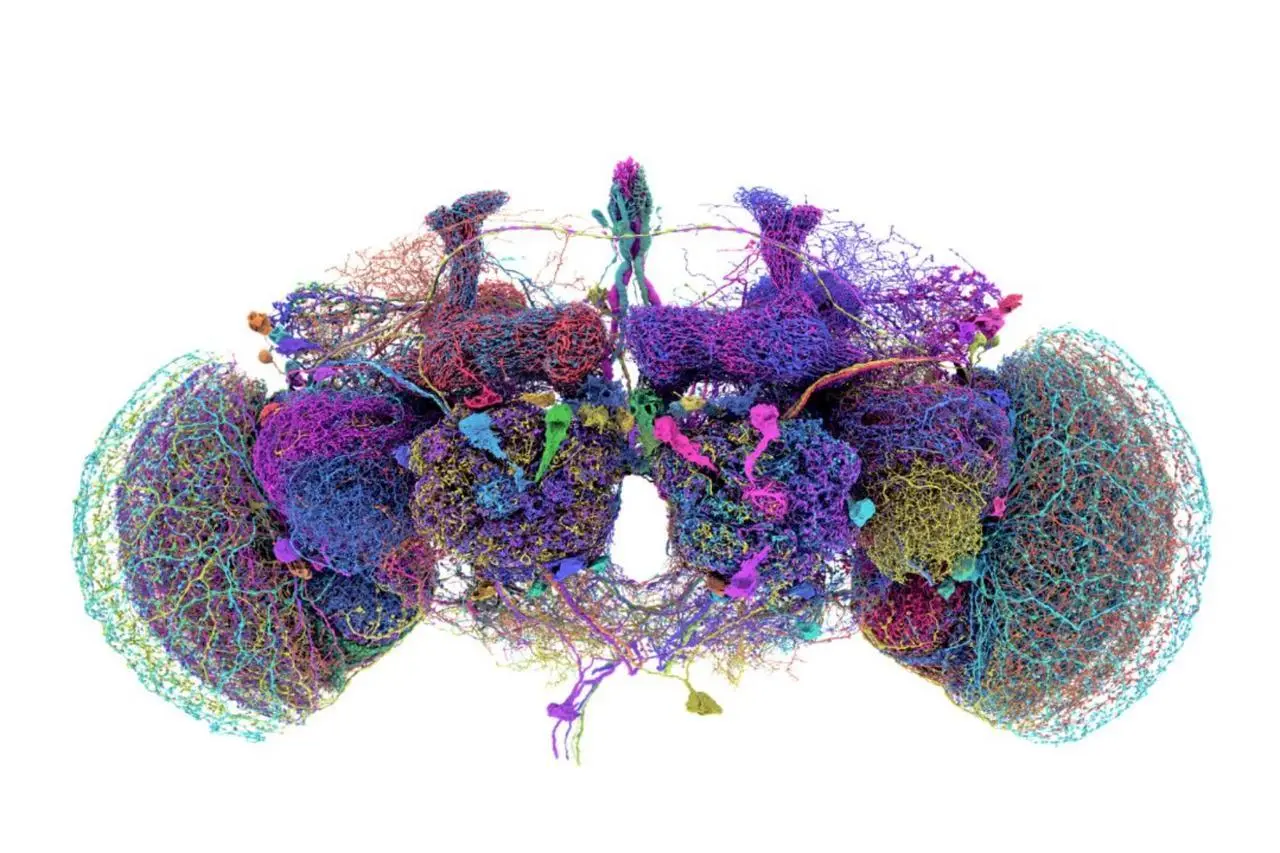
50 largest neurons of the fly brain connectome by Tyler Sloan and Amy Sterling (Image via flywire.ai)
This effort builds on a major milestone from 2024, when researchers released a computational model of the adult fruit fly brain, which includes over 125,000 neurons and 50 million synaptic connections. The model was based on the FlyWire connectome and used machine learning to predict neurotransmitter identities. Philip Shiu, a senior scientist, led this research.
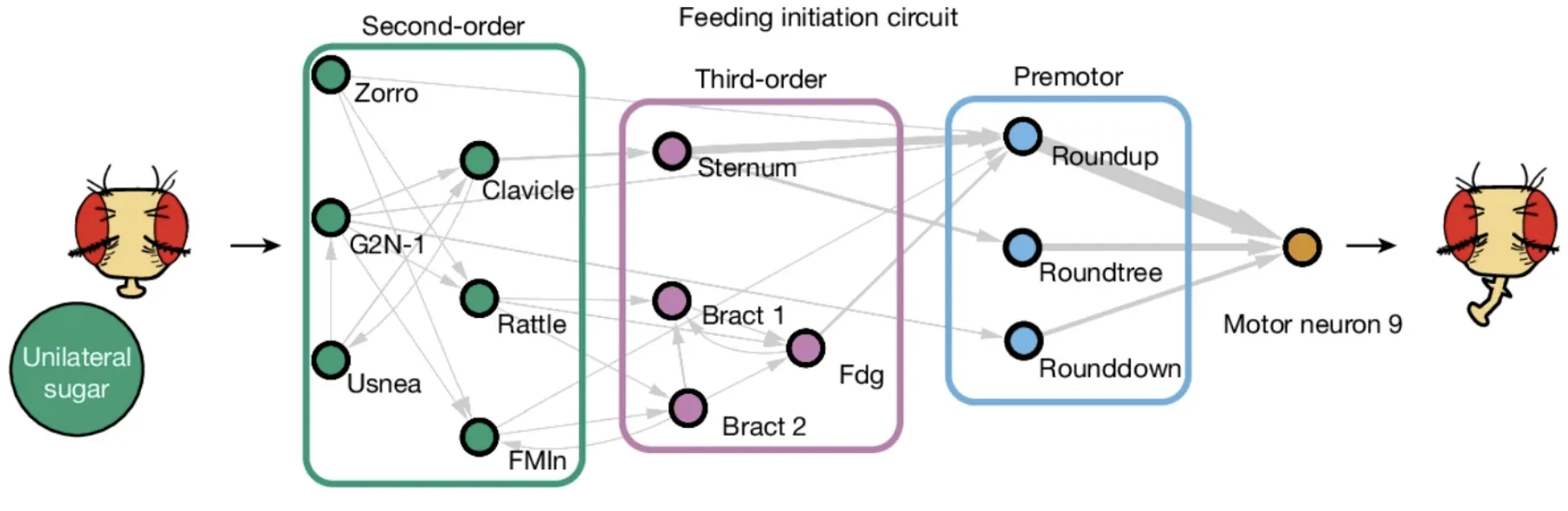
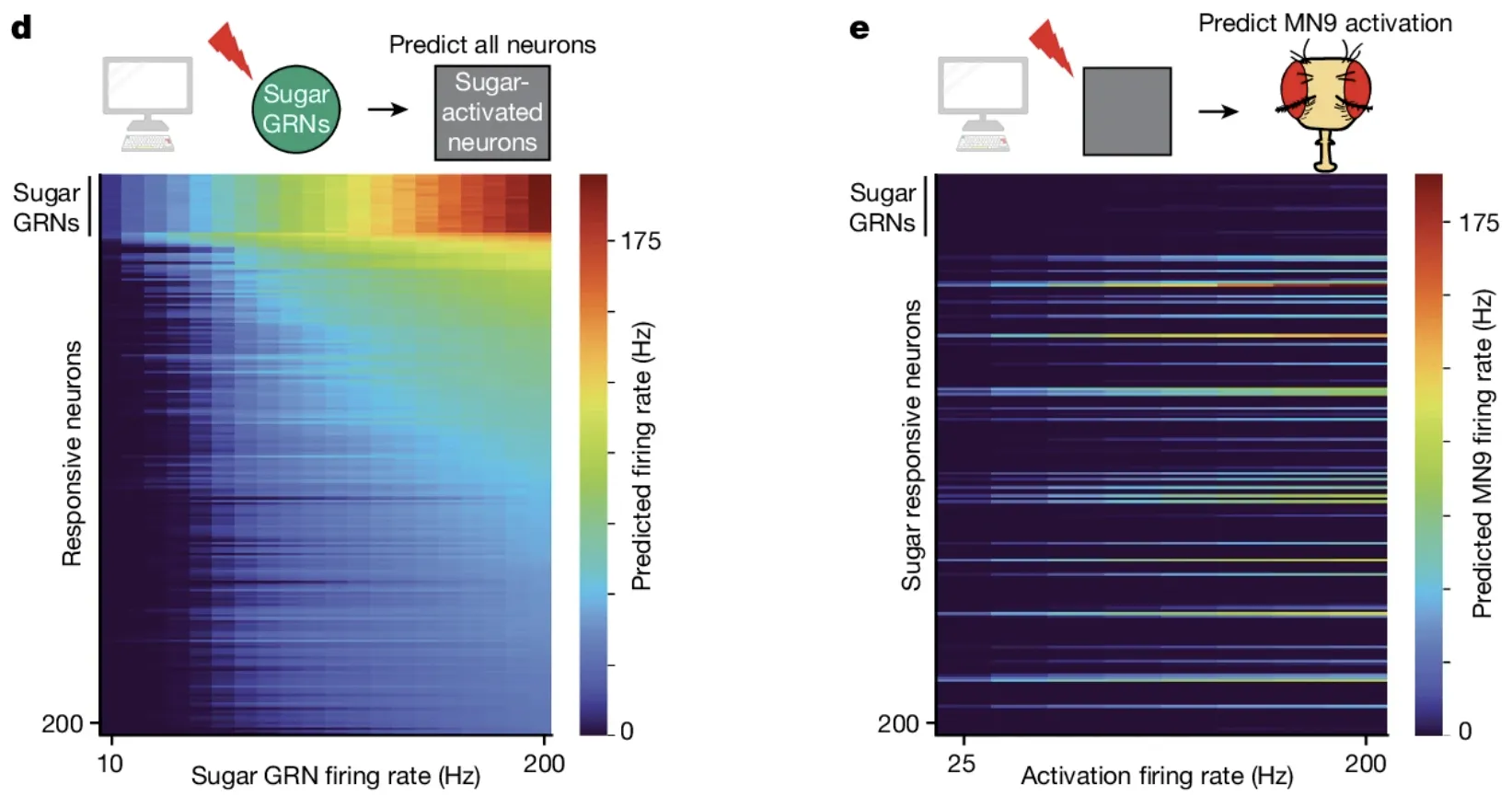
Previously, this model could simulate neural activity and predict motor behavior, but it lacked a connection to a physical body. The new demonstration addresses this by integrating the brain model with a simulated fly body using the MuJoCo physics engine, commonly used in robotics.
The virtual fly demonstrates behaviors like walking, grooming, and feeding. These actions are not simple animations but arise from the brain model’s own neural circuits, where sensory input travels through the connectome and motor output returns to the body.
This demonstration stands out by combining detailed neural mapping with an active body, unlike earlier efforts that either mapped nervous systems without linking them to a physical body or created simulated animals controlled by reinforcement learning or engineered systems.
While this project does not create a conscious digital organism, it is an important step in understanding how biological brain wiring generates behavior. The fruit fly serves as a manageable starting point before moving on to more complex animals, such as mice or potentially humans in the future.
| Target Organism | Number of Neurons | Model Scale Ratio (Approx.) | Simulation Status |
|---|---|---|---|
| Fruit Fly | 125,000 | 413 times | Multiple behaviors have been simulated |
| Mouse | 70 million | 560 times (compared to fruit fly) | Data collection and basic stage construction |
| Human | 860 billion | 1200 times (compared to mouse) | Fully realized model |

