


Abstract
Microsoft, through its Project Silica, has achieved long-term stable data storage on ordinary borosilicate glass, significantly reducing material costs and improving practical feasibility. Experimental results demonstrate high-density data writing with a projected storage lifetime exceeding 10,000 years, making the technology suitable for ultra-long-term archival applications such as cultural heritage and records preservation.
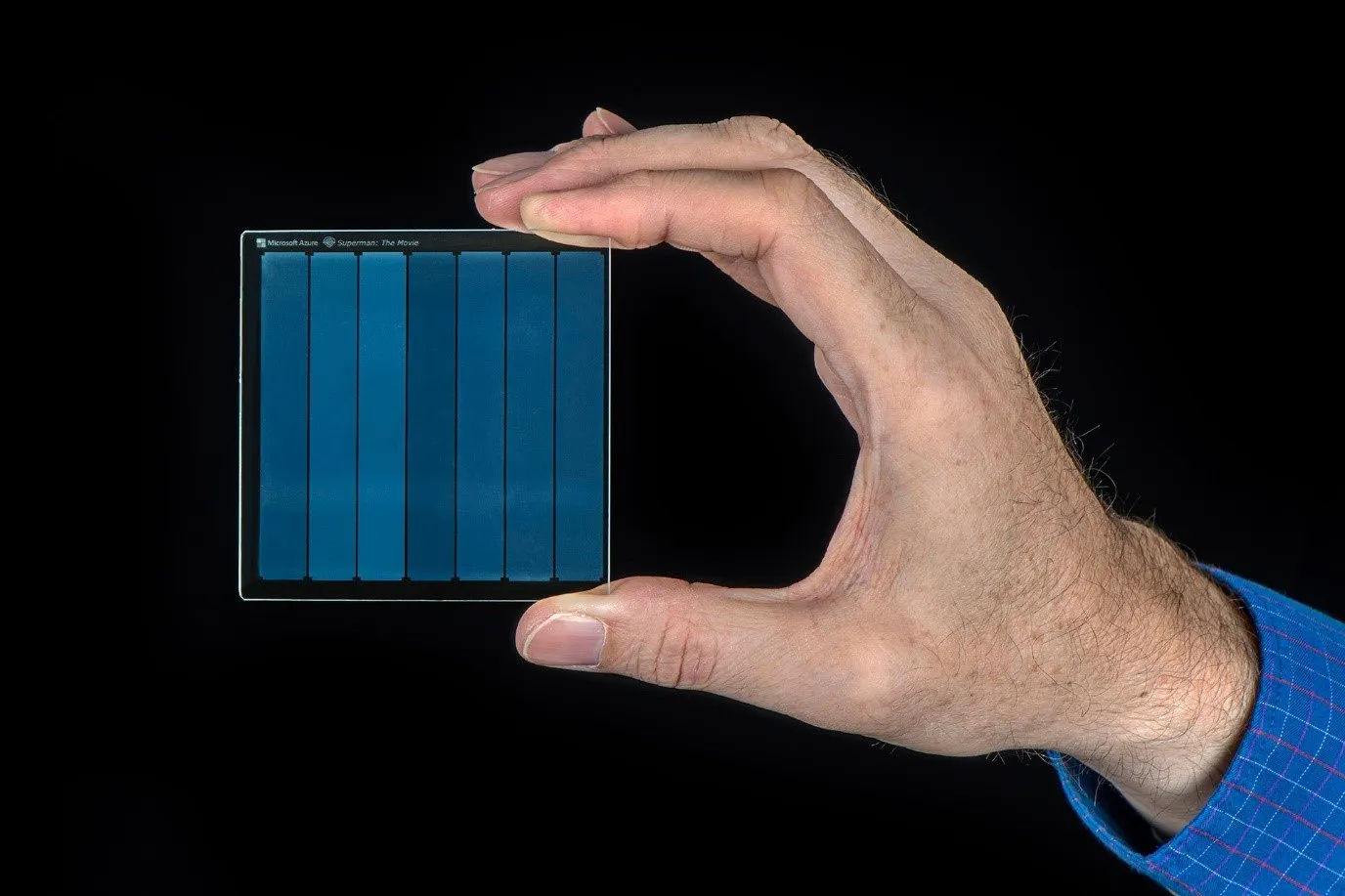
A written piece of glass (with a copy of Microsoft Flight Simulator map data on it)
According to research published in Nature, Microsoft has achieved a significant breakthrough in glass-based data storage technology, successfully demonstrating for the first time the long-term stable storage of data on ordinary borosilicate glass. This advancement makes it feasible to use low-cost, readily available everyday glass materials—such as heat-resistant cookware—as ultra-long-term data storage media.
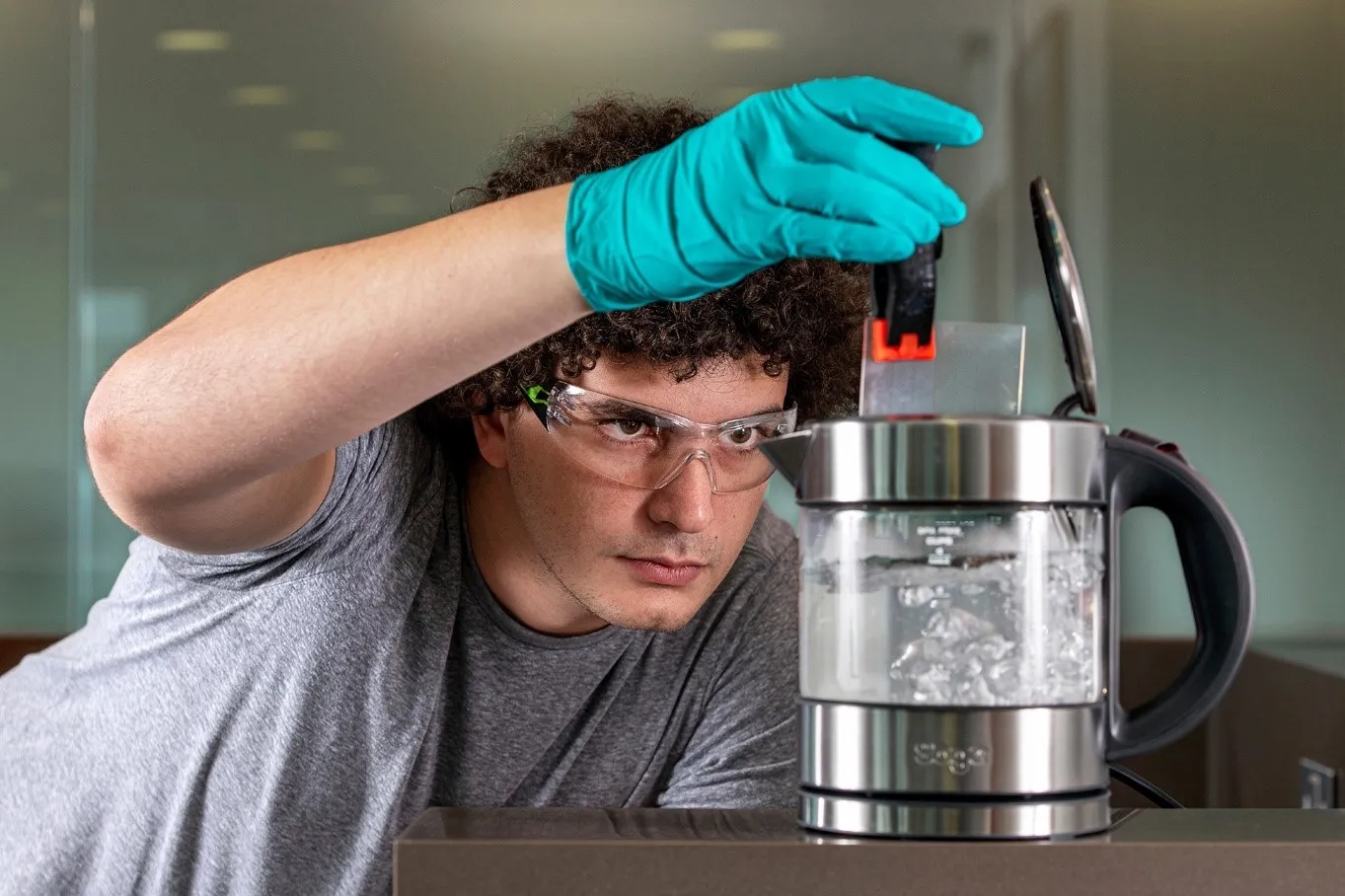
Microsoft researchers performed durability tests on quartz glass by immersing it in boiling water.
The research builds upon Microsoft’s “Project Silica,” launched in 2019. Previously, the team was only able to store data on expensive, specially manufactured fused silica glass. This latest breakthrough extends the storage medium to widely used borosilicate glass, substantially reducing both material costs and accessibility barriers. In addition, the team has improved data encoding and retrieval methods, enhancing the overall practicality of the technology.
In the experiment, researchers wrote 4.8 terabytes of data—roughly equivalent to 200 4K ultra-high-definition films—onto a borosilicate glass plate measuring 120 mm in length and 2 mm in width. The data was written in 301 layers at a speed of 3.13 MB/s. Although this write speed remains significantly slower than that of conventional hard disk drives or solid-state drives, the key advantage lies in the extraordinary durability of the stored data. Accelerated aging tests indicate that data stored in glass could remain intact for over 10,000 years, compared to the typical lifespan of around a decade for current hard drives.
Richard Black, co-author of the paper and a partner research manager at Microsoft, noted that this achievement addresses a critical barrier to commercialization—namely, the cost and availability of storage media—while also demonstrating parallel high-speed writing and long-term stability.
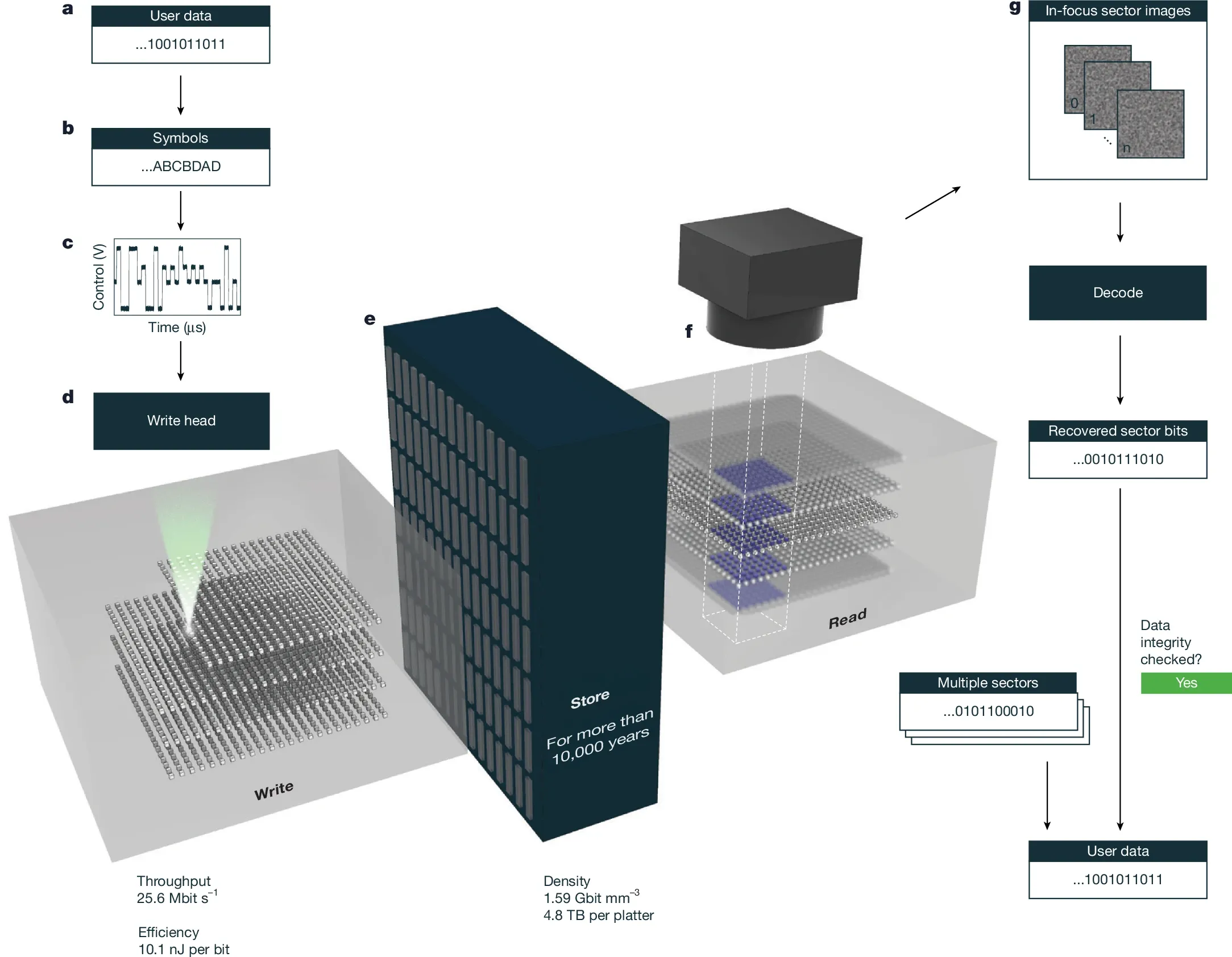
The system of Silica:a, Data are received from a user. These are prepared as a stream of bits, for example, using compression, encryption and FEC. b, The bits are encoded as symbols. One symbol corresponds to a modulator configuration. c,d, The glass sample is loaded into a write subsystem and the modulator settings are changed in time as the laser beam is moved relative to the glass. The symbols are written layer by layer, from the bottom up, to fill the full thickness of the glass. e, The data can be stored securely in the glass for more than 10,000 years. f, To read, we use an automated microscope with a camera to capture images of each 2D layer of voxels. g, Images are passed to a decoder to recover user data.
The primary application of glass storage technology is not in everyday computing devices, but in archival scenarios requiring permanent or ultra-long-term data preservation, such as cultural heritage, scientific records, and legal documents. Microsoft has previously proposed using similar technology to permanently archive music in facilities such as the Global Music Vault in Norway.
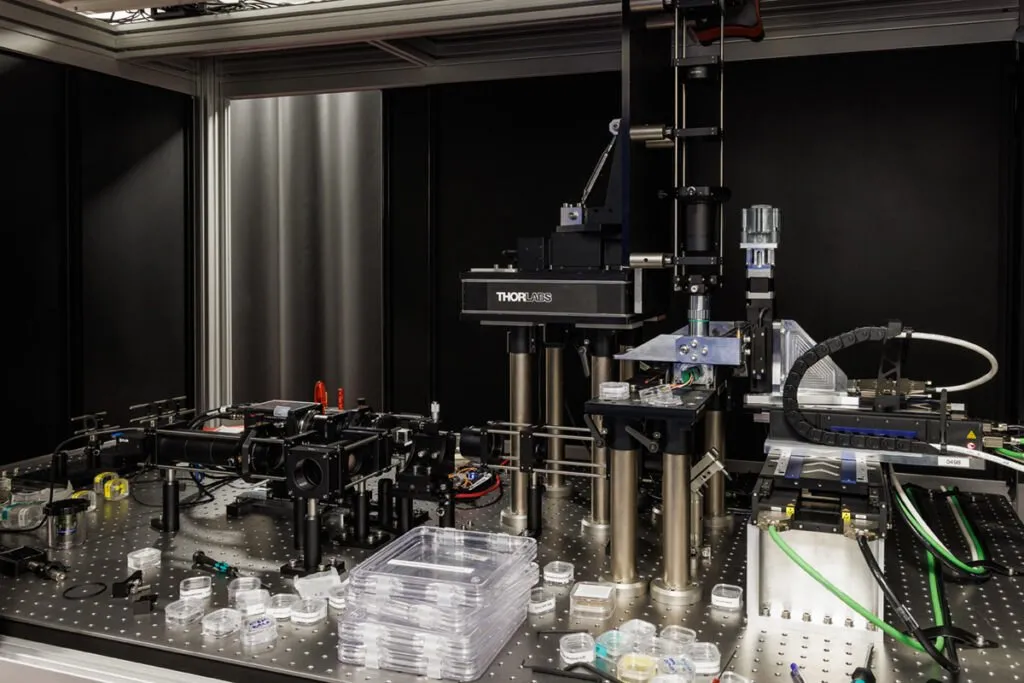
A research-grade Reader for retrieving data from glass.
Meanwhile, other research institutions have also made progress in alternative long-term storage technologies. For example, DNA-based data storage systems have been developed that can preserve vast amounts of information for tens of thousands of years under specific conditions, highlighting the potential of biological media for ultra-high-density storage. Together, these advancements point toward a common goal: developing reliable storage solutions capable of preserving humanity’s growing digital heritage across millennia.
References
Nature. (Year). Long-term data storage on borosilicate glass enabled by advanced optical encoding.
Microsoft Research. (2019–present). Project Silica: Glass-based data storage technology.
Zhirnov, V., et al. (2016). Nucleic acid memory. Nature Materials, 15(4), 366–370.
Organick, L., et al. (2018). Random access in large-scale DNA data storage. Nature Biotechnology, 36, 242–248.

