


Summary :The emergence of high-power-density, rare-earth-free motors is revolutionizing the electric vehicle, renewable energy, and industrial sectors. Combining innovative magnetic materials, optimized design, and advanced control algorithms, these motors promise lower costs, greater efficiency, and reduced reliance on scarce resources, potentially reshaping global supply chains.
The development of high-power-density, rare-earth-free motors (NRPMs) marks a significant technological breakthrough in the electric motor industry. Unlike traditional permanent magnet motors that rely heavily on rare-earth materials like neodymium and dysprosium, NRPMs leverage advanced magnetic materials, optimized rotor and stator designs, and innovative cooling strategies to achieve similar or higher efficiency. This innovation addresses both cost and resource supply challenges, positioning NRPMs as a potential game-changer for multiple industries.
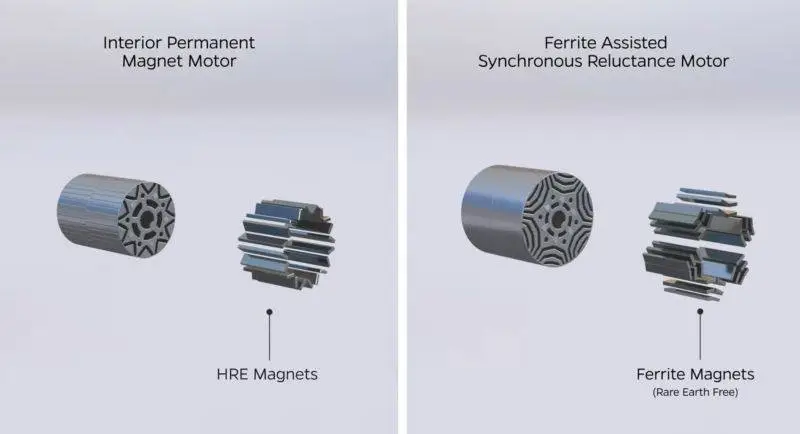
One of the key technical innovations in NRPMs lies in magnetic circuit optimization. By redesigning the flux paths and carefully arranging non-rare-earth magnets such as ferrite or cobalt-based composites, engineers can achieve high torque and power density. Additional advancements in high-speed rotor design and thermal management allow these motors to operate efficiently under demanding conditions without compromising longevity, making them suitable for a wide range of applications.
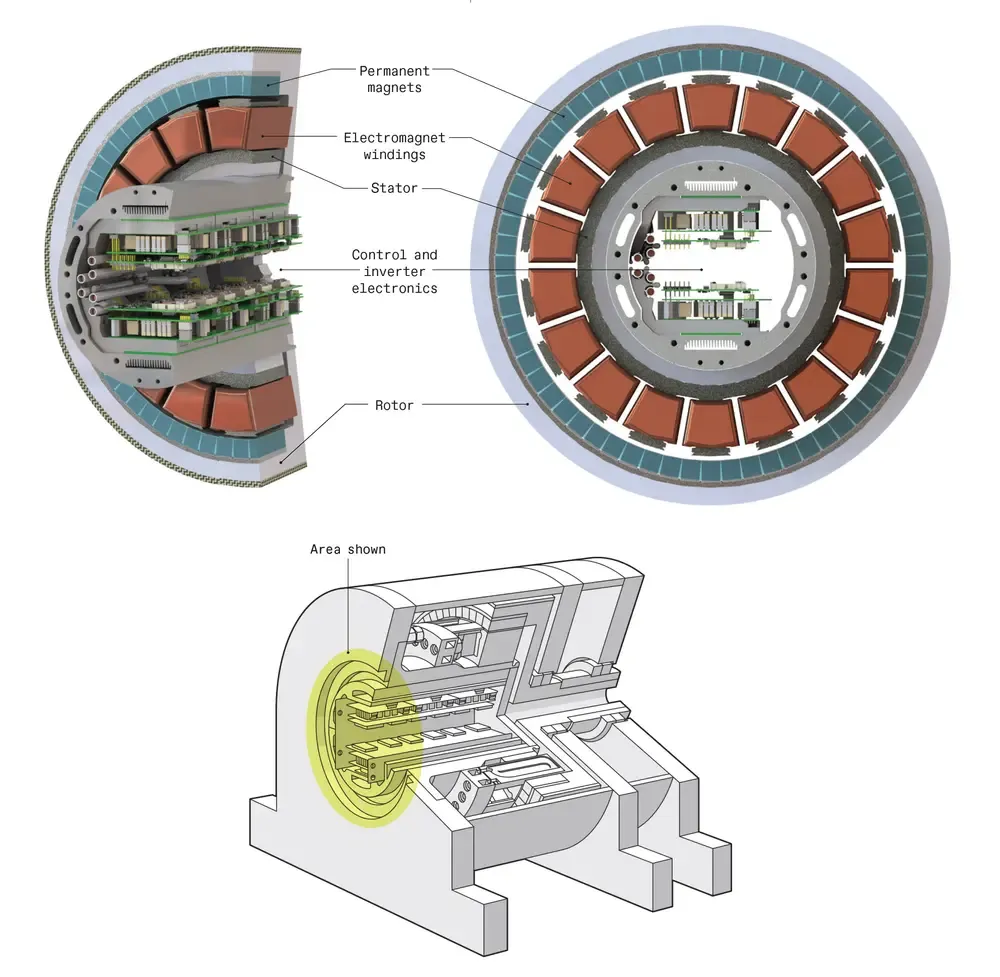
An experimental motor built by the authors at Oak Ridge National Laboratory did not use any heavy rare earth elements. Neodymium iron boron permanent magnets are mounted on the external surface of the rotor. These magnets are represented by the teal-colored ring of blocks surrounding the copper-colored stator windings. To save space, the motor’s inverter and control electronics were installed inside the stator.Oak Ridge National Laboratory
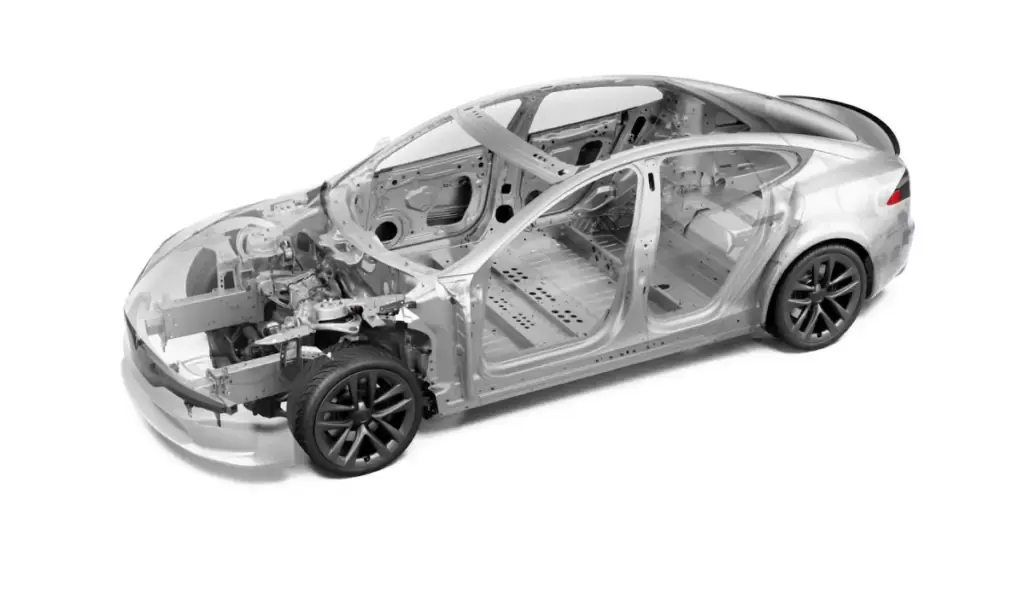
Currently, NRPMs are being deployed on a limited scale across several sectors. Electric vehicle manufacturers, including BYD and Tesla, have introduced prototypes and small-batch production models using these motors. Industrial robotics companies, such as ABB and Siemens, are experimenting with NRPMs in high-end robotic arms, while some wind energy projects are testing NRPMs for mid-sized turbines. Although large-scale commercial adoption is still emerging, the early results are promising.
The industry implications of NRPMs are substantial. In the electric vehicle market, replacing rare-earth magnets can lower production costs and reduce dependency on volatile global supply chains. Renewable energy applications, such as wind turbines, benefit from reduced material costs and improved efficiency. In high-end aerospace and industrial equipment, the lightweight, high-power characteristics of NRPMs enhance performance and reliability, offering opportunities for further innovation in electric aircraft, drones, and automated manufacturing systems.
As NRPM technology matures, it has the potential to reshape global supply chains and drive broader industry transformations. Companies that achieve large-scale adoption may gain competitive advantages in electric mobility, renewable energy, and smart manufacturing. With rising attention from media and investors, the next few years could see NRPMs become a headline technology, signaling a new era of cost-effective, sustainable, and high-performance electric motors.

