


Summary:
Solid State Transformers (SST) are revolutionizing global AI data centers and renewable energy grids with high-efficiency, intelligent, bidirectional power conversion, becoming a cornerstone of future energy and digital infrastructure.
Solid State Transformers (SST) are no longer just a concept—they are becoming the backbone of modern energy and digital infrastructure. By combining advanced power electronics, wide-bandgap semiconductors, and intelligent control, SSTs convert power with unprecedented efficiency—up to 99%—while reducing size and weight to a fraction of traditional transformers. They respond in milliseconds, support bidirectional power flow, and manage voltage and harmonics with precision, making them ideal for both AI data centers and renewable energy grids.
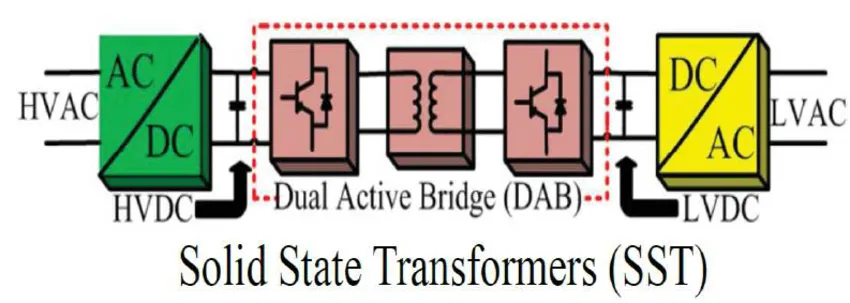
AI data centers are already leading the way. High-density computing clusters now rely on SSTs directly connected to 800V DC architectures, cutting energy losses and lowering PUE to around 1.15. A single megawatt of power can save hundreds of thousands of kilowatt-hours each year, while supporting ultra-dense racks up to 240kW. For companies racing to scale AI workloads sustainably, SSTs provide a green, stable, and high-performance solution.
Renewable energy integration is also transforming with SSTs. Wind and solar farms can connect rapidly and reliably to medium-voltage grids, smoothing fluctuations and reducing curtailment. Storage systems can actively feed power back into the grid, enabling real-time balancing and “generation-grid-load-storage” coordination. SSTs act as intelligent energy routers, making microgrids, urban energy systems, and smart grids more flexible and resilient than ever.
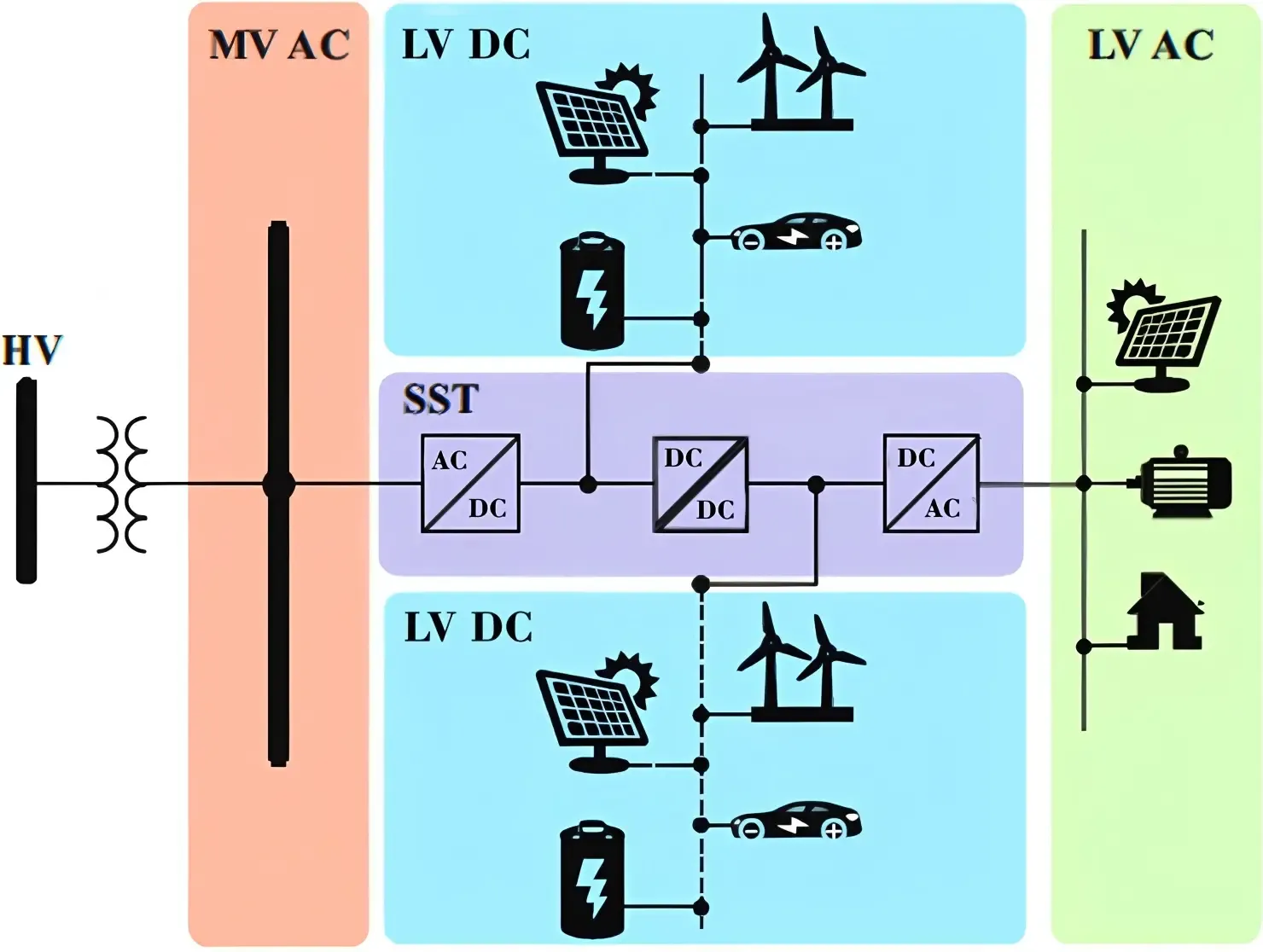
Global adoption is accelerating. International standards are evolving, and companies like ABB and Siemens are rolling out high-frequency, high-power SST solutions. Containerized SSTs are already powering microgrids, industrial parks, and fast-charging stations. Analysts estimate the global SST market could reach $500–1000 million by 2030, reflecting rapid growth and industry-wide recognition of its strategic value.
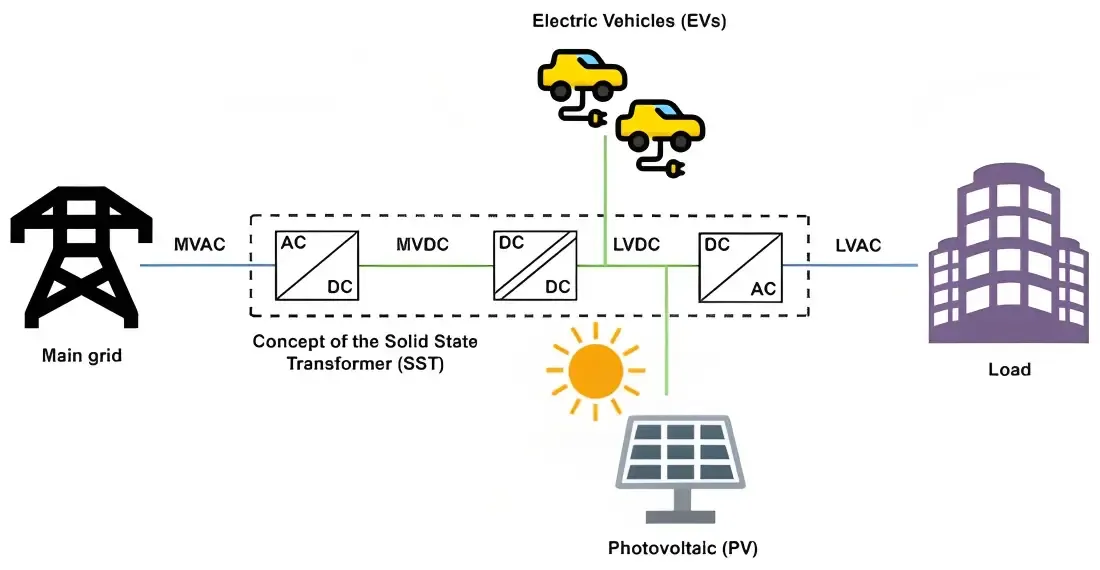
As we look ahead, SSTs are set to redefine electricity distribution and energy management worldwide. By 2030, they are expected to become mainstream, forming the core of AI computing, renewable energy, and smart grids. Compact, intelligent, and ultra-efficient, SSTs are not just transformers—they are the future of global energy and digital infrastructure.

