


Summary:Researchers at Penn State and NIST have developed a silicon-free, chip-style fabrication method to create ultra-stable glass vapor cells filled with cesium and rubidium atoms, enabling highly precise atomic sensing for navigation, timing, and high-frequency wireless signal detection.
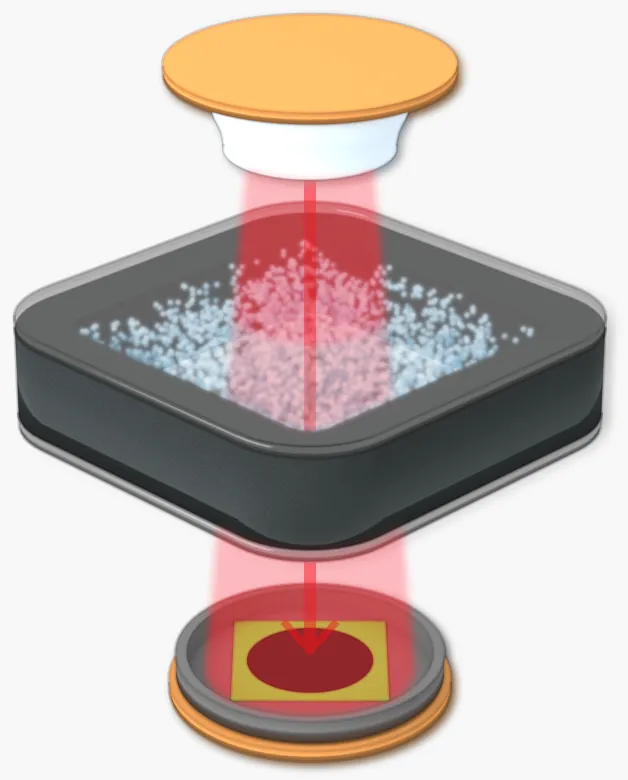
A research team from Penn State University and the National Institute of Standards and Technology (NIST) has introduced a new manufacturable approach for producing miniature glass vapor cells that could reshape precision navigation and wireless sensing technologies. Instead of relying on conventional silicon-based microdevices, the method fabricates sealed glass cavities containing highly controlled ensembles of cesium and rubidium atoms.

These vapor cells function as atomic-scale sensors, leveraging the fundamental property that all atoms of a given element are identical and governed by well-characterized quantum physics. This intrinsic uniformity allows atoms to serve as extremely stable and reproducible reference systems, surpassing the variability inherent in engineered electronic components.
The fabrication process is described as being similar to semiconductor chip manufacturing techniques, enabling scalable production of microscale glass chambers while maintaining strict vacuum integrity. Each cell is hermetically sealed to preserve a precisely controlled internal gas environment, which is essential for long-term atomic performance. The researchers reported that the devices maintained stable vacuum conditions and consistent atomic behavior over nearly three years of testing, indicating strong potential for long operational lifetimes.
Inside the cells, the vaporized alkali atoms interact with electromagnetic fields in highly predictable ways. This allows the sensors to detect and measure high-frequency signals, including millimeter-wave radiation used in advanced radar and next-generation wireless communication systems. The atomic response provides a direct physical reference, enabling extremely high sensitivity and accuracy.
Unlike conventional timing systems based on quartz oscillators, which can drift and require frequent GPS correction, atomic vapor cell devices derive stability from fundamental constants of nature. This makes them promising candidates for future navigation, timing, and communication systems that require resilience in environments where satellite signals may be weak or unavailable.
With demonstrated long-term stability and compatibility with scalable manufacturing techniques, this silicon-free atomic sensing platform represents a significant step toward compact, high-precision quantum-enabled sensor technologies.

