


Summary:CATL has introduced the TENER Sodium Energy Storage System in Munich as the first field-validated sodium-ion BESS targeting grid-scale applications. The platform emphasizes modular architecture, system-level efficiency optimization, and supply-chain-ready commercialization.
CATL unveiled its TENER Sodium Energy Storage System (ESS), marking the first commercially validated sodium-ion battery energy storage system (BESS) designed for large-scale grid deployment. Built on sodium-ion chemistry, the system targets improved resource availability, safety, and long-duration storage flexibility compared with conventional lithium-based platforms.
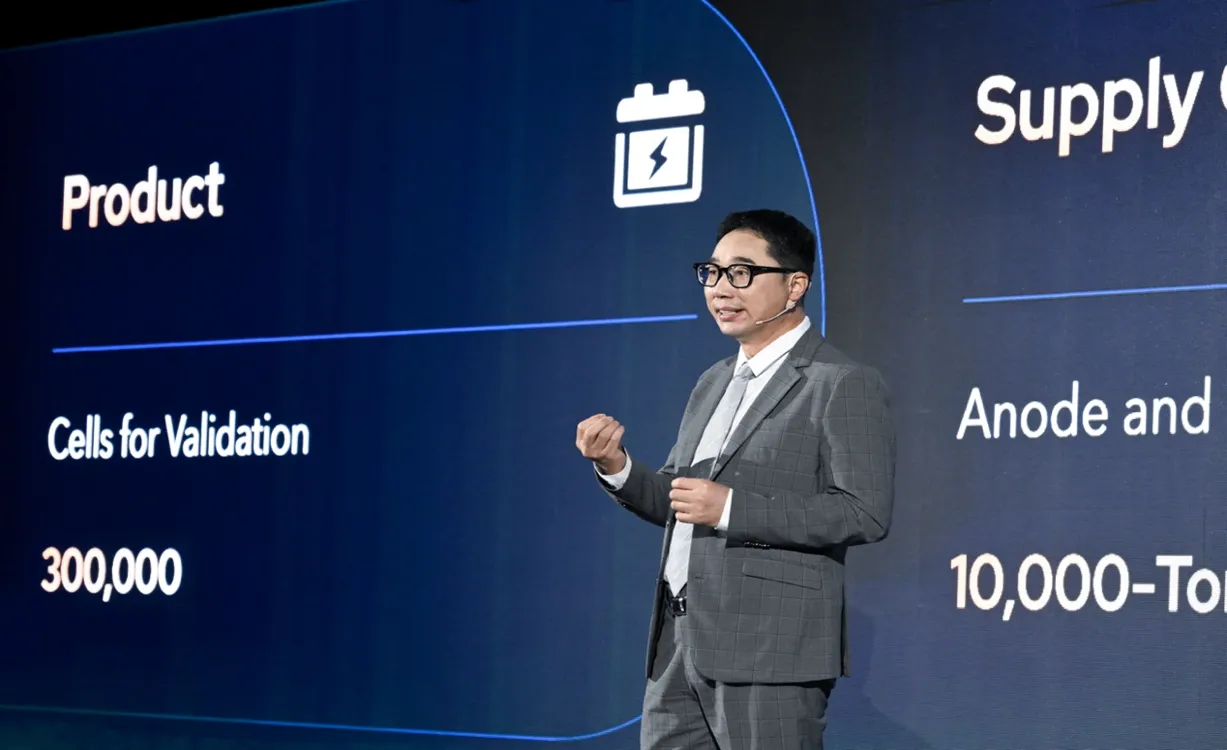
TENER Sodium adopts a modular station architecture delivering over 30 MWh per unit design block. A 1 GWh installation requires approximately 34 standardized units, simplifying transport, installation, and scaling. The system decouples energy and power configuration, enabling flexible discharge durations from 1 to 8 hours depending on grid requirements.
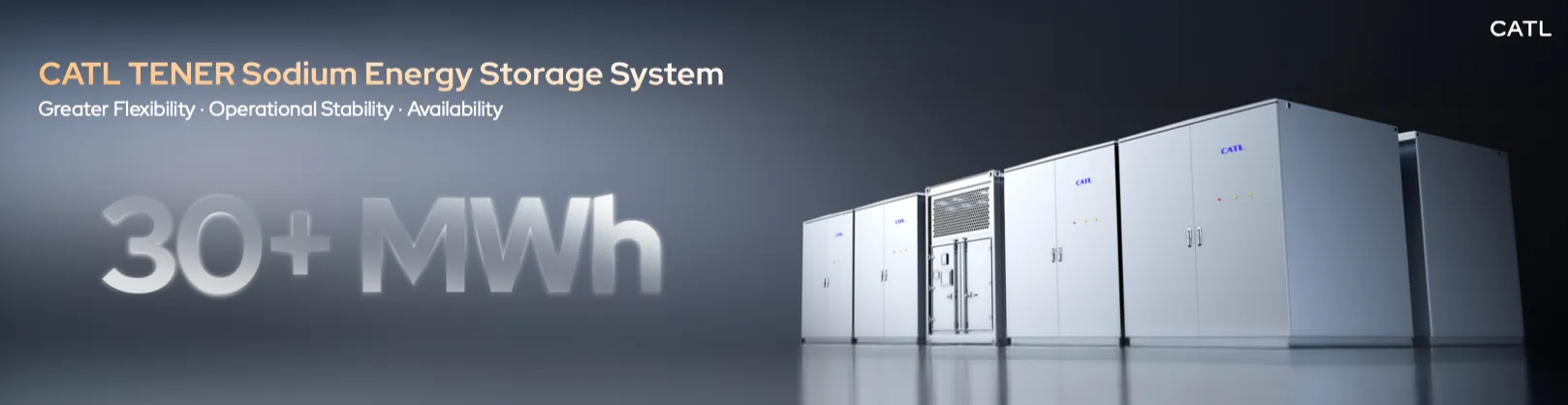
At the system level, CATL introduced a dedicated bidirectional DC voltage regulation architecture optimized for sodium-ion voltage behavior. This improves power conversion system (PCS) operating efficiency across a wider voltage range and increases round-trip efficiency by approximately 2%.
The battery management system (BMS) is redesigned for sodium-ion chemistry, leveraging its smoother voltage curve to improve state-of-charge (SOC) estimation accuracy. The system also expands overcharge tolerance by 20%, increasing operational safety margins for utility-scale deployments.
Efficiency optimization extends to thermal and auxiliary systems. A redesigned airflow and liquid-cooling architecture reduces auxiliary energy consumption to about 1%, compared with an industry average of roughly 2%. Thermal losses are reduced by approximately 30%, improving long-duration operational stability and lowering lifecycle operating costs.
Acoustic optimization is another engineering focus, with operating noise reduced to 65 dB, enabling closer deployment to load centers. The platform is also designed to maintain footprint compatibility with lithium iron phosphate (LFP) systems, allowing interchangeable deployment without enclosure redesign. A future upgrade path toward 2000V high-voltage architectures is reserved for next-generation grid integration.
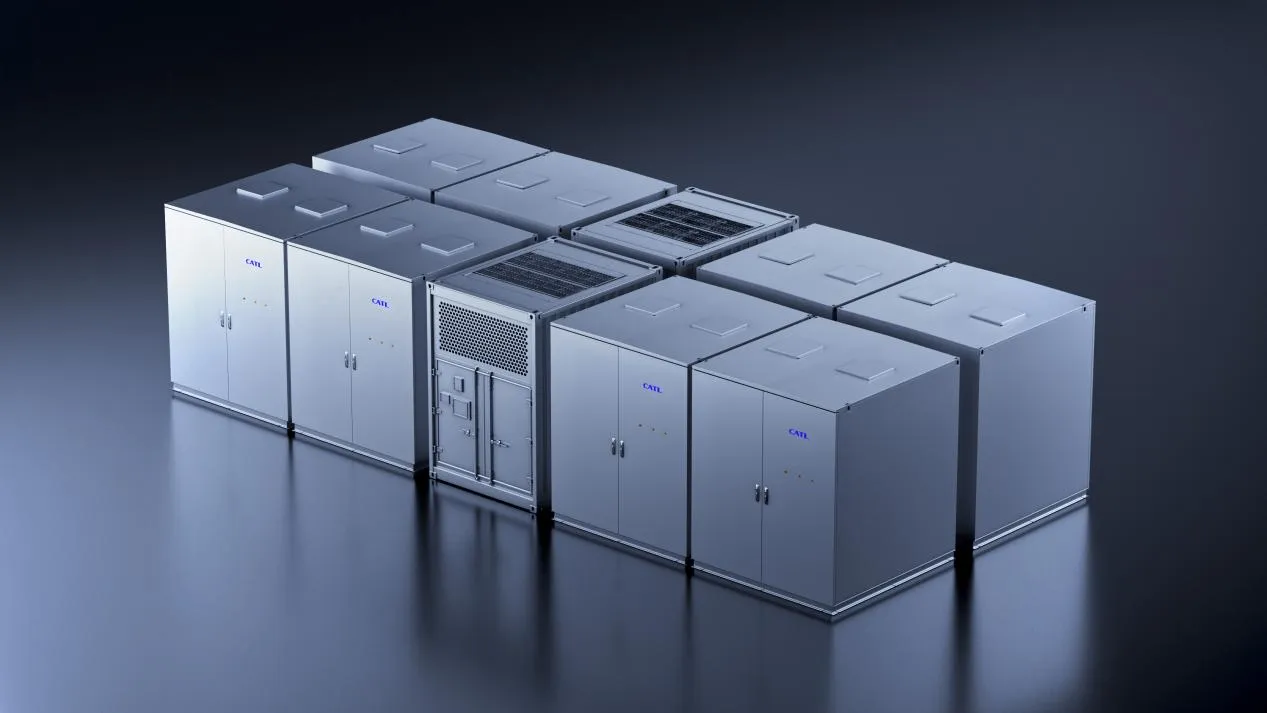
With full end-to-end manufacturing readiness, sodium-ion production capacity has been scaled for GWh-level deployment, positioning TENER Sodium as a parallel chemistry platform to lithium-ion in future energy storage infrastructure.

