


Summary: Researchers have developed a high-resolution mechanochromic tactile sensor that delivers 100μm real-time touch sensing without deep learning or computational reconstruction, advancing robotic dexterity, embodied AI, and next-generation humanoid robotics.
A new mechanochromic tactile sensor is redefining robotic touch perception by overcoming one of the biggest challenges in robotics: achieving both ultra-high spatial resolution and real-time responsiveness. Designed for humanoid robots, robotic grippers, embodied AI systems, and intelligent automation, the technology eliminates the need for complex image processing and deep learning-based tactile reconstruction while maintaining exceptional sensing performance.
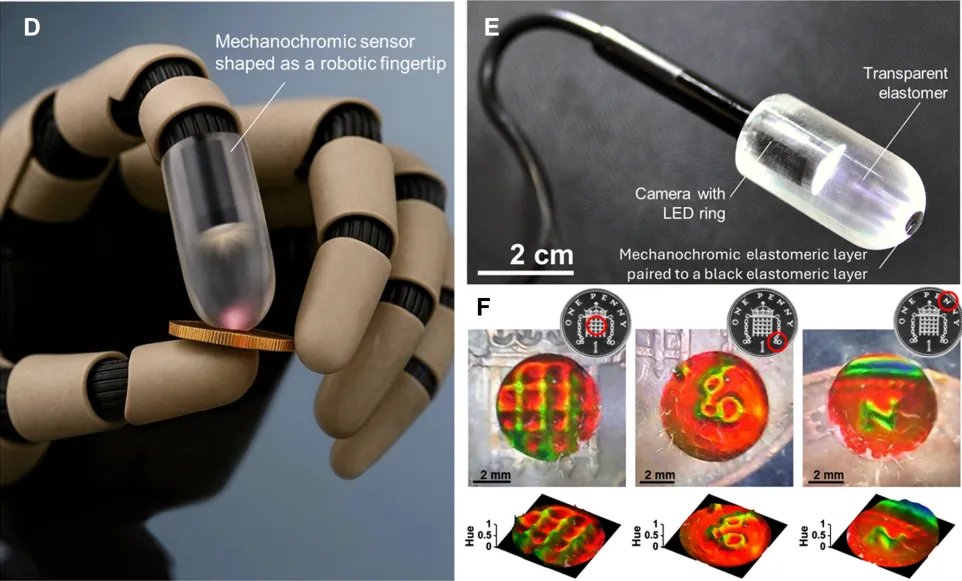
Unlike conventional taxel-based tactile sensors, which are typically limited to approximately 1 mm spatial resolution, the new system uses a continuous sensing surface that directly converts mechanical deformation into visible color changes. The sensor is built around a 16 μm-thick mechanochromic Bragg reflector embedded between black and transparent silicone elastomer layers. When pressure or strain is applied, the material produces structural color shifts that are captured by a standard low-cost camera, enabling direct optical interpretation of tactile information.
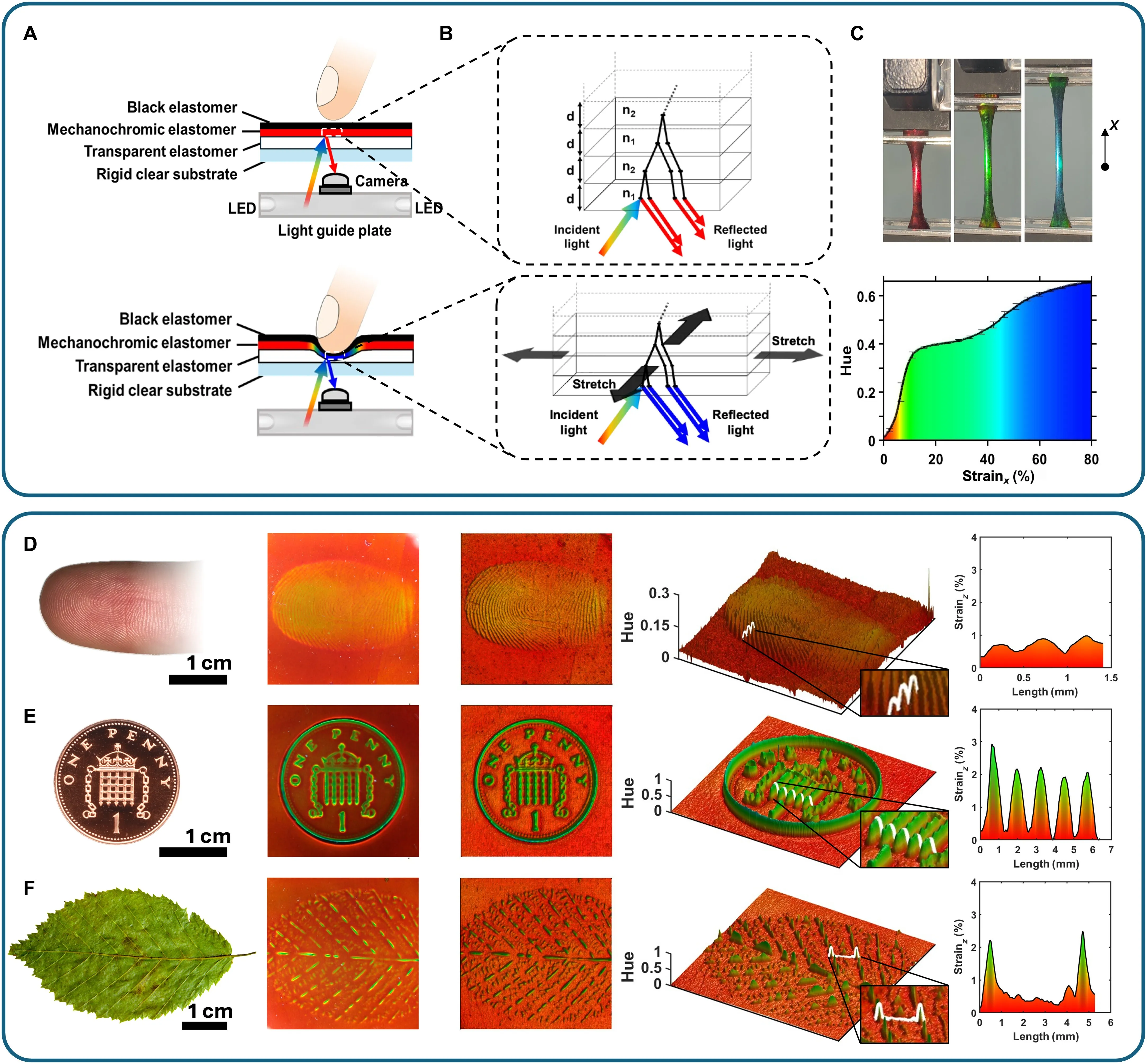
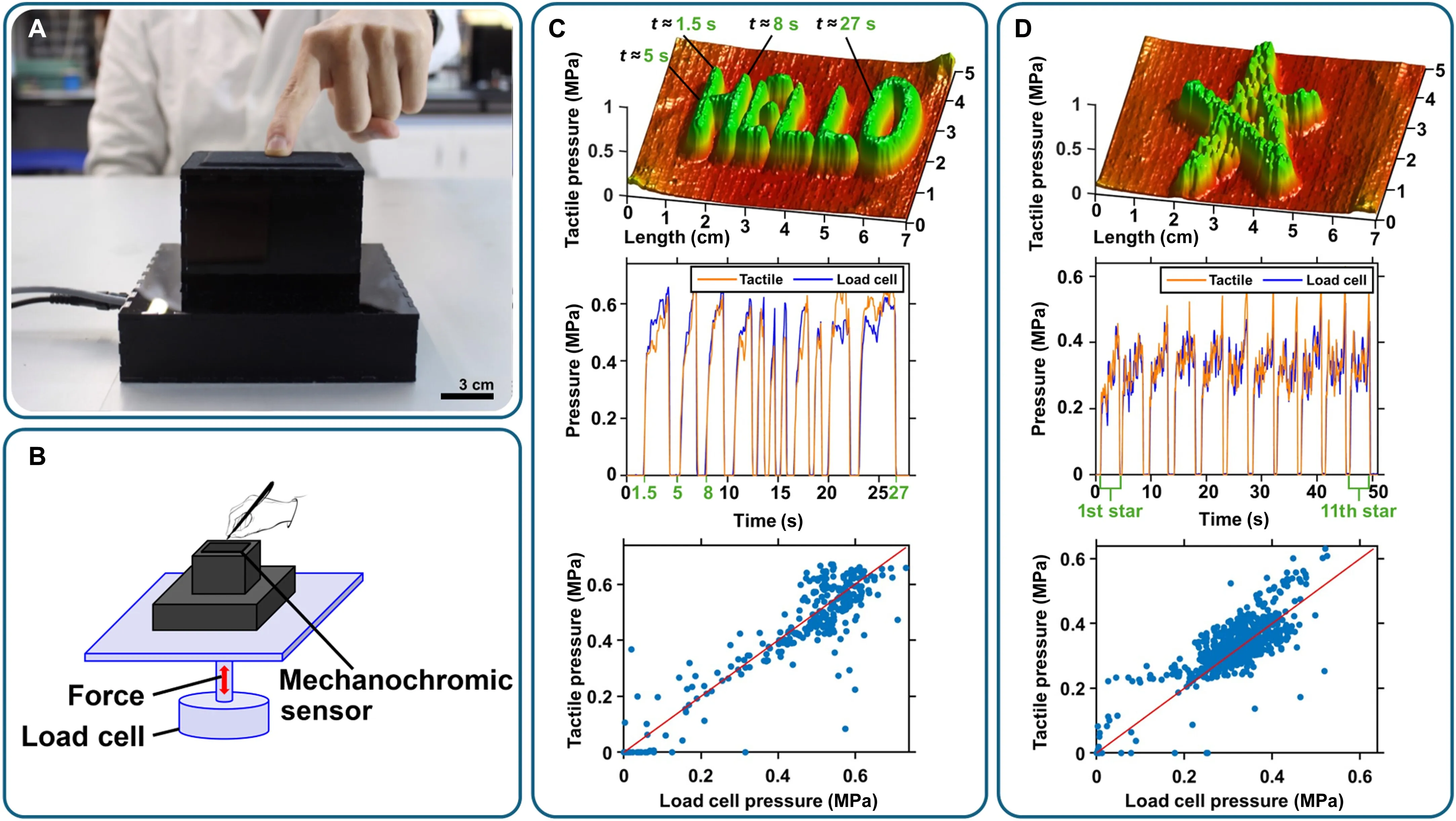
This approach removes the computational bottlenecks associated with traditional vision-based tactile sensing, allowing real-time operation with virtually zero algorithmic latency. Experimental demonstrations achieved 100 μm spatial resolution, enabling the accurate mapping of contact morphology, surface textures, strain distribution, and pressure profiles. The sensor also demonstrated pressure-sensing capabilities up to 1.4 MPa, with measurements showing strong agreement with finite element modeling (FEM) simulations and Pearson correlation coefficients ranging from 0.93 to 0.97.
Researchers found that performance can be tailored by adjusting the thickness ratio of the elastomer layers. Lower thickness ratios improve edge detection and fine surface detail recognition, while higher ratios expand pressure measurement range and enhance stability for robotic gripping applications.
With its simple architecture, low manufacturing complexity, scalability, and high sensing accuracy, the technology offers significant potential for humanoid robot tactile sensing, robotic manipulation of fragile objects, industrial quality inspection, intelligent grippers, human-robot interaction, and embodied AI systems. As demand grows for robots capable of human-like dexterity, this breakthrough represents an important step toward enabling faster, more precise, and more reliable robotic touch perception in real-world environments.

