


Summary:A new AI-driven control framework enables quadruped robots to achieve human-like agility through autonomous skill learning, adaptive gait switching, and high-speed terrain perception, opening new possibilities for embodied AI robotics in complex real-world environments.
Quadruped robots are rapidly evolving from laboratory platforms into intelligent machines capable of operating in unpredictable real-world environments. However, achieving fast, stable, and adaptive movement across complex terrain remains one of the biggest challenges in legged robotics. A newly developed artificial intelligence framework, APT-RL (Action Pretrained Transformer-based Reinforcement Learning), introduces a new approach that allows quadruped robots to learn multiple locomotion skills and autonomously adapt their movement strategies in changing environments.
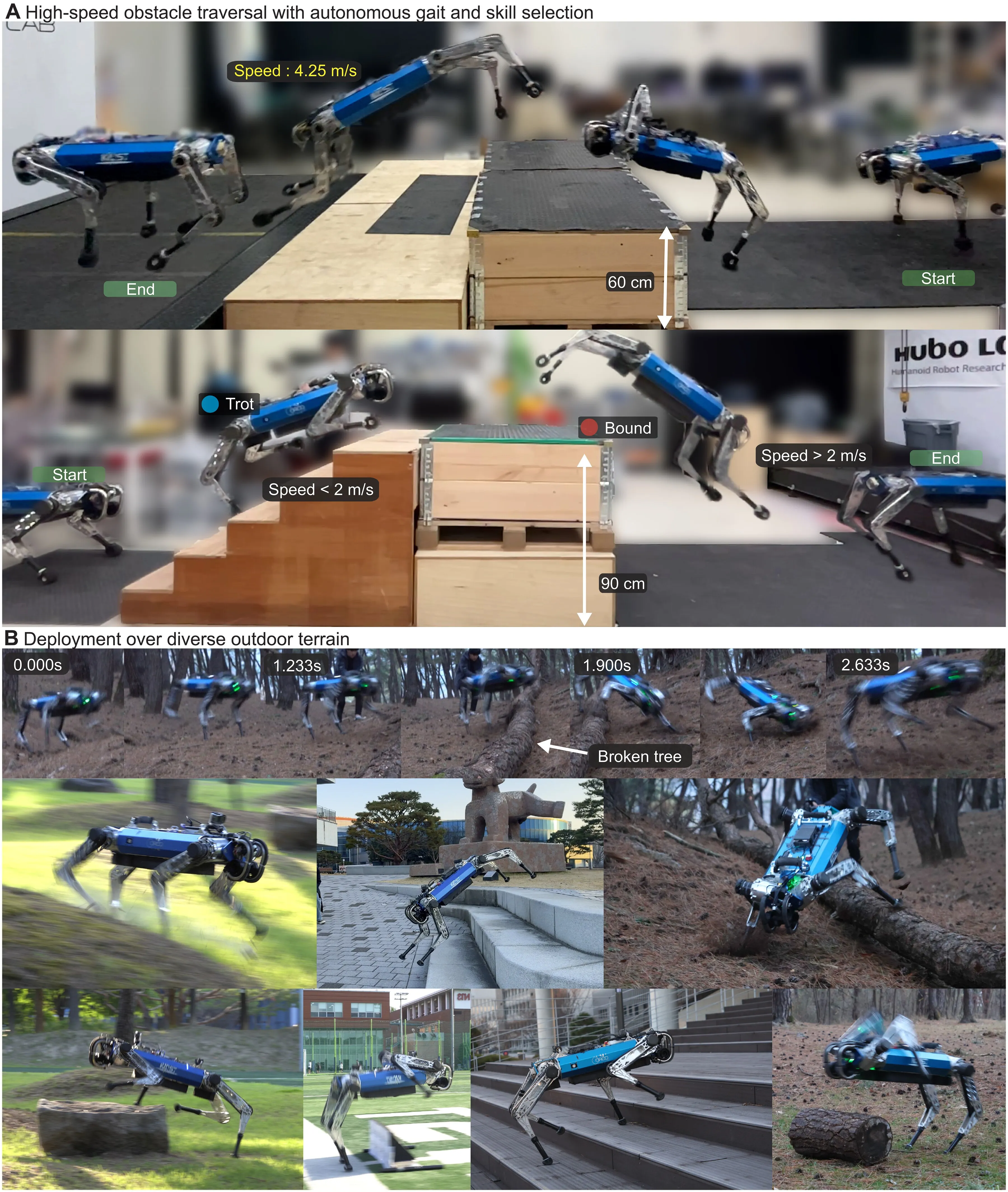
Traditional quadruped robot control systems often rely on predefined gaits, limiting their ability to respond efficiently to unexpected obstacles or rapidly changing terrain. APT-RL addresses this limitation by combining transformer-based learning, reinforcement learning, and trajectory optimization, creating a unified AI control architecture that enables robots to develop reusable movement skills.
The system first generates a large-scale robotic motion dataset through trajectory optimization based on simplified physical dynamics. These motion samples contain valuable information about robot posture, movement patterns, and joint control signals. Using a transformer-based variational autoencoder, APT-RL learns a shared representation of different locomotion skills, allowing the robot to reuse previously learned behaviors instead of starting from zero when facing new tasks.
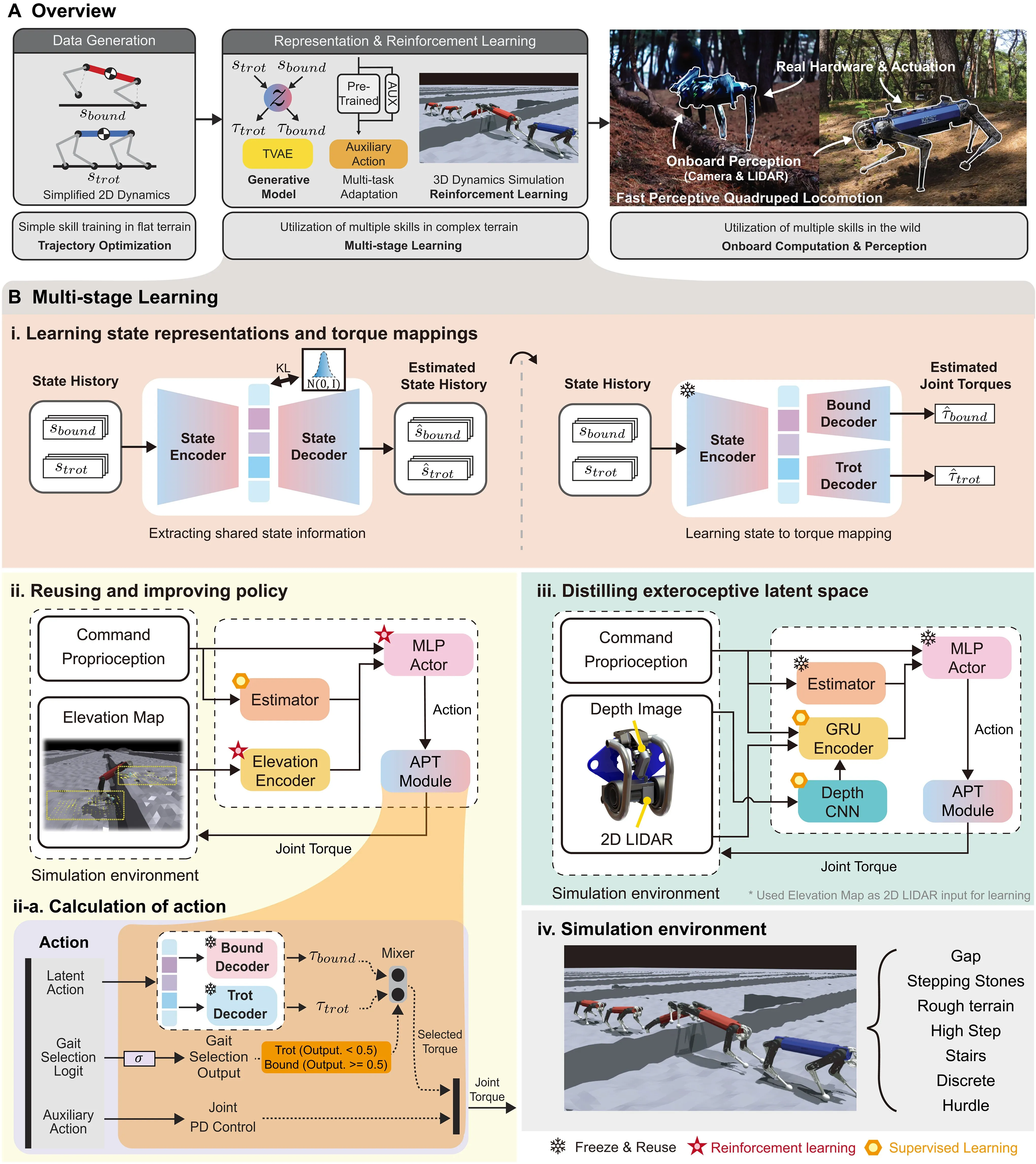
A key advantage of the technology is its ability to perform autonomous gait selection and smooth skill transitions. The robot can switch between stable walking patterns such as trotting and high-speed bounding depending on terrain conditions, obstacle height, and movement requirements. This capability allows the robot to maintain balance while moving quickly across stairs, gaps, uneven surfaces, stepping stones, and natural environments.
Unlike systems that depend on external cameras or computing platforms, APT-RL enables fully onboard autonomous operation. The robot uses integrated LiDAR and depth camera sensors to perceive terrain ahead, estimate environmental changes, and make real-time movement decisions. By combining short-range visual information with long-range laser sensing, the system improves navigation reliability during high-speed motion.
In real-world experiments, a quadruped robot equipped with the APT-RL framework successfully navigated diverse environments, including urban pathways, forest trails, and indoor obstacle courses. The robot demonstrated advanced maneuvers such as climbing high steps, jumping over obstacles, crossing irregular terrain, and performing dynamic drop-down movements. During challenging stair descent experiments, the robot achieved an instantaneous peak speed of up to 6 meters per second, demonstrating a significant improvement in high-speed perceptive locomotion.
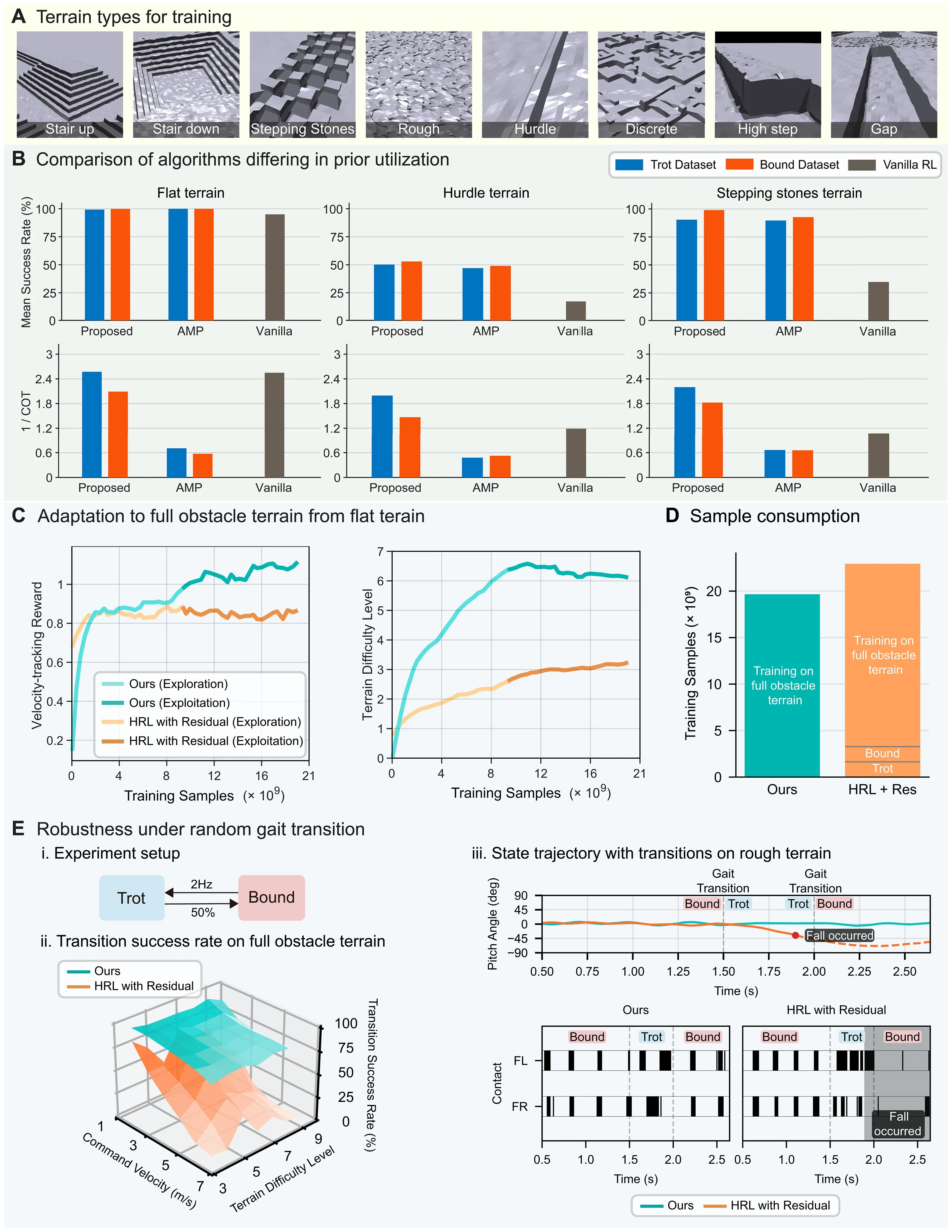
The development of APT-RL highlights the growing integration of embodied AI, reinforcement learning robotics, intelligent perception systems, and autonomous mobility technologies. This breakthrough could accelerate the deployment of quadruped robots in demanding applications such as search and rescue, industrial inspection, infrastructure monitoring, exploration, and hazardous environment operations.
As AI-driven robotic control continues to advance, future legged robots may achieve increasingly flexible and animal-like mobility, allowing machines to safely and efficiently operate in environments that were previously inaccessible for traditional robots.

