


Summary:Researchers have identified theta-phase tantalum nitride (TaNθ) as the highest thermal conductivity metal ever measured, offering a potential breakthrough for AI chip cooling, high-performance computing, and next-generation thermal management technologies.
As artificial intelligence processors, high-performance computing systems, and advanced electronics continue to increase in power density, efficient heat dissipation has become one of the most critical engineering challenges. A newly characterized material, theta-phase tantalum nitride (TaNθ), may provide a transformative solution.
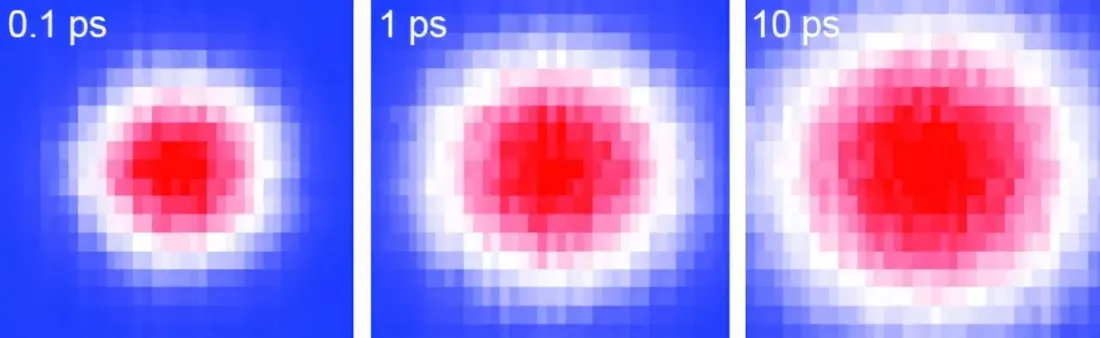
A sequence showing how thermal energy, carried by electrons, spreads through theta-phase tantalum nitride after the metallic material is struck by a pulse of light, from 0.1 to 10 picoseconds.
Researchers have demonstrated that metallic theta-phase tantalum nitride achieves an extraordinary thermal conductivity of approximately 1,100 W/mK, nearly three times higher than conventional heat-conducting metals such as copper and silver. This performance establishes TaNθ as the fastest heat-conducting metal reported to date.
The material’s exceptional behavior originates from its unique hexagonal crystal structure. At the atomic level, the arrangement of tantalum and nitrogen atoms significantly reduces interactions between electrons and lattice vibrations, known as phonons. Because these interactions normally limit heat transport in metals, their suppression allows thermal energy to travel with remarkably low resistance.
Advanced synchrotron X-ray scattering and ultrafast optical spectroscopy measurements confirmed the material’s unprecedented heat-transfer capability. The results suggest that metallic thermal conductivity can exceed traditional expectations, opening new opportunities for thermal engineering.
The team confirmed the material’s performance using multiple techniques, including synchrotron-based X-ray scattering and ultrafast optical spectroscopy. (Representational image)
The discovery is particularly relevant for AI accelerators, data center processors, graphics chips, aerospace electronics, and quantum technologies, where overheating can reduce efficiency, reliability, and performance. By enabling faster heat removal, theta-phase tantalum nitride could support smaller, more powerful, and more energy-efficient electronic systems.
As demand grows for advanced thermal management materials, theta-phase tantalum nitride represents a promising candidate for next-generation heat spreaders, chip cooling solutions, and high-power electronic devices, potentially redefining the future of thermal conductivity technology.

