


Summary: In July 2026, researchers at Finland’s Aalto University demonstrated the first cyclic quantum heat engine based on a superconducting circuit, using a flux-tunable Transmon qubit to complete a quantum Otto cycle and achieve measurable net work extraction. The breakthrough advances quantum thermodynamics, superconducting quantum computing, and future quantum energy management technologies.

In July 2026, researchers at Aalto University, Finland, achieved a major milestone in quantum technology by experimentally demonstrating a superconducting quantum heat engine based on a flux-tunable Transmon superconducting qubit.
The experiment represents the first successful realization of a complete quantum Otto cycle in a superconducting circuit, showing that a single quantum device can function as a microscopic heat engine and produce measurable cyclic net work output.
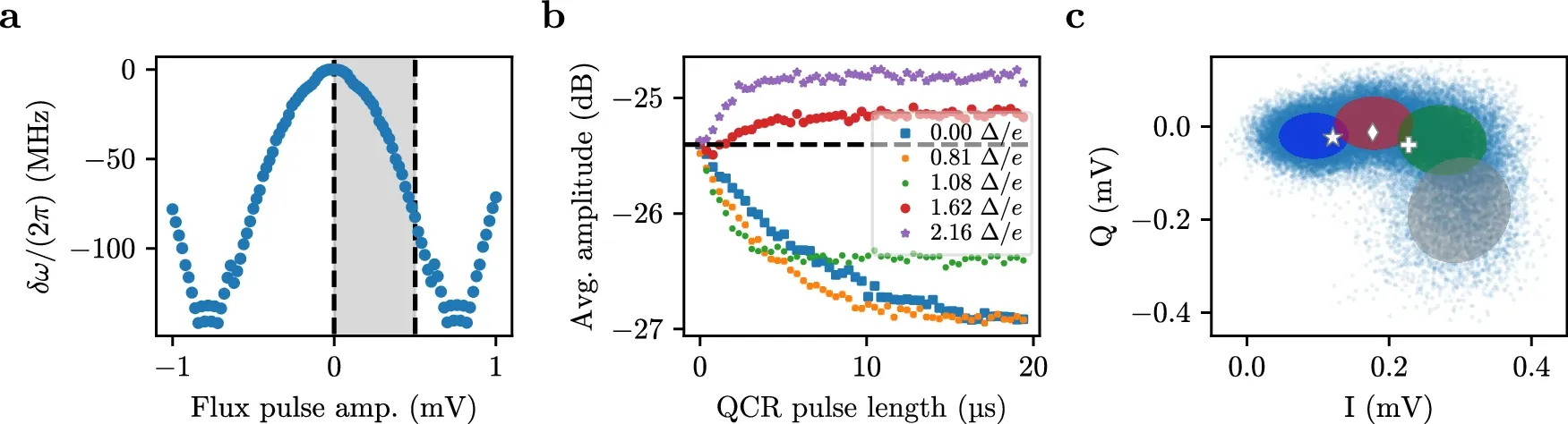
Calibration of qubit frequency, QCR bias, and single-shot readout for the Otto cycles.
The core technology, the flux-tunable Transmon qubit, is one of the leading architectures used in superconducting quantum computers. In the quantum heat engine experiment, researchers controlled the qubit’s energy landscape through magnetic flux tuning, enabling precise manipulation of quantum states during repeated thermodynamic cycles.
Unlike conventional engines that use macroscopic working fluids such as steam or gas, this quantum engine uses an artificial atom-like superconducting qubit as its working medium. The system combines advanced superconducting circuits with controlled thermal environments to achieve energy exchange, compression, expansion, and power extraction at the quantum scale.
The successful operation of the quantum Otto cycle provides experimental validation of quantum thermodynamics principles and demonstrates how heat and work can be managed in highly controlled quantum systems.
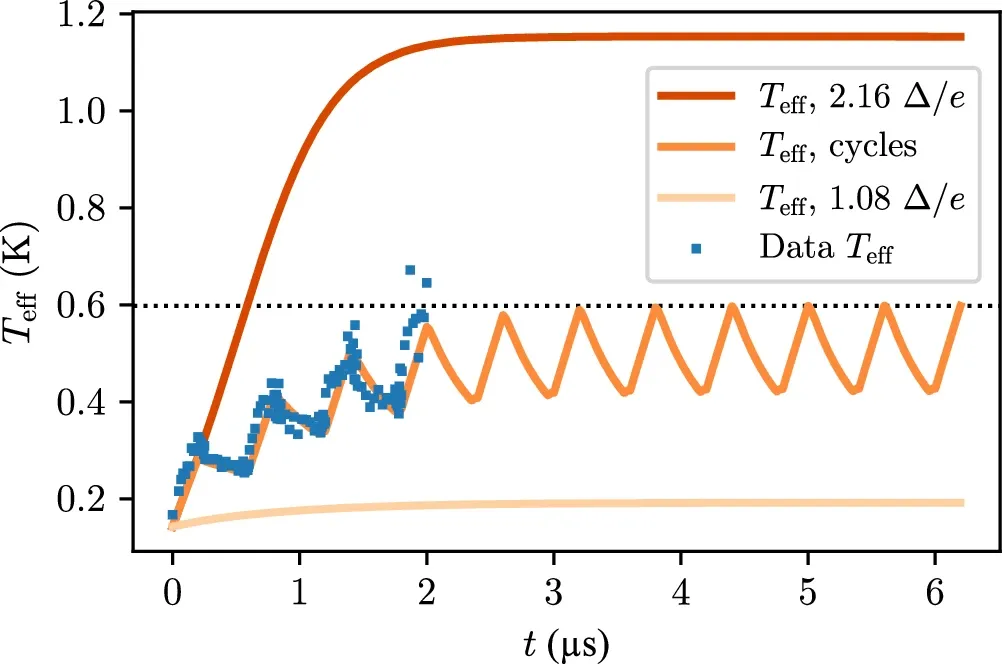
Simulation of the effective temperature of the transmon during a cyclic operation of the heat engine.
Developed by Aalto University, this technology opens new possibilities for quantum computing energy efficiency, superconducting quantum processors, quantum thermal management, and next-generation quantum engineering platforms.
As quantum computers continue scaling toward larger architectures, efficient control of heat generation and energy flow will become increasingly important. The July 2026 breakthrough shows that superconducting quantum circuits may not only serve as powerful computing platforms but could also become precision tools for exploring and controlling energy conversion at the quantum level.

