


Summary: In August 2026, a US AI computing startup announced that its Z1 Thermodynamic AI Chip had completed tape-out and entered manufacturing, marking a major step toward commercializing probabilistic computing for generative AI, robotics, and scientific computing.
August 2026 marked a significant milestone for emerging AI hardware architectures as the Z1 Thermodynamic AI Chip successfully completed tape-out and entered the manufacturing phase. The achievement moves thermodynamic computing beyond laboratory demonstrations and closer to real-world deployment, offering a potential alternative to conventional AI accelerators in an era of rapidly rising power consumption.
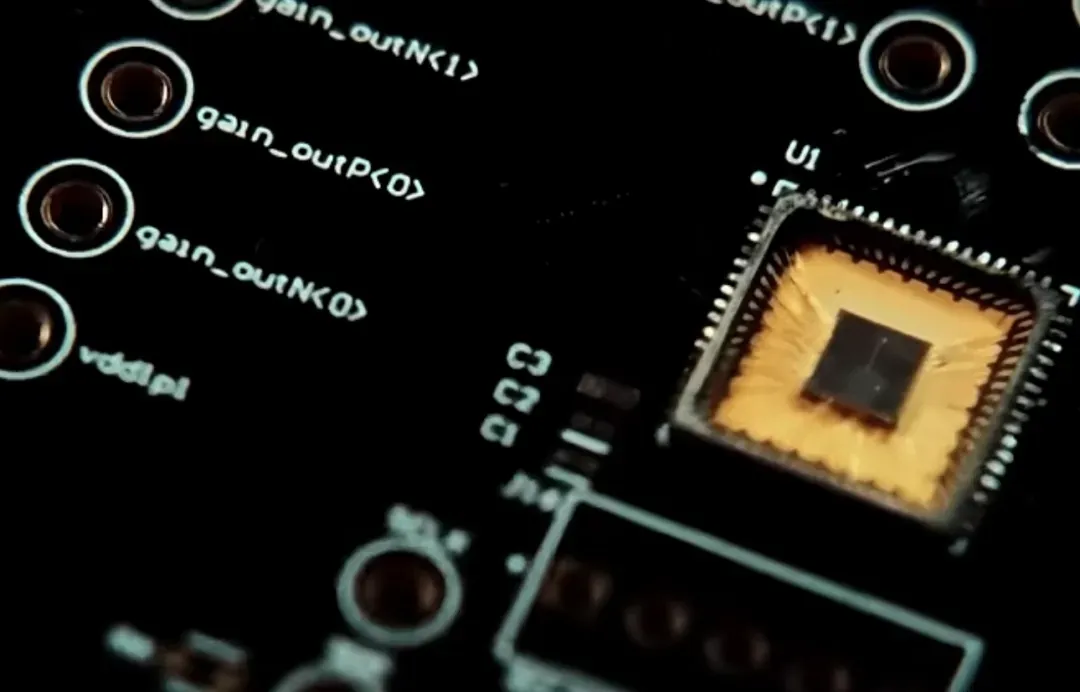
Unlike traditional CPUs and GPUs that rely on deterministic binary operations, the Z1 is designed around a probabilistic computing architecture. The processor uses probabilistic bits, or p-bits, and harnesses naturally occurring electronic noise and thermal fluctuations as part of the computational process. Instead of expending energy to suppress noise, the architecture leverages it to perform probability-based calculations directly.
The approach is particularly relevant for modern AI workloads. Large language models, diffusion-based image generation, Bayesian inference, optimization problems, and scientific simulations all depend heavily on sampling from probability distributions. By aligning hardware more closely with these computational requirements, thermodynamic computing aims to deliver higher efficiency than conventional digital architectures for selected workloads.

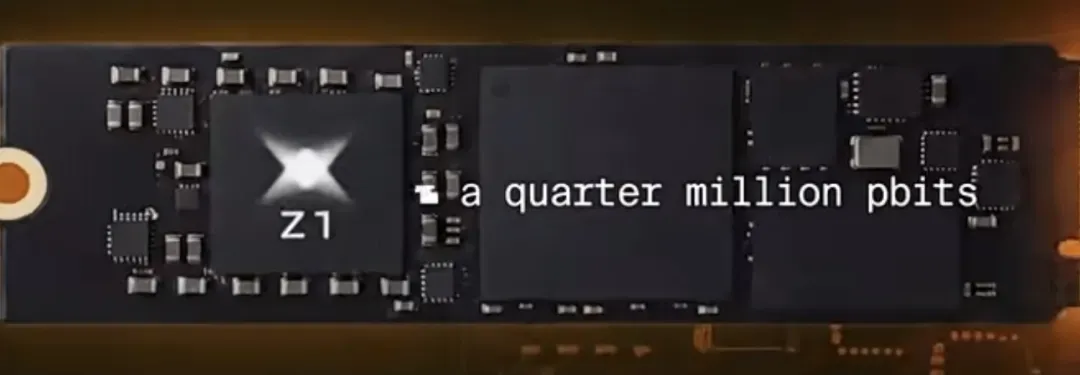
According to publicly released specifications, the Z1 integrates more than 269,000 p-bits on a chip measuring less than 12 millimeters across. The processor achieves sampling rates exceeding 50 MHz while operating at less than 1 watt of power consumption. Rather than focusing on peak floating-point performance, the design emphasizes generating large volumes of useful probabilistic samples with minimal energy use.
The hardware roadmap includes multiple deployment formats. The Z1 Stick, built in an M.2 form factor, is designed for edge AI applications such as robotics, AR/VR devices, and autonomous systems. The Z1 Card, a PCIe accelerator, targets data centers and high-performance computing environments, where it can operate alongside CPUs and GPUs to accelerate AI inference, probabilistic modeling, and scientific workloads.
To support adoption, the startup has also developed a dedicated software ecosystem that allows developers to build, test, and optimize thermodynamic computing applications before large-scale hardware deployment. The strategy mirrors the broader industry trend of combining specialized hardware with software frameworks to accelerate ecosystem development.
As global AI infrastructure power demand continues to increase, researchers and technology companies are actively exploring alternatives to traditional computing architectures. While the Z1 is not intended to replace CPUs or GPUs, it represents a new category of AI accelerator optimized for probability-driven computation. With early-access systems expected in 2027, thermodynamic computing is emerging as one of the most closely watched technologies in the search for more scalable and energy-efficient artificial intelligence infrastructure.

