


Summary: Researchers have transformed Helmholtz resonators into wireless acoustic actuators capable of powering miniature robots, autonomous boats, and ultralight flying machines. The breakthrough demonstrates a scalable approach to acoustic propulsion that could accelerate the development of next-generation microrobotics and aerial robotics.
Researchers have unveiled a new acoustic propulsion technology that converts Helmholtz resonators into wireless actuators capable of generating controlled thrust in air. While acoustic actuation has long been explored in liquids, its application in airborne robotic systems has remained largely unexplored. The new study demonstrates that 3D-printed resonators, ranging from centimeter-scale structures to microscopic devices, can generate directional thrust when excited at their resonance frequencies.
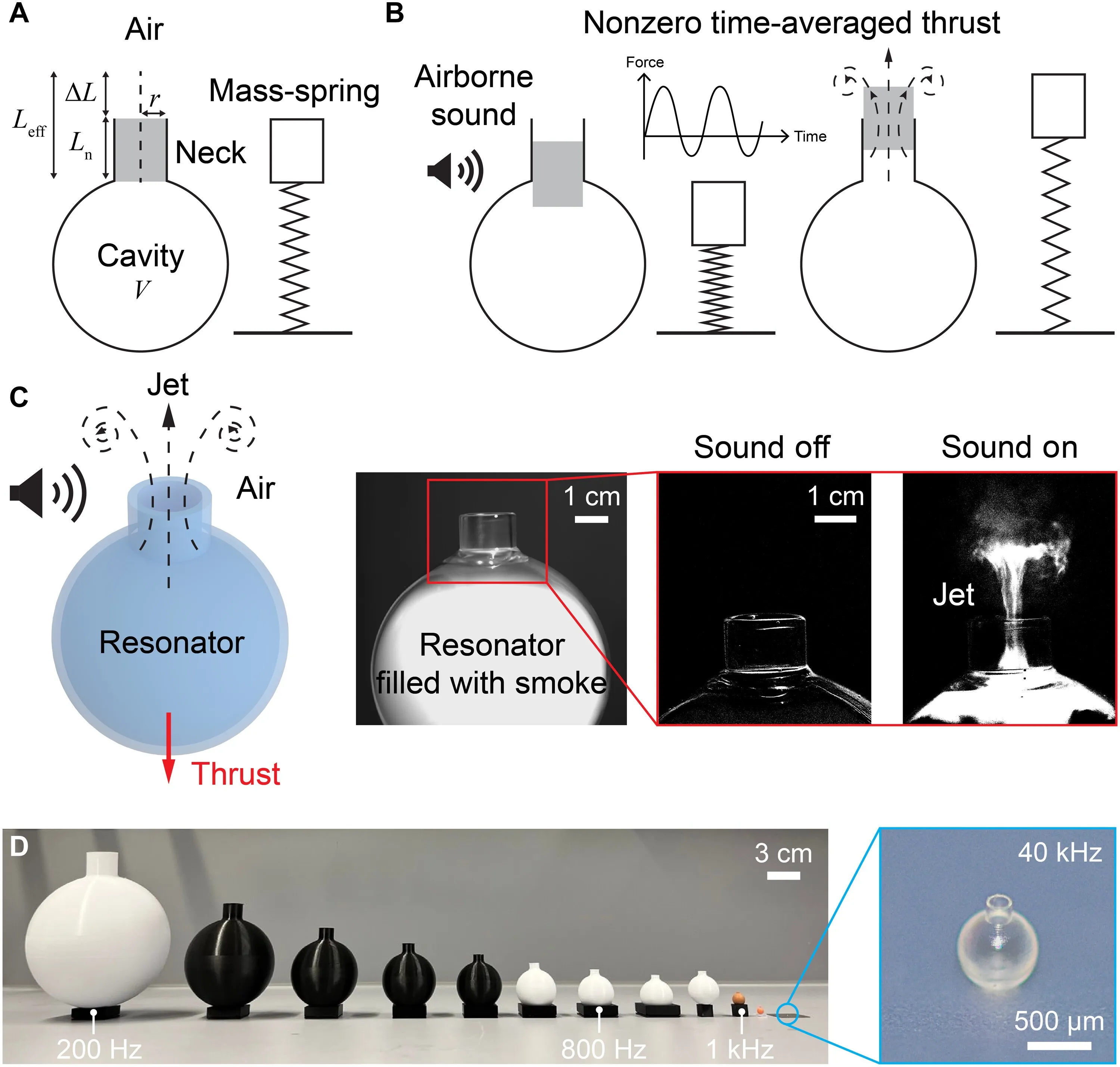
Helmholtz resonators as wireless actuators in air.
To establish the technology, the team developed a comprehensive design framework covering cavity geometry, neck configuration, material properties, and acoustic excitation methods. Experimental results showed that thrust increases predictably with resonator volume, enabling force generation from micronewton to millinewton levels. The approach was validated through analytical modeling, numerical simulations, and physical testing across multiple manufacturing methods, including advanced microfabrication techniques.
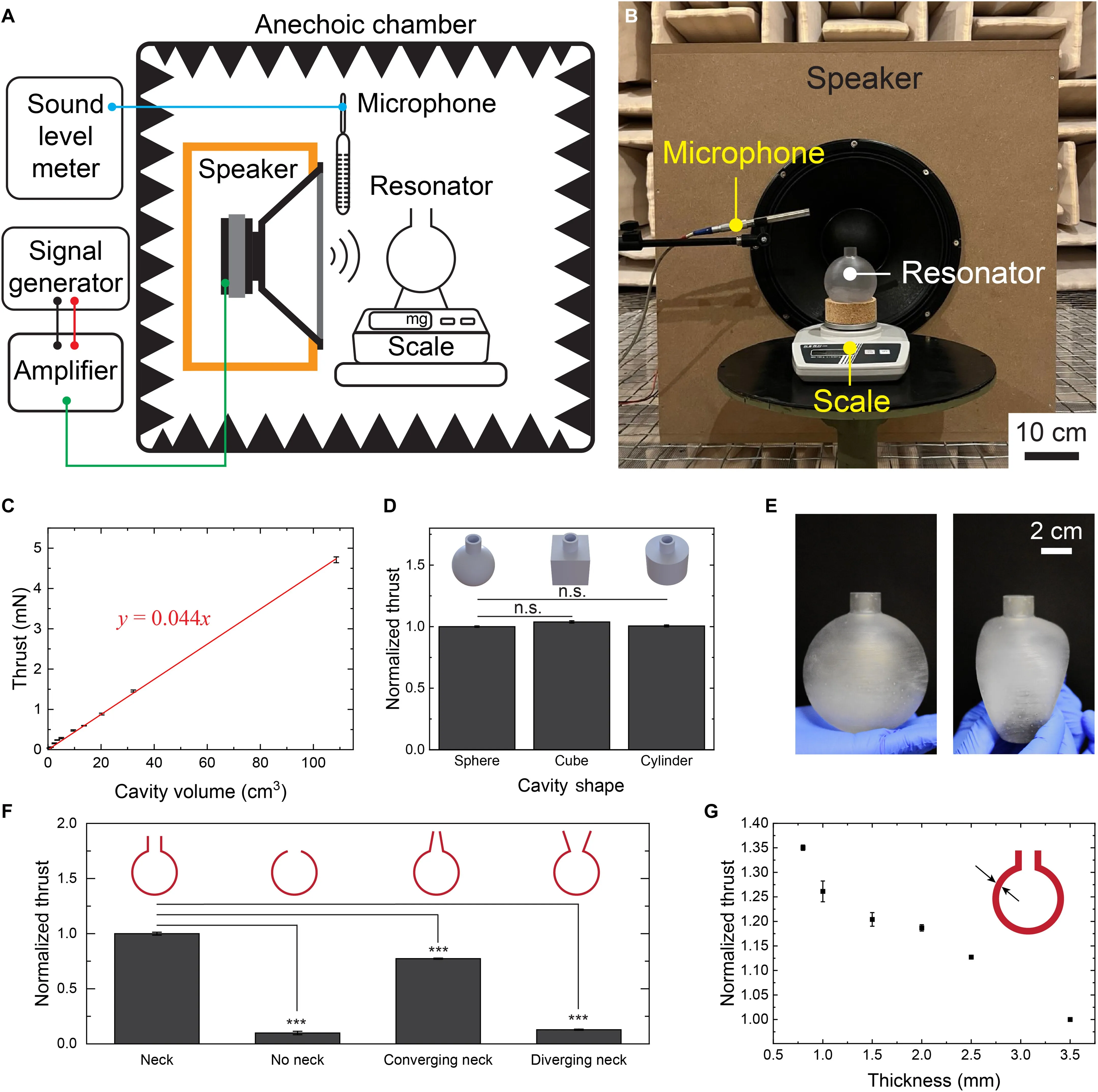
The impact of design parameters on thrust.
The researchers then demonstrated practical robotic applications using acoustically powered miniature boats. By integrating resonators tuned to different frequencies, the boats achieved forward motion, steering, obstacle avoidance, and trajectory tracking. A fully integrated prototype combined onboard batteries, electronics, and acoustic transducers, proving that compact robotic systems can be powered and controlled through resonance-based propulsion.
The most significant advance came in the form of airborne micro-robots. One microflier, weighing only 150 micrograms, used ultrasonic excitation to generate vertical thrust and achieved a thrust-to-weight ratio of 4.9, allowing stable takeoff. A second design incorporated rotor blades attached to resonators, producing aerodynamic lift through high-speed rotation. This ultralight flying robot weighed just 184 micrograms and reached rotational speeds of up to 13,000 rpm, enabling stable flight behavior.
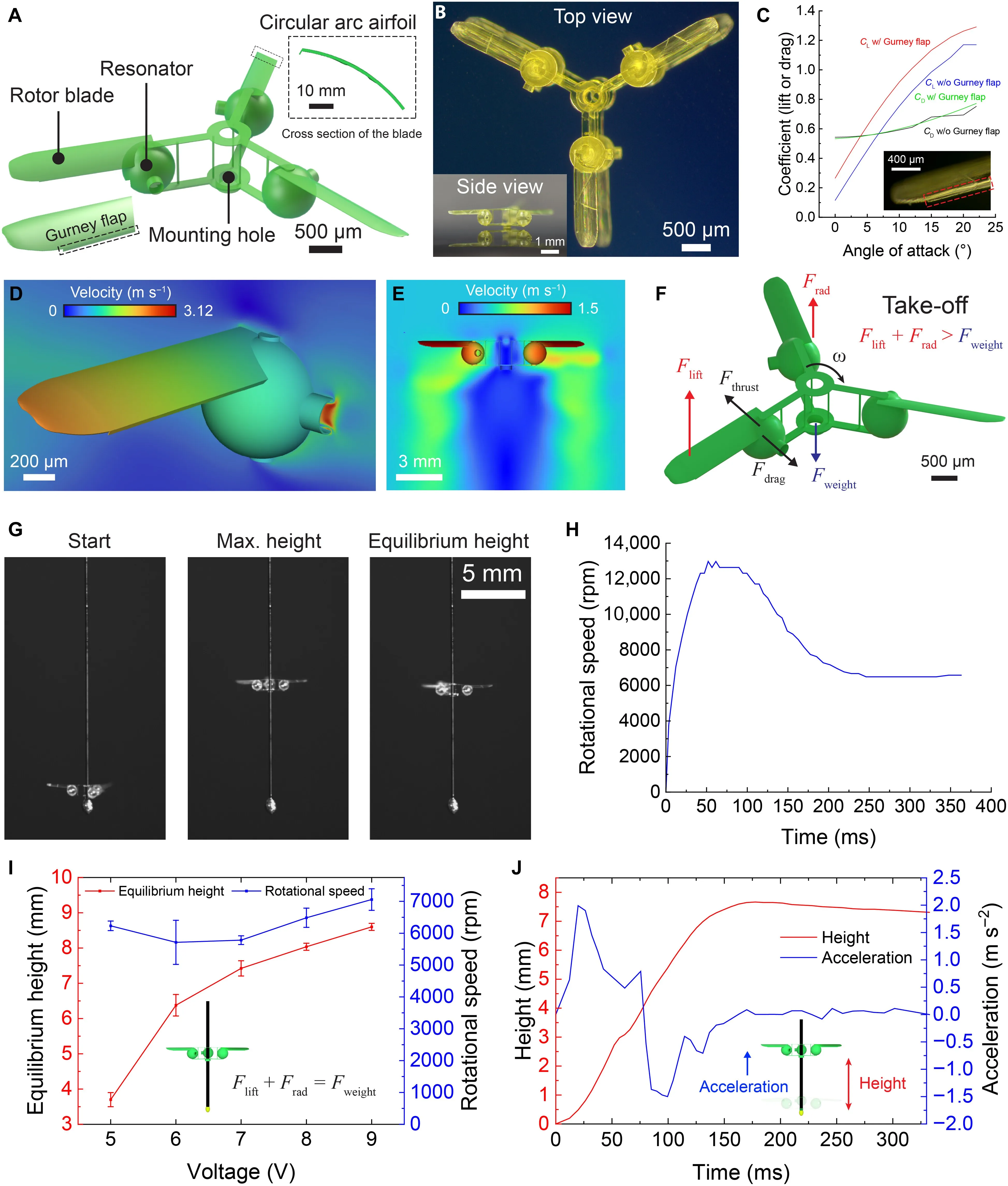
Acoustically powered microflier via aerodynamic lift.
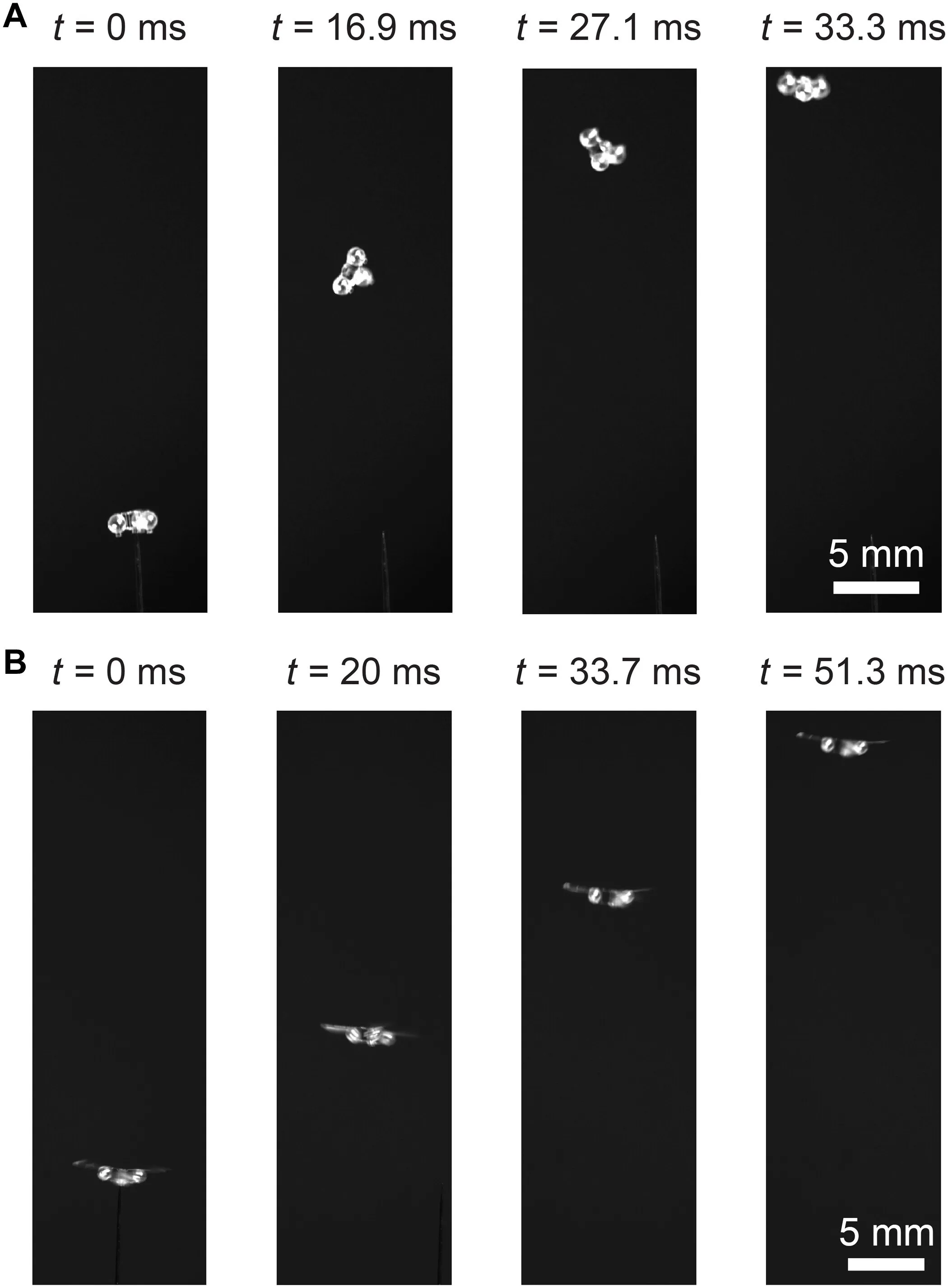
Unconstrained flight of microfliers.
According to the research team, the technology offers a versatile and material-independent platform for wireless micro-robotics, acoustic propulsion, micro aerial vehicles, and small-scale automation systems. As 3D nanoprinting, MEMS transducers, and ultrasonic control systems continue to advance, acoustically powered robots could play an expanding role in environmental monitoring, precision manufacturing, biomedical devices, and future autonomous robotic platforms.

