


Summary: Researchers at Kyoto University have developed a silicon carbide transistor capable of operating at 600°C, marking a major breakthrough for high-temperature semiconductors, space exploration, and industrial electronics.
Kyoto University researchers have developed a new silicon carbide (SiC) transistor capable of stable operation at temperatures up to 600°C (873 K), significantly exceeding the thermal limits of conventional silicon-based semiconductors, which typically fail above 250°C.
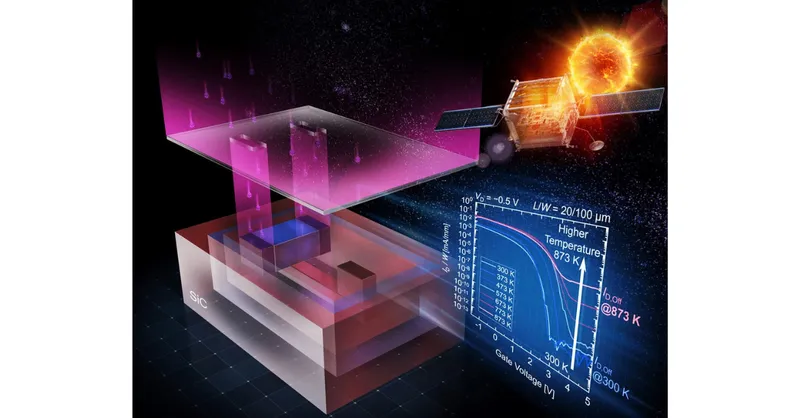
The breakthrough, published in APL Electronic Devices on August 17, demonstrates how advanced high-temperature semiconductor technology can be manufactured using the industry-standard ion implantation process, making the design compatible with existing commercial semiconductor fabrication facilities and potentially suitable for large-scale production.
The research team adopted a junction field-effect transistor (JFET) architecture featuring an innovative bottom-gate design. In conventional top-gate devices, ion implantation can create a "channeling effect," causing dopant atoms to penetrate deeper than intended and leading to significant threshold voltage shifts. According to the researchers, traditional designs can experience voltage deviations greater than 2 volts under high-temperature conditions.
By positioning the gate beneath the channel, the new transistor structure compensates for these implantation-induced variations. Tests showed that the difference between the designed and measured threshold voltage was reduced to less than 0.1 volts at 400°C, representing a substantial improvement in device stability.
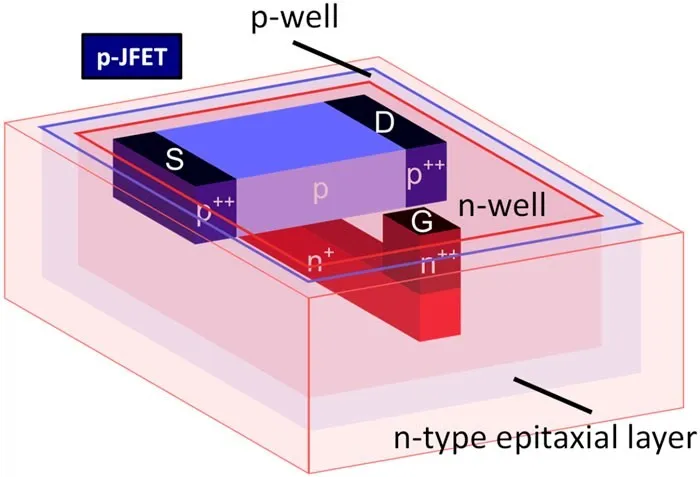
To further address leakage currents at extreme temperatures, the team incorporated a double-well isolation structure. This approach electrically isolates individual devices through PN junctions rather than relying on the semi-insulating silicon carbide substrate. As a result, high-temperature leakage currents were significantly reduced, enabling reliable operation even under severe thermal stress.
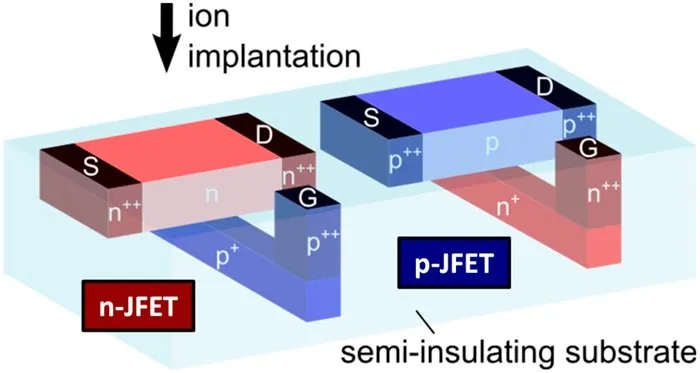
Researchers say the combination of the bottom-gate layout and double-well isolation allows the SiC transistor to maintain stable electrical performance at temperatures reaching 600°C.
The technology could have major implications for space exploration, including future Venus missions, where surface temperatures approach 460°C. Other potential applications include gas turbines, jet engines, aerospace electronics, industrial sensing systems, and extreme-environment computing, where conventional silicon chips struggle to survive.
While the achievement marks a significant step forward for high-temperature electronics and silicon carbide semiconductor technology, challenges remain. The research team is now focused on developing low-power complementary circuits and evaluating long-term reliability, packaging materials, and system integration required for commercial deployment in aerospace and industrial environments.

