


Summary: Ferroelectric materials are emerging as a leading candidate for next-generation AI and neuromorphic computing, enabling memory, logic, and computation to operate within the same device. Their unique polarization-driven behavior could help overcome the energy and performance limitations of conventional silicon architectures.
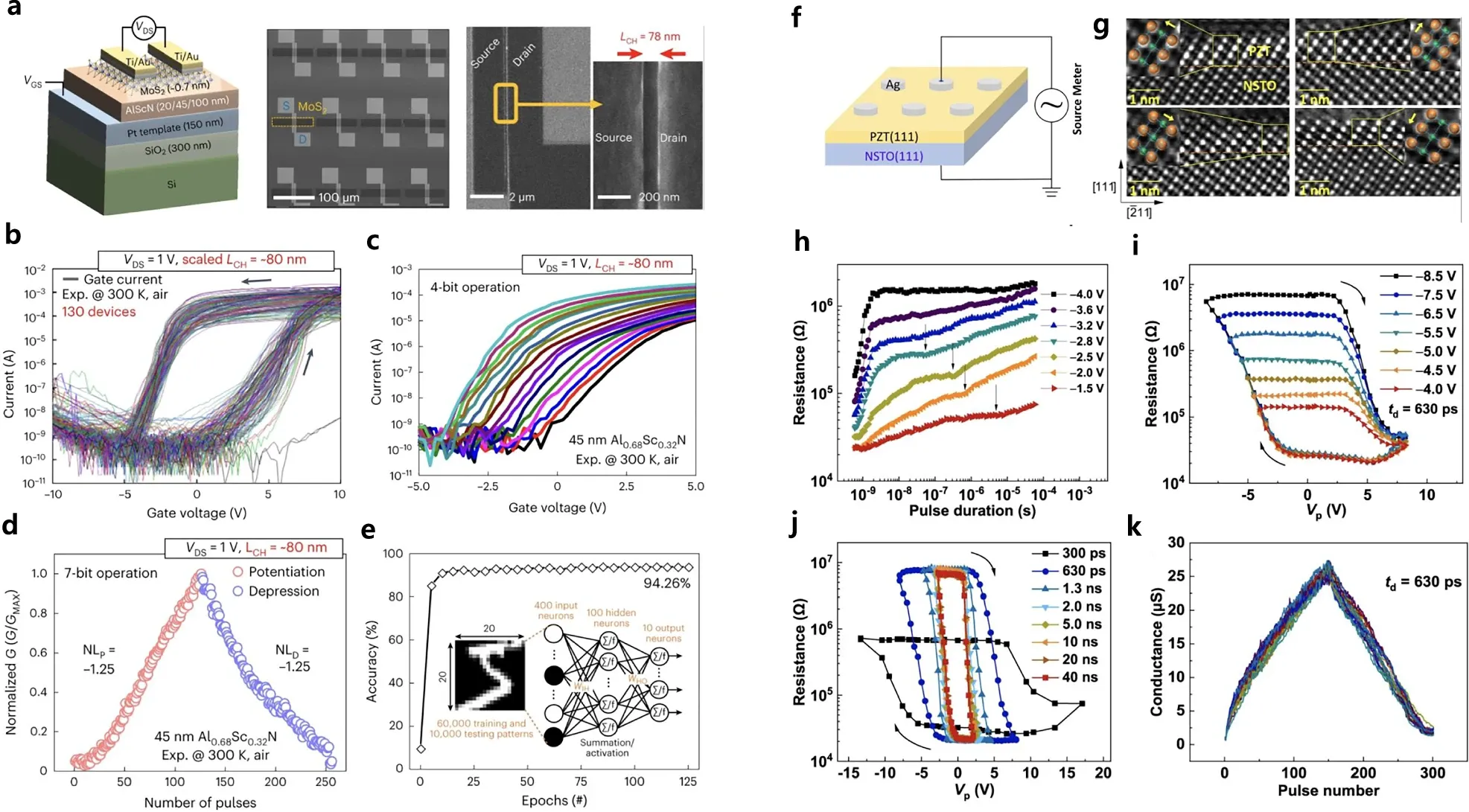
Ferroelectric computing II: device-level implementations of artificial synapses.
As artificial intelligence workloads continue to push the limits of conventional semiconductor technology, researchers are increasingly looking beyond traditional silicon scaling. A growing body of work highlights ferroelectric computing as a promising pathway toward energy-efficient, high-density computing systems capable of supporting future AI applications.
Unlike conventional electronics, which separate memory and processing units, ferroelectric materials possess a switchable and non-volatile electric polarization that can simultaneously store information and perform computation. This capability addresses one of the biggest bottlenecks in modern computing: the costly movement of data between memory and processors.
The underlying principle is simple but powerful. Ferroelectric polarization can be electrically programmed, retained without power, and used to control charge transport, conductance, and tunneling behavior within nanoscale devices. As a result, memory and logic functions can converge into a single hardware platform.
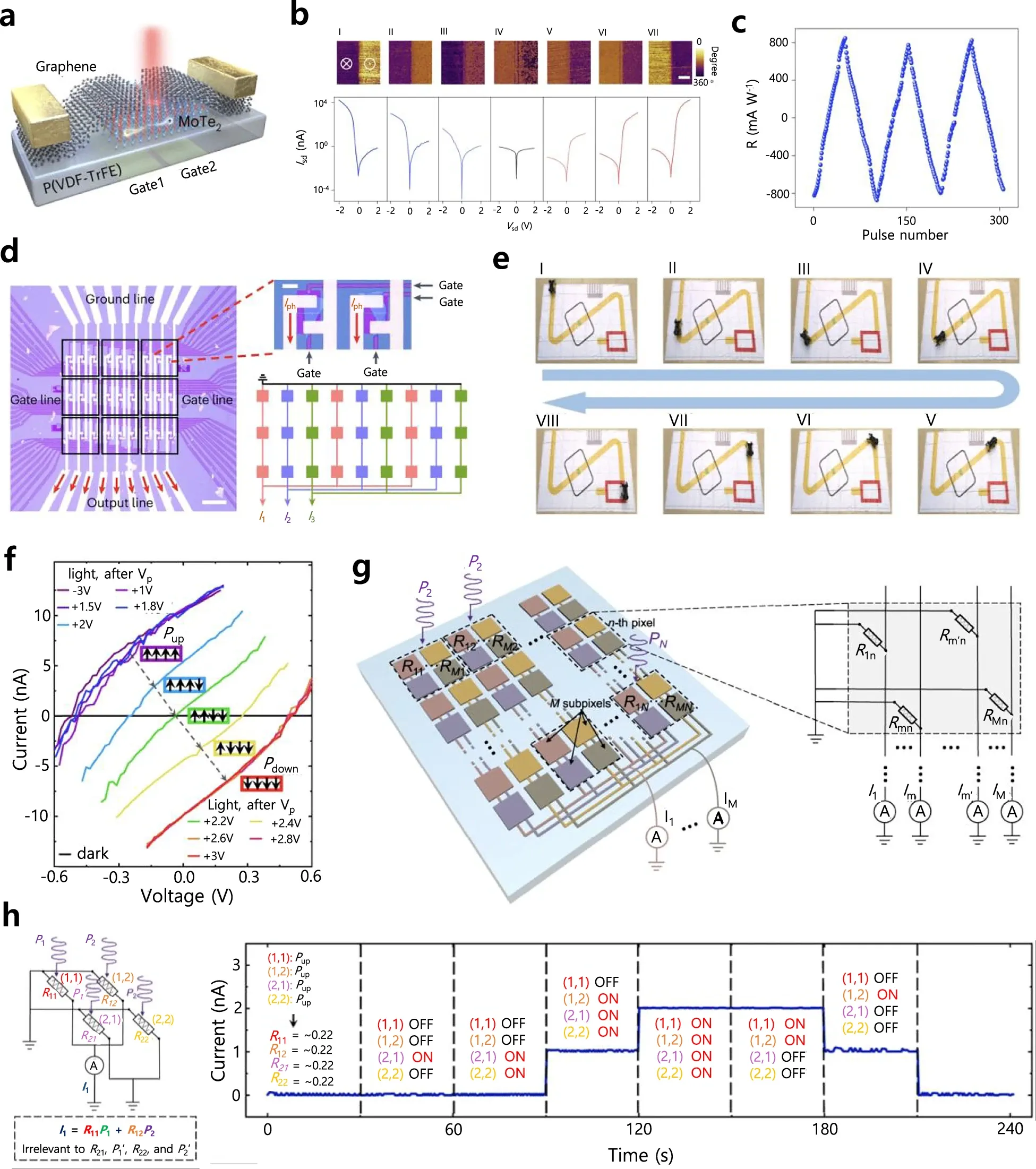 Ferroelectric computing V: in-sensor computing.
Researchers are exploring multiple ferroelectric device architectures, including Ferroelectric RAM (FeRAM), Ferroelectric Tunnel Junctions (FTJs), and Ferroelectric Field-Effect Transistors (FeFETs). These technologies offer key advantages such as non-volatile storage, analog programmability, high endurance, and compatibility with advanced semiconductor manufacturing.
The technology is particularly attractive for neuromorphic computing, where hardware mimics the behavior of biological neural networks. Ferroelectric devices can function as artificial synapses with continuously tunable weights, enabling low-power machine learning directly on-chip. Recent demonstrations have shown dense FeFET arrays, high-speed FTJ synapses, and memory-computing architectures capable of performing neural network operations with significantly reduced energy consumption.
Material innovation is also accelerating. Beyond traditional ferroelectric oxides, researchers are developing hafnia-based ferroelectrics compatible with CMOS manufacturing, scandium-doped aluminum nitride for high-endurance devices, and two-dimensional ferroelectric materials for ultra-scaled electronics.
As Moore’s Law slows and AI demand continues to grow, ferroelectric computing represents more than a new memory technology. It offers a fundamentally different computing paradigm—one in which storage, signal processing, and computation are integrated into the same physical structure, potentially redefining the future of AI hardware, neuromorphic computing, in-memory computing, and post-silicon semiconductor technology.
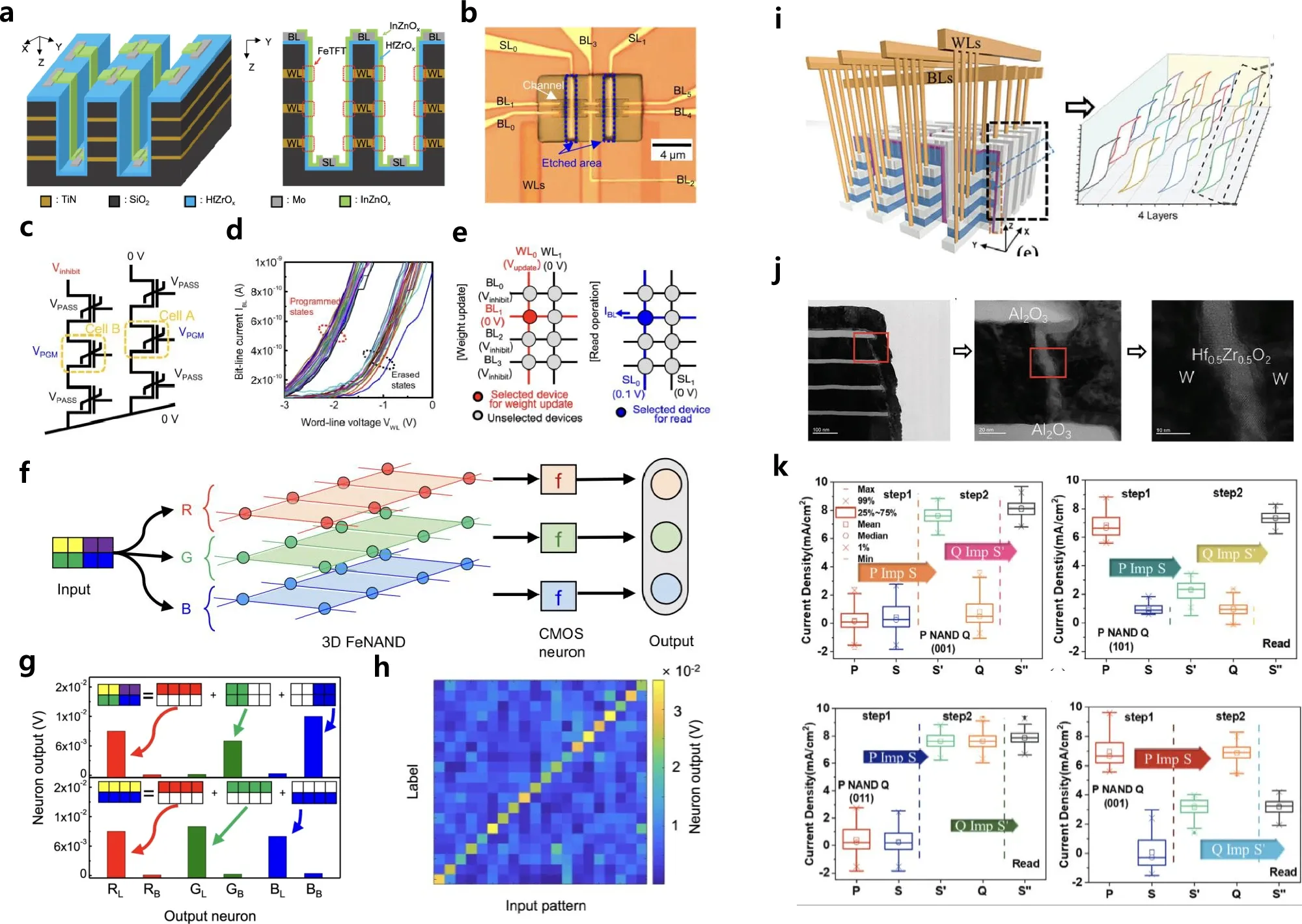 Ferroelectric computing VIII: 3D architectures.

