


Summary: Researchers have developed a hummingbird-inspired flapping-wing robot that uses real-time closed-loop wing synchronization to improve lift generation, demonstrating how precise control systems can enhance the performance of next-generation bioinspired flying robots.
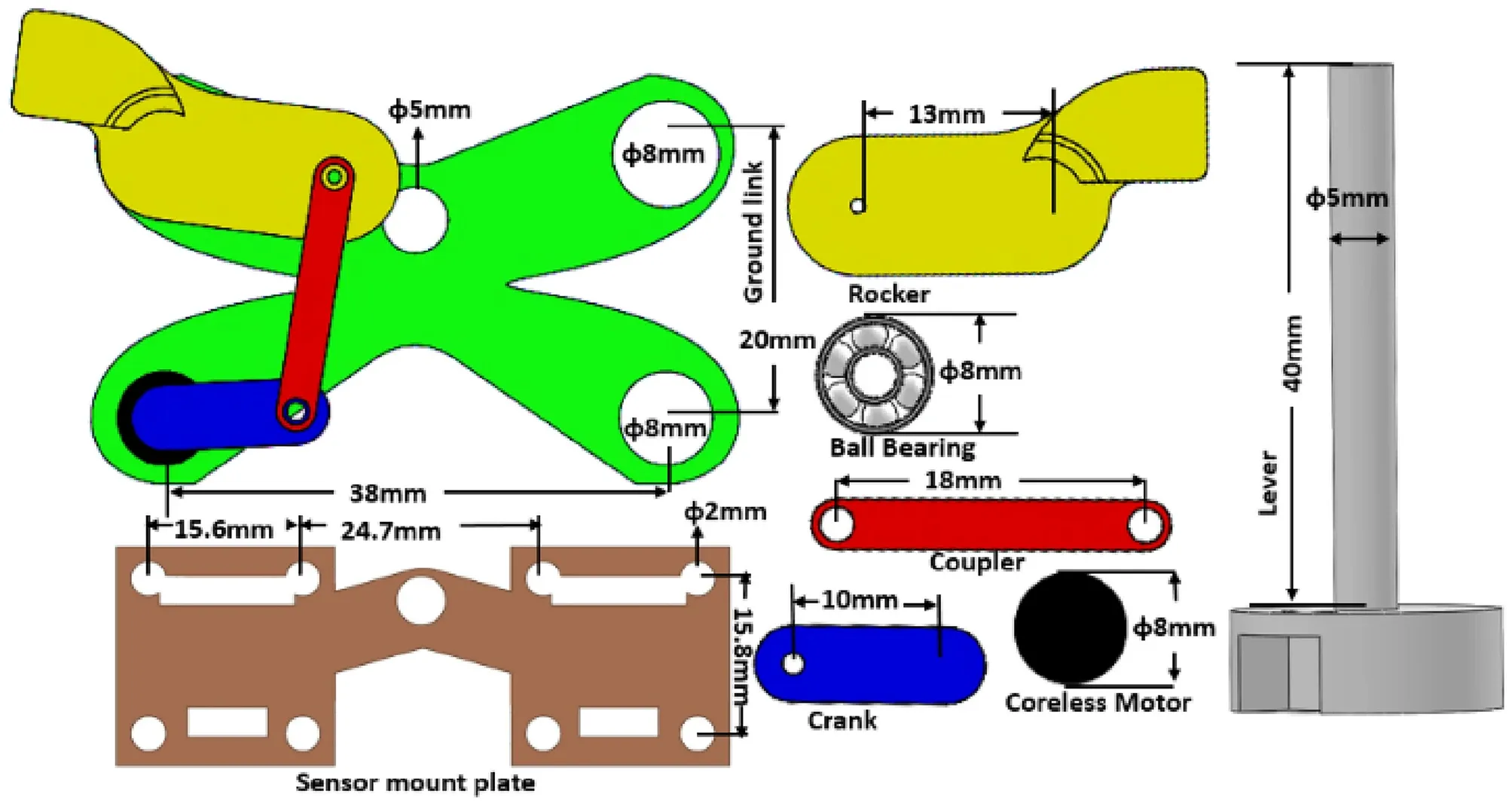
Flapping-Wing Robot Mechanism
A research team from India has developed a hummingbird-inspired flapping-wing robot that demonstrates how precise synchronization between independently actuated wings can significantly improve lift generation. The study highlights a key advance in bioinspired robotics, combining real-time sensing, closed-loop control, and bird-like flight mechanics to create a more efficient aerial robot.
Unlike many previous flapping-wing robotic systems that rely on open-loop actuation, the new platform employs two independently driven motors monitored by magnetic encoders. The robot continuously measures wing frequency and phase alignment, using dual Proportional–Integral (PI) controllers and a Proportional (P) controller to maintain synchronized wing motion during flight.
The synchronized control system enables the robot to achieve an average lift of 57.2 grams at an 8 Hz flapping frequency, the highest performance recorded during testing. Researchers found that even small phase mismatches between the wings reduced lift generation, confirming that precise coordination is critical for stable and efficient flapping-wing flight.
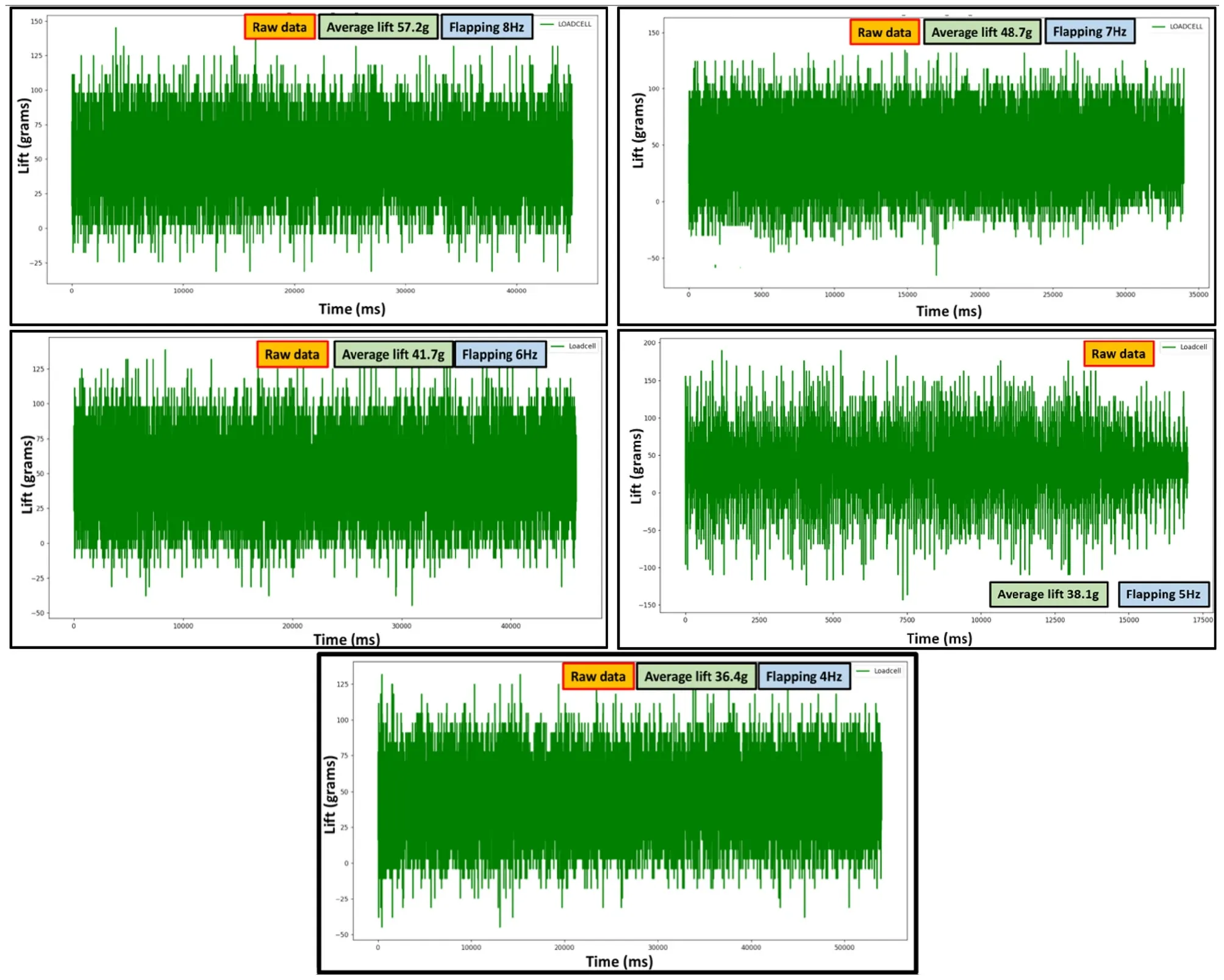
Lift Performance at Different Flapping Frequencies
The robot's design draws inspiration from hummingbirds, which rely on highly coordinated wing movements to hover and maneuver. Experimental measurements revealed a distinct lift peak near the end of the forward wing stroke, a phenomenon researchers believe is linked to the well-known “clap-and-fling” aerodynamic effect, where wing interactions generate additional lift.
To better understand performance, the team also developed a reduced-order aerodynamic model that explains how lift changes with flapping frequency. Results showed a clear relationship between frequency and lift, with higher flapping frequencies producing stronger aerodynamic forces.
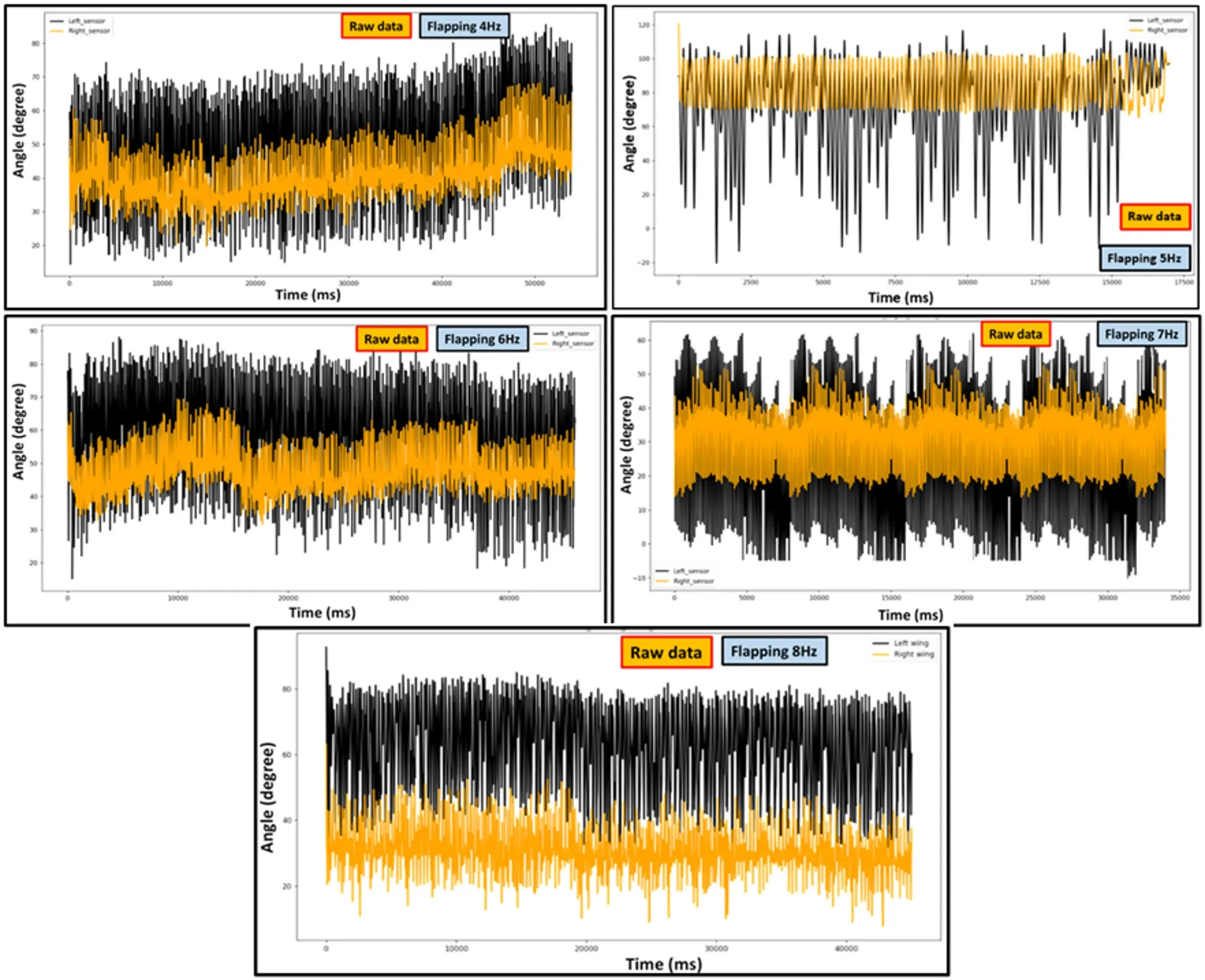
Wing Motion Data at Multiple Frequencies
Beyond the mechanical design, the study demonstrates the importance of integrating real-time feedback control, magnetic sensing, and adaptive motor synchronization into flapping-wing aerial vehicles. Such technologies could help improve the efficiency and maneuverability of future micro air vehicles (MAVs), robotic pollinators, environmental monitoring drones, and autonomous flying robots.
As researchers continue to explore bird-inspired flight systems, the successful implementation of closed-loop wing synchronization offers a promising pathway toward lightweight flying robots capable of achieving greater lift, stability, and energy efficiency in complex environments.

