


Summary: Researchers have developed miniature robots that fly and navigate using ultrasonic sound waves instead of conventional motors, opening new possibilities for micro robotics, biomedical devices, and confined-space exploration.
A research team from the United Kingdom has unveiled a breakthrough in micro robotics by creating tiny robots that can fly, float, and steer using ultrasonic sound waves rather than traditional motors. The technology leverages Helmholtz resonance, a physical phenomenon that converts acoustic energy into directed airflow, enabling movement without batteries, magnets, or mechanical drive systems.
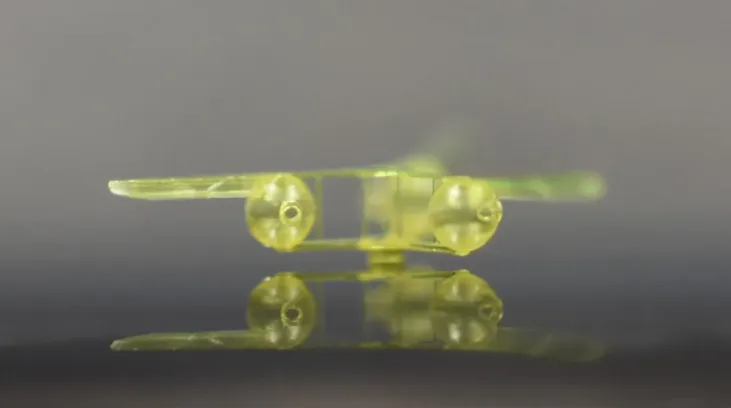
Image credit: EPFL/MICROBS
The innovation relies on miniature resonators fabricated using two-photon 3D printing, an advanced manufacturing technique capable of producing highly precise hollow structures. When exposed to ultrasonic frequencies, these resonators generate focused air jets that create thrust and motion.
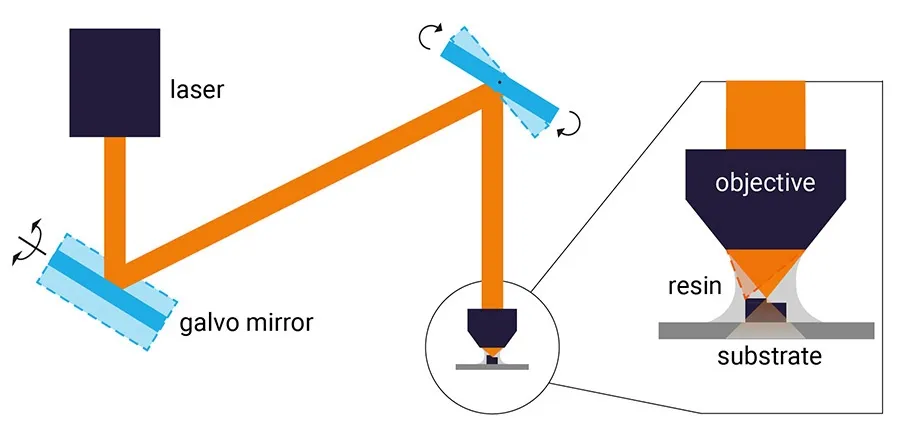
Schematic illustration of the 2PP-based microfabrication hardware setup
Researchers demonstrated the concept with small robotic boats approximately 5 centimeters long. Each boat contains multiple resonators tuned to different frequencies, allowing external sound sources to control direction and movement. The team also developed microfliers as small as 1 millimeter, including designs that generate lift through downward airflow and others that mimic helicopter rotors powered entirely by sound.
Unlike conventional electric motors, which become increasingly difficult to miniaturize due to magnets, coils, and moving components, acoustic resonators are primarily hollow structures. This makes them highly scalable and potentially suitable for next-generation ultra-small autonomous robots.
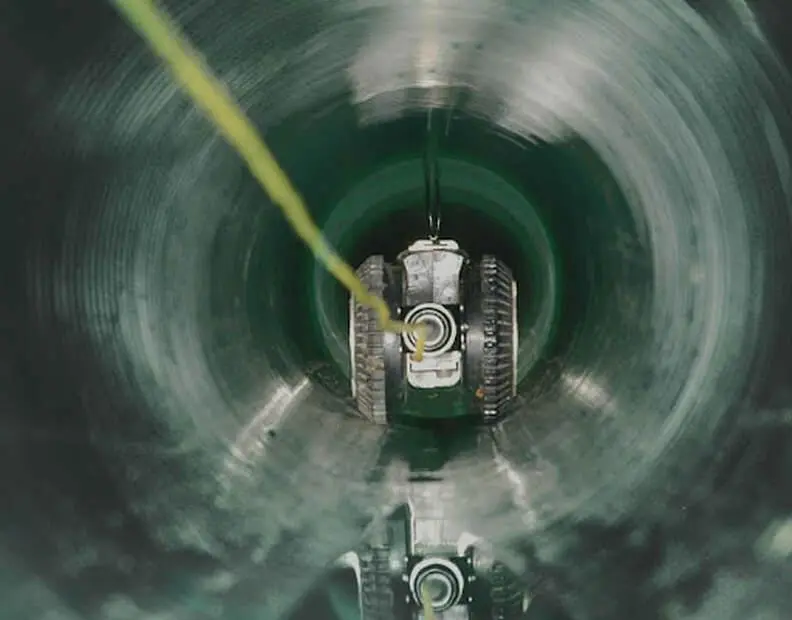
Beyond propulsion, the technology could enable contactless manipulation, remote actuation of flexible structures, and future integration with biomedical devices. Researchers envision applications in confined environments where traditional robotic systems struggle, including narrow pipelines, underground tunnels, industrial inspection routes, and areas affected by strong electromagnetic interference.
Although challenges remain in navigation, sensing, and onboard intelligence, the research demonstrates a new method of converting sound into mechanical work. As advances in microelectronics and sensors continue, sound-powered robots could evolve into a new class of miniature machines capable of operating where conventional motors cannot.

