


Summary: Founded by AI pioneer Fei-Fei Li, World Labs has introduced Atlas, a next-generation multimodal world model capable of understanding and generating text, images, video, and 3D content within a shared spatial environment.
World Labs, the spatial intelligence startup co-founded by renowned AI researcher Fei-Fei Li, has officially launched Atlas, a new multimodal world model designed to understand, generate, and reason across text, images, video, and 3D data. The release marks a significant step forward in the development of AI world models, spatial intelligence, and 3D generative AI.
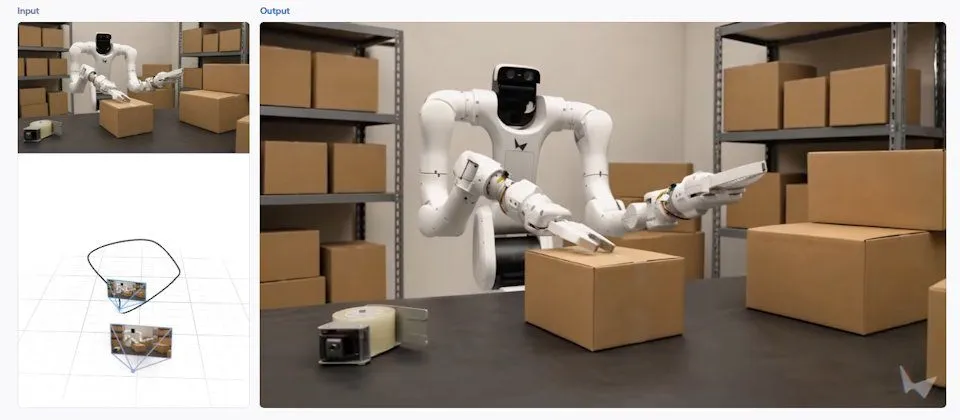
Atlas is built as a foundation model that combines multiple data modalities within a shared 3D spatial framework. According to World Labs, the system can generate high-resolution videos, reconstruct complex 3D environments, simulate scenes across time and space, and create photorealistic images from natural language prompts.
One of Atlas’s standout capabilities is camera-controlled video generation. Using just one to six reference images, users can specify virtual camera movements and generate videos up to one minute long in 1440p resolution. The model can also infer and render areas that were not visible in the original photos, producing coherent and immersive visual content.
For 3D scene reconstruction, Atlas can process anything from a single image to hundreds of photographs. More input images improve accuracy, while smaller datasets allow the model to leverage its learned understanding of the physical world to intelligently predict missing details. This capability could benefit applications ranging from digital twins and architecture to robotics and game development.
Atlas also introduces advanced spatiotemporal simulation, enabling users to recreate dynamic scenes and view them from any perspective. Tasks that traditionally require expensive multi-camera setups can now be achieved using footage captured from only a few smartphones.
At its core, Atlas uses a multimodal autoregressive diffusion Transformer architecture that anchors visual and textual information within a unified 3D spatial context. This allows the model to maintain consistency across generated outputs while reasoning about unseen portions of a scene.
Benchmark tests reported by World Labs show Atlas outperforming several leading models in camera-control generation and achieving highly competitive results in 3D reconstruction tasks. The technology is expected to power future versions of the company’s Marble platform and other upcoming products.
Currently, Atlas is available only to selected partners, positioning World Labs at the forefront of the rapidly evolving race toward spatially aware artificial intelligence.

