


Summary:Researchers have developed a bikitaite-infused cellulose separator that suppresses lithium dendrites, improves fast-charging performance, and significantly extends the lifespan of lithium-metal batteries.
Lithium-metal batteries have long been viewed as a breakthrough technology for electric vehicles and next-generation energy storage due to their exceptionally high energy density. However, safety risks caused by lithium dendrite growth have remained one of the biggest obstacles to commercialization.
A research team has now developed a new bikitaite-infused cellulose-based separator (CBT) that could help overcome this challenge. The study shows that the separator creates continuous three-dimensional lithium-ion transport pathways, enabling more uniform lithium deposition while reducing the formation of dangerous dendrites.
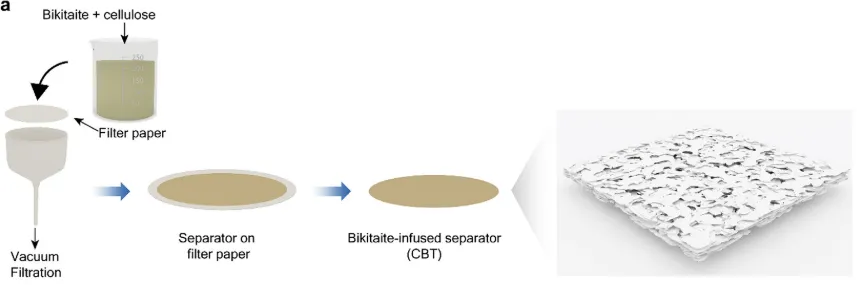
Figure 1:Schematic Diagram of CBT Separator Preparation Process
According to the research, the CBT separator achieved a lithium-ion transference number of 0.742 and an ionic conductivity of 3.45 × 10⁻³ S cm⁻¹, substantially higher than conventional polyethylene (PE) separators. These improvements accelerate ion transport, reduce polarization, and enhance battery charging efficiency.
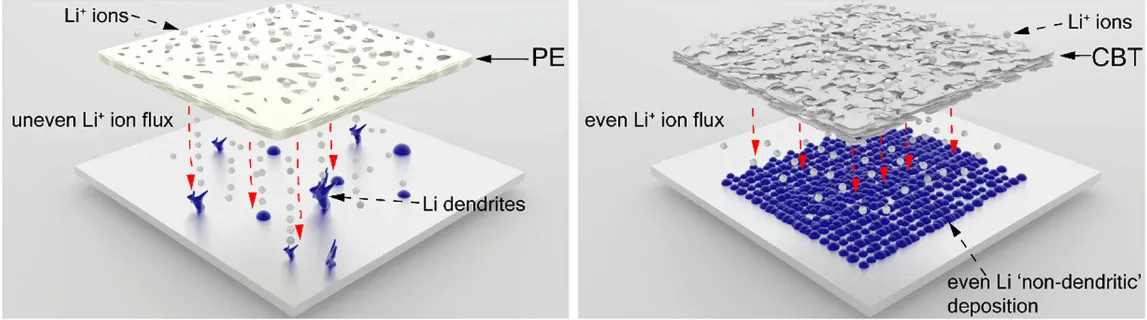
Figure 2:Schematic diagram of Li⁺ ion flux comparison under PE and CBT separators
The technology also demonstrated exceptional durability. Lithium-metal symmetric cells operated for more than 2,200 hours with stable cycling, while lithium-metal batteries paired with high-nickel NCM90 cathodes retained around 60% of their original capacity after more than 2,500 high-rate charge-discharge cycles.
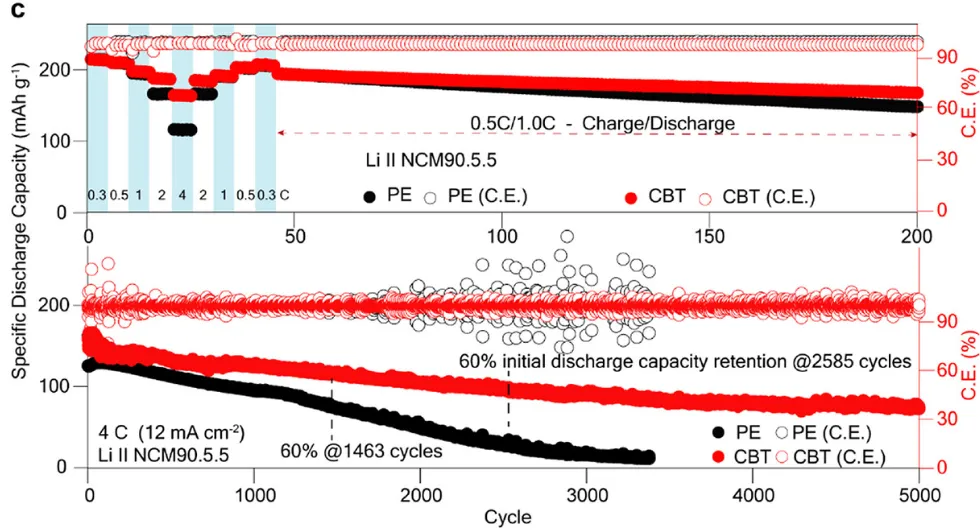
Figure 3:Schematic diagram of Li⁺ ion flux comparison under PE and CBT separators
Beyond cycle life, the separator offers significant safety advantages. Unlike conventional PE separators that shrink at elevated temperatures, the cellulose-based design maintained structural integrity even at 200°C, reducing the risk of internal short circuits.
The separator also performed well under extreme conditions. Tests at −25°C showed improved cycling stability and reduced dendrite formation, highlighting its potential for electric vehicles and energy storage systems operating in cold climates.
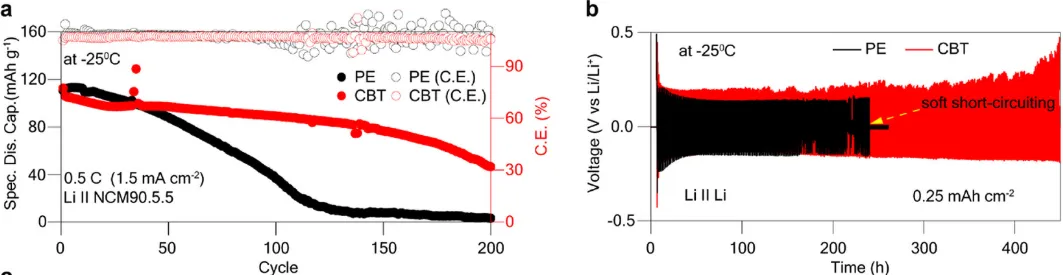
Figure 3:Comparison of Low-temperature Cycle Performance at -25°C
As global demand grows for fast-charging EV batteries, high-energy-density battery technology, and safer energy storage systems, the researchers believe the scalable cellulose-ceramic separator design could provide a practical pathway toward commercial lithium-metal batteries.

