


Summary: A new microwave diffractive neural network chip combines AI computing and real-time electromagnetic sensing on a semiconductor platform, delivering ultra-fast inference with low power consumption.
Researchers have developed a microwave diffractive neural network (MDNN) chip that could reshape the future of edge AI, wireless communications, autonomous drones, radar sensing, and RF computing. Published in Science Advances, the semiconductor-based processor performs AI inference directly in the microwave domain, eliminating many of the latency and energy costs associated with conventional digital computing.
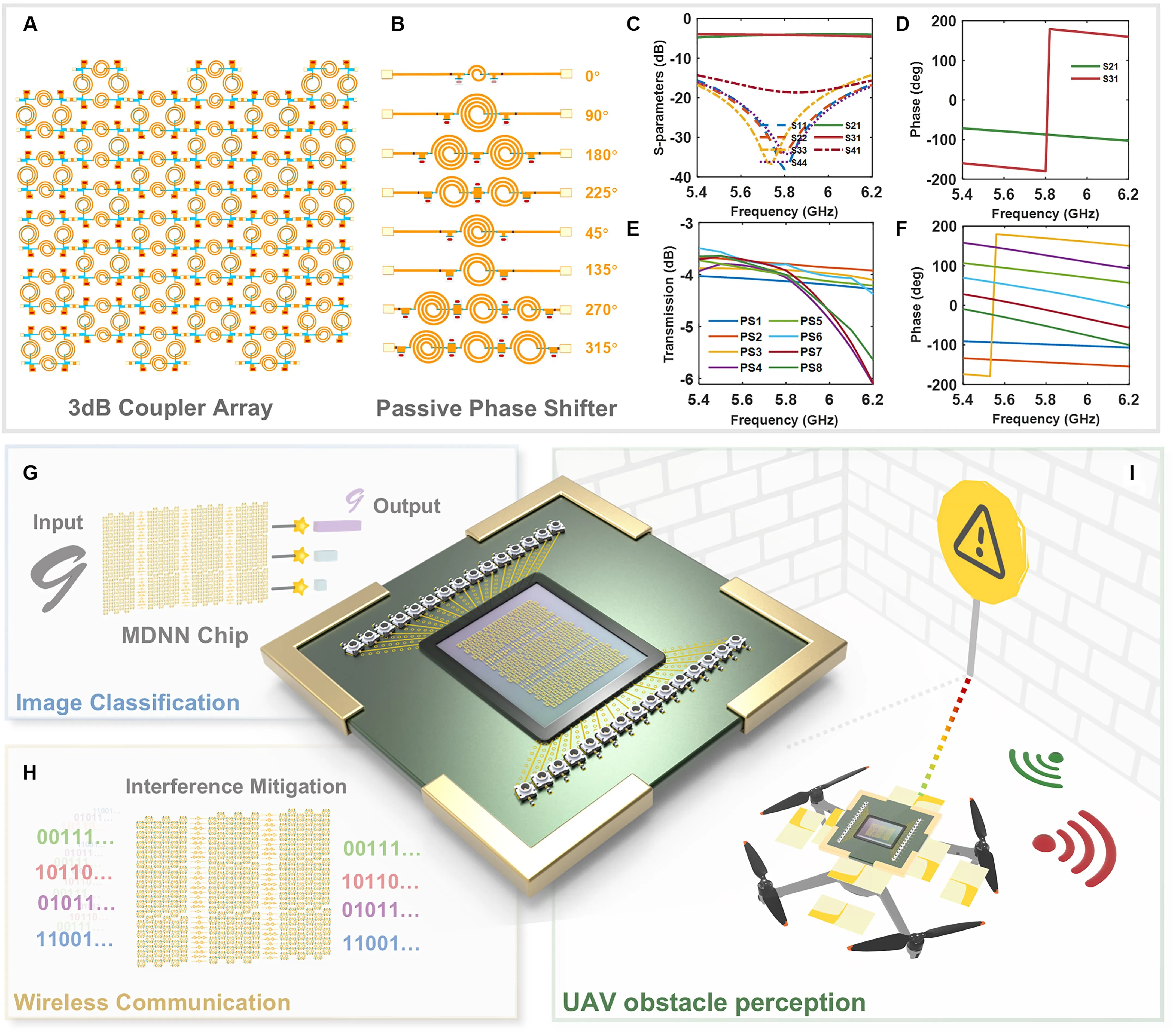
Architecture and core component implementation of the MDNN chip.
Unlike optical neural networks that often face scalability and manufacturing challenges, the MDNN integrates cascaded couplers and programmable phase shifters on a GaAs semiconductor chip. The architecture compresses traditional microwave diffractive neural networks by more than four orders of magnitude, enabling hundreds of electromagnetic neurons to operate within a compact millimeter-scale footprint.
The chip achieves a computing latency of just 2.05 nanoseconds and a system-level energy efficiency of 0.83 TOPS/W, positioning it as a promising platform for low-power AI acceleration. In benchmark tests, the processor reached 90% accuracy in handwritten digit recognition while maintaining real-time performance. It also demonstrated over 86% accuracy in obstacle-distance perception for unmanned aerial vehicles (UAVs).
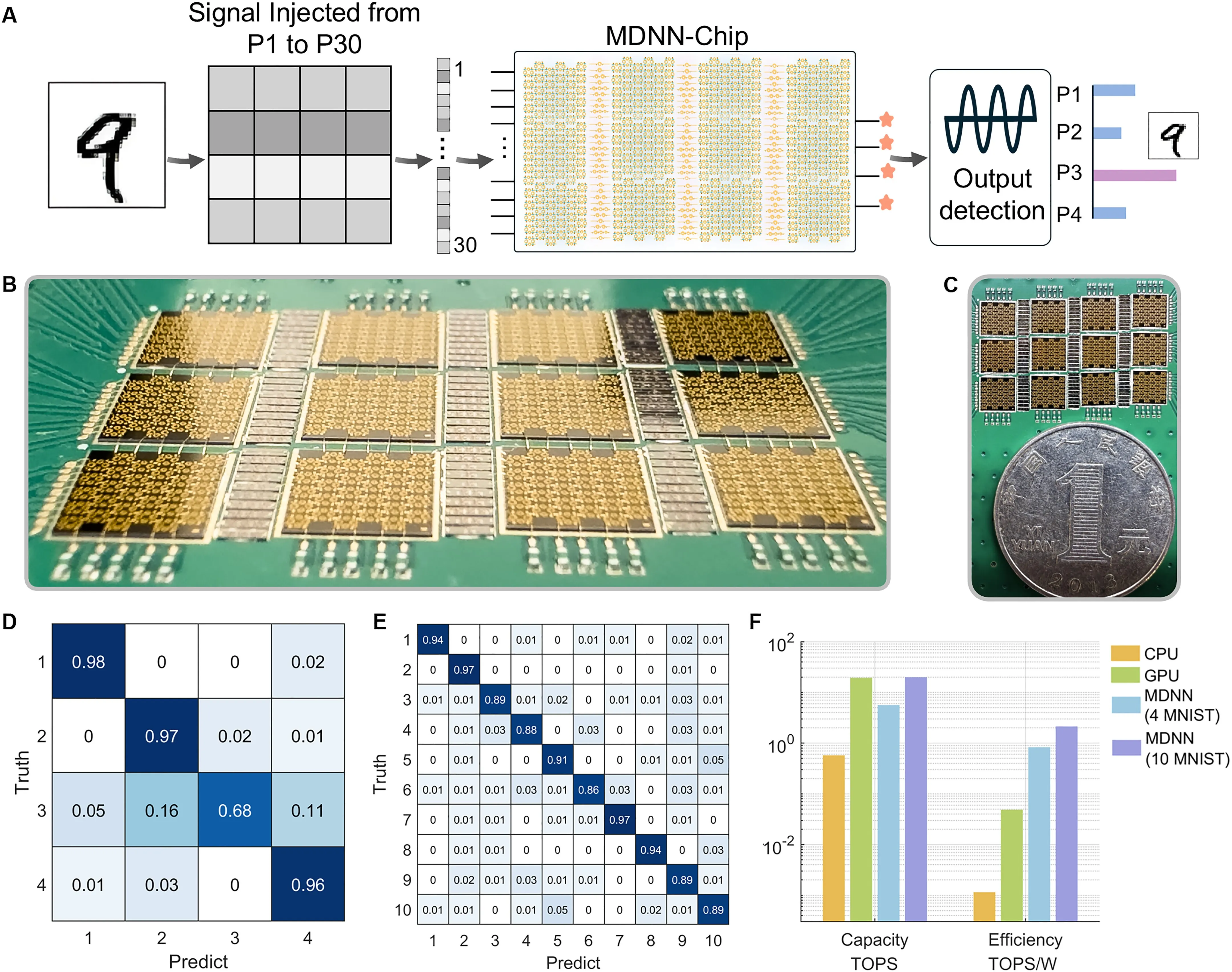
Computational performance of the MDNN chip on MNIST handwritten digit classification.
Beyond AI image classification, the researchers validated the chip in wireless communication systems, where it performed real-time multi-user interference suppression. By processing electromagnetic signals directly at the hardware level, the MDNN improved signal separation and reduced communication interference without relying on power-hungry backend processors.
The team believes the technology could accelerate the development of 6G networks, intelligent sensing systems, autonomous robotics, smart drones, and next-generation AI chips. Future versions are expected to feature larger-scale integration, reconfigurable architectures, and on-chip training capabilities, bringing electromagnetic AI computing closer to real-world deployment.
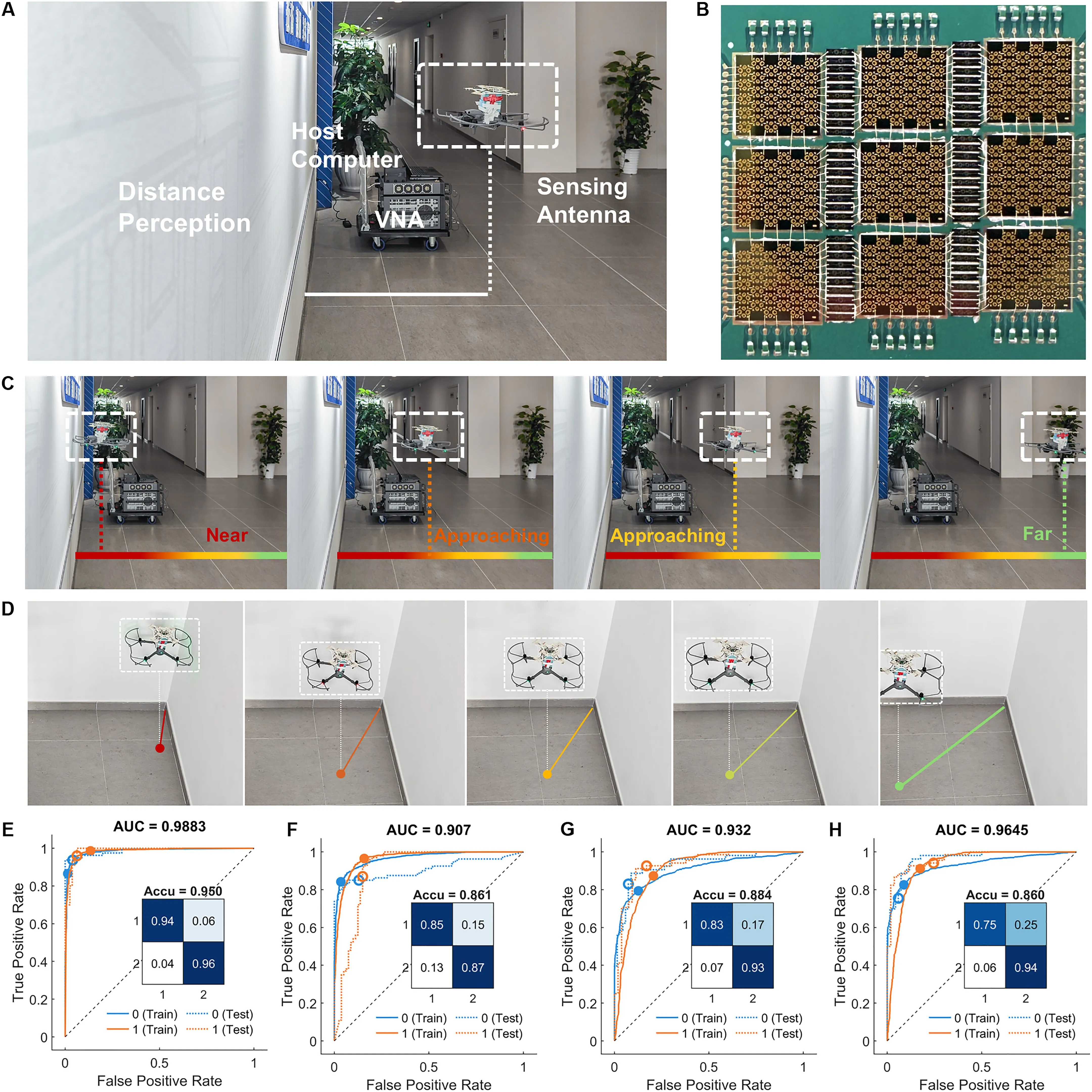
MDNN-based UAV distance perception validation and performance evaluation.

