


Summary: A new Science Advances review highlights how spintronics is moving from magnetic sensing and MRAM toward energy-efficient computing architectures that could extend beyond conventional silicon electronics.
A comprehensive review published in Science Advances highlights the rapid evolution of spintronics, a technology that uses the spin of electrons rather than only their electric charge to process and store information. Researchers say the field is becoming a key foundation for next-generation MRAM memory, low-power electronics, AI hardware, and beyond-CMOS computing.
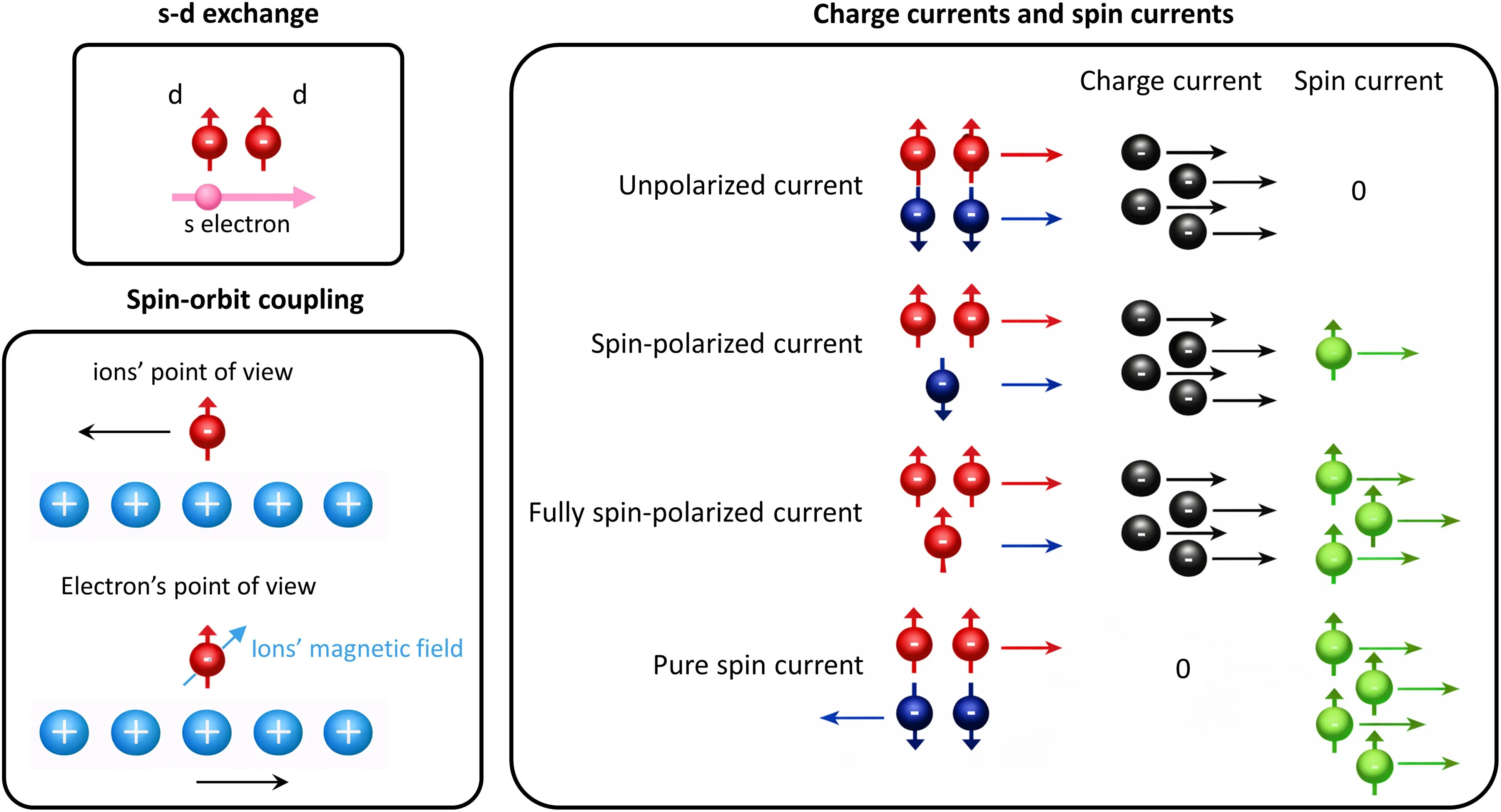
Exchange, spin-orbit coupling, and charge and spin currents
Spintronics first gained commercial importance through the discovery of giant magnetoresistance (GMR), a breakthrough that transformed hard-disk drive technology. Today, the field has expanded to include spin-orbit coupling, spin Hall effects, spin currents, and advanced methods for electrically controlling magnetic states at the nanoscale.
One of the most important developments is the rise of spin-orbit torque (SOT) technology. By converting charge currents into spin currents, SOT devices can switch magnetic states more efficiently than earlier approaches. Researchers view SOT-MRAM as a promising candidate for high-speed, energy-efficient nonvolatile memory that could serve future data centers, edge AI devices, and automotive systems.
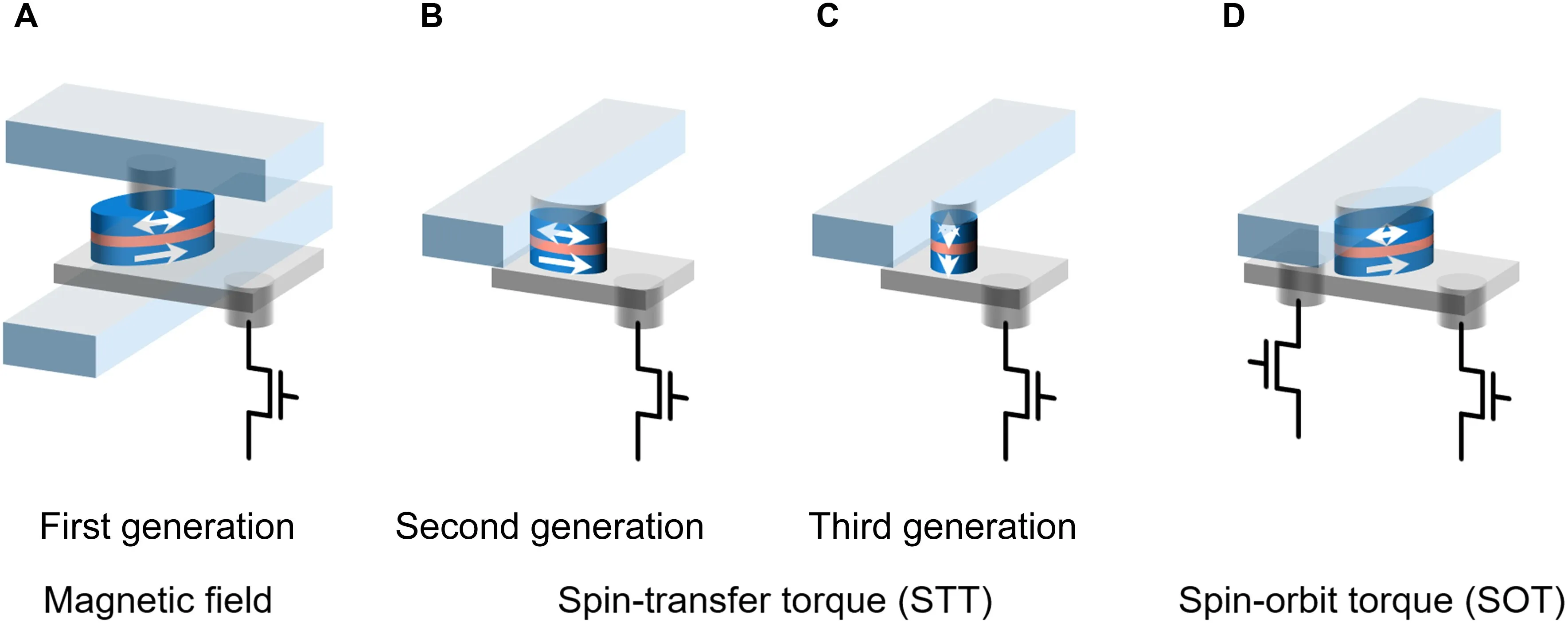
MRAM roadmap.
The review also highlights growing interest in voltage-controlled magnetic anisotropy and magnetoelectric coupling, which allow magnetic properties to be manipulated using electric fields instead of large currents. These approaches could significantly reduce power consumption while enabling new memory and logic architectures.
Beyond memory, scientists are exploring racetrack memory, spin-based logic, neuromorphic computing, and magnonic processors that use spin waves for information processing. Such technologies may offer alternatives to traditional semiconductor scaling as the industry searches for new ways to improve performance and energy efficiency.
As artificial intelligence drives demand for faster and more efficient hardware, spintronics is increasingly viewed as a strategic technology that could help shape the future of computing, data storage, and intelligent electronic systems.

