


Summary:Researchers have developed FLEXOR, a bio-inspired quadruped robot that mimics the spine-leg coordination of fast-running mammals, achieving speeds of 7.13 body lengths per second while improving energy efficiency.
Inspired by the remarkable running ability of small mammals such as the sengi, researchers have unveiled FLEXOR (Fast Legged Robot with a Flexible Spine for Optimal Running), a new quadruped robot that demonstrates how embodied intelligence can dramatically improve robotic locomotion. The study was published in Science Advances.
Unlike conventional quadruped robots that rely mainly on leg actuation, FLEXOR incorporates a dual-joint coupled spine designed to reproduce the rhythmic flexion and extension found in fast-running animals. The robotic spine converts a simple unidirectional motor input into rapid, coordinated spinal motion while amplifying torque, allowing the robot to generate stronger propulsion without increasing energy consumption.
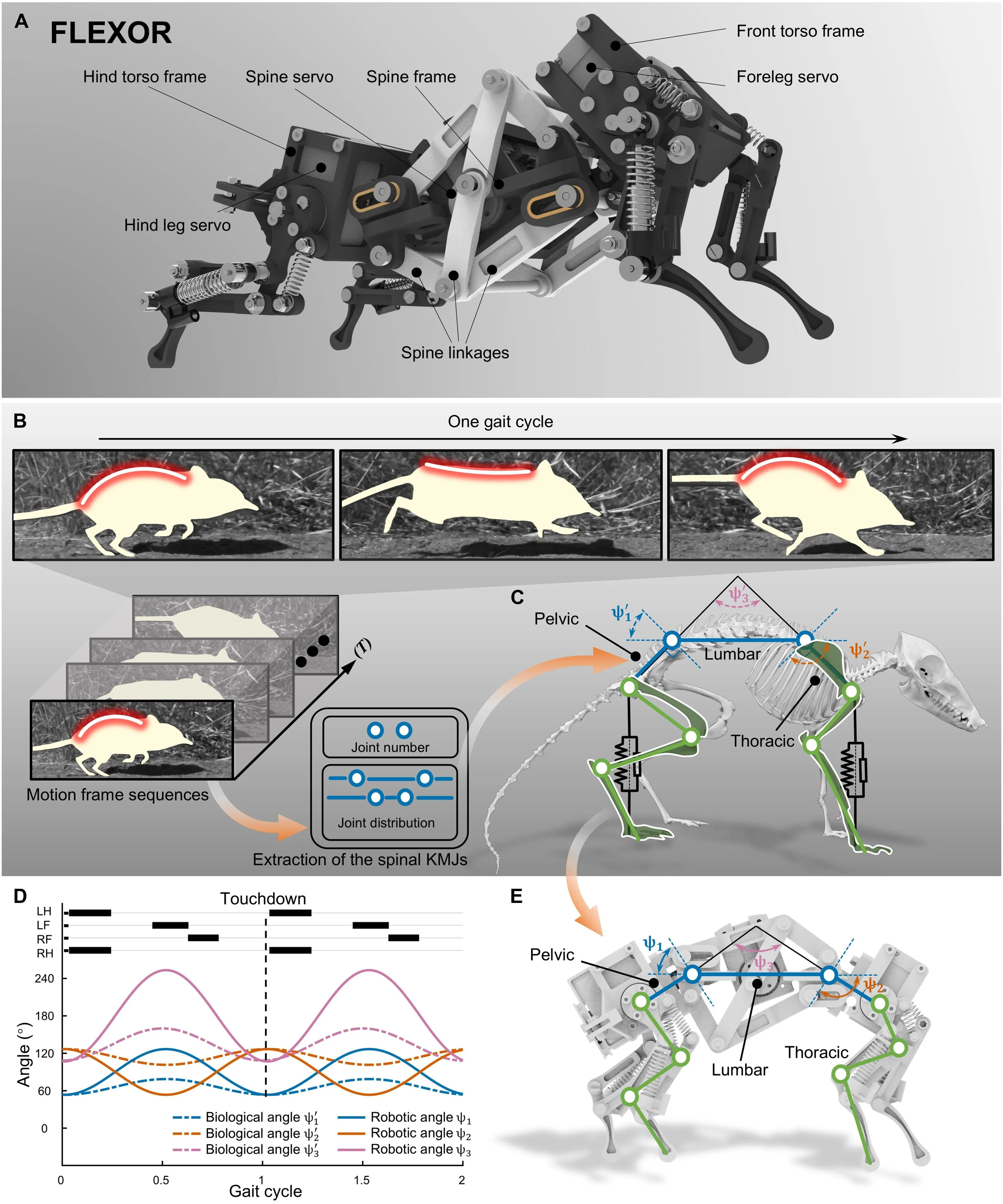
FLEXOR design and sengi-inspired morphology
Through simulations and physical experiments, the team identified an optimal coordination pattern between the robot’s spine and hind legs. Researchers found that maximum performance occurs when the hind-leg backswing slightly lags behind spinal extension. This timing aligns ground reaction forces for more effective forward propulsion and longer stride lengths.
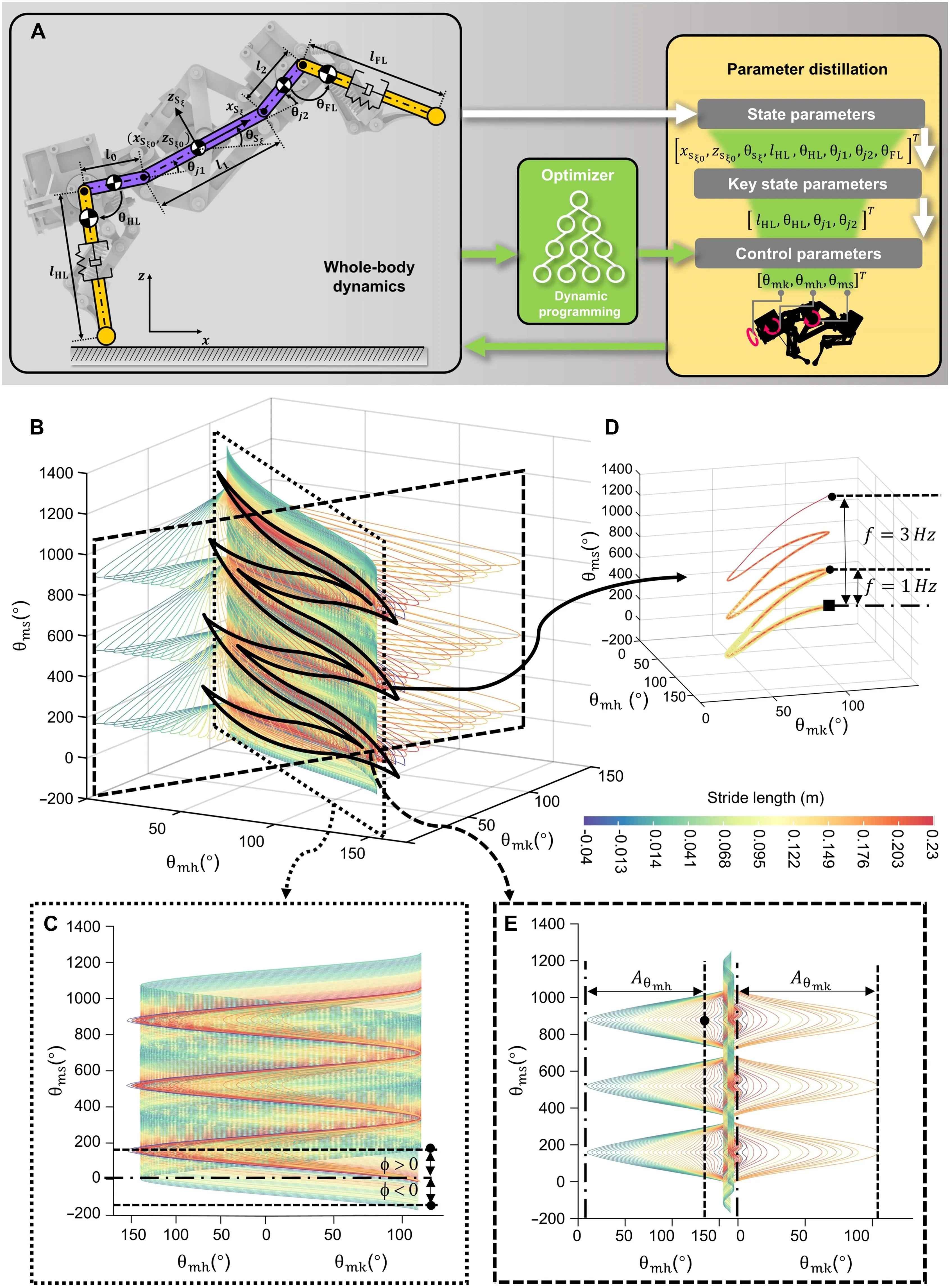 Optimal spine-leg synergy model
Testing showed that FLEXOR reached a top speed of 0.784 meters per second, equivalent to 7.13 body lengths per second, outperforming other quadruped robots equipped with flexible spines. At the same time, the robot reduced its cost of transport, demonstrating improved locomotion efficiency. Researchers reported that the optimal coordination pattern minimized energy expenditure while maximizing forward speed.
The robot’s design was inspired by the biomechanics of the sengi, a small mammal known for rapid terrestrial movement. By incorporating flexible spinal motion directly into the robot’s physical structure, the researchers argue that locomotion intelligence can emerge from morphology itself rather than relying solely on complex software control.
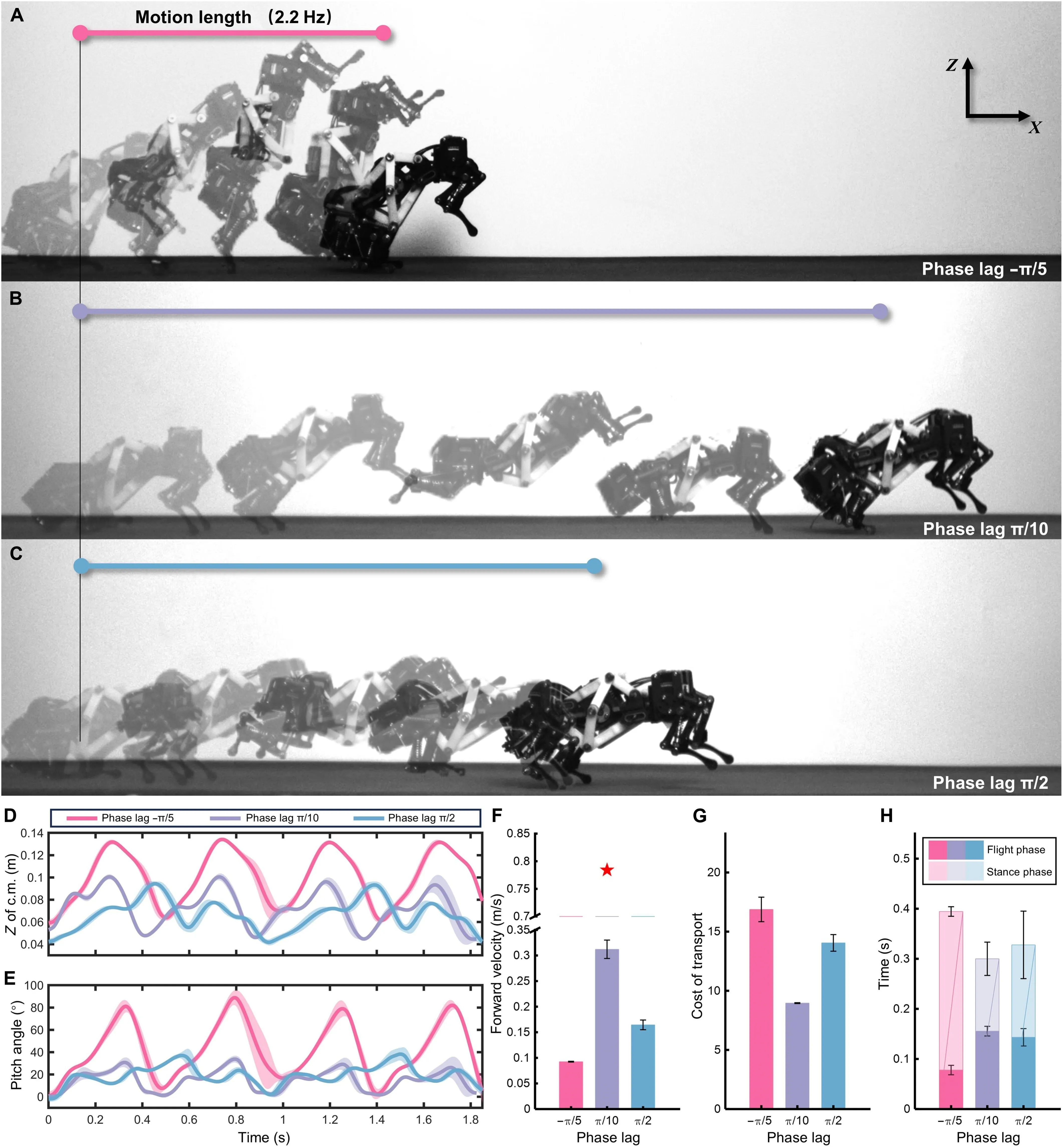
High-speed running experiments
The team also developed an extended dynamics framework showing that the optimal spine-leg coordination principle remains effective across different robot sizes and body designs, suggesting broader applications for future legged machines.
The findings could influence the next generation of legged robots, embodied AI systems, search-and-rescue robots, and environmental monitoring platforms, where speed, stability, and energy efficiency are critical.

