


Summary: Researchers have developed a 4D-printed piezoelectric metamaterial that combines mechanical protection, self-powered sensing, and vibration energy harvesting in a single lightweight structure, opening new possibilities for smart robots, aerospace systems, and intelligent equipment.
A research team has unveiled a new class of piezoelectric metamaterials that integrates impact protection, self-powered sensing, and energy harvesting into one engineered structure. The technology combines advanced materials, innovative 4D printing, and a Kagome lattice-inspired architecture, potentially enabling smarter structural components for robotics, aerospace, autonomous systems, and next-generation intelligent equipment.
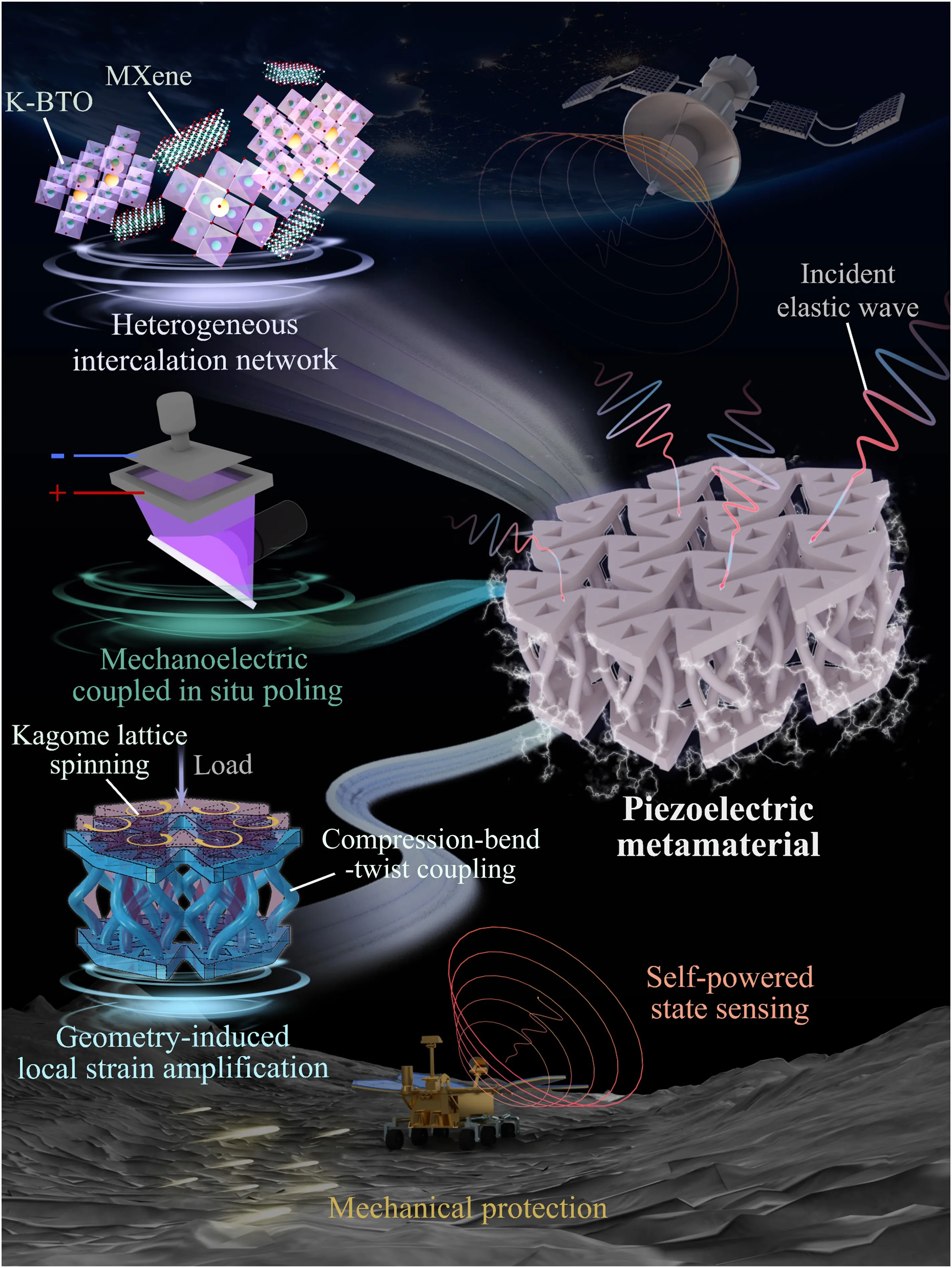 Material-architecture-manufacture integrated strategy for piezoelectric metamaterials with mechanical protection and self-powered sensing.
The researchers designed a composite material based on silane-modified barium titanate (K-BTO) and MXene nanosheets. During manufacturing, an electric field-assisted 4D printing process aligns and polarizes the material in situ, significantly enhancing its piezoelectric performance. The resulting composite achieved a piezoelectric coefficient of 41.5 pC/N and a voltage constant of 0.763 V·m/N, outperforming several commonly used flexible piezoelectric materials.
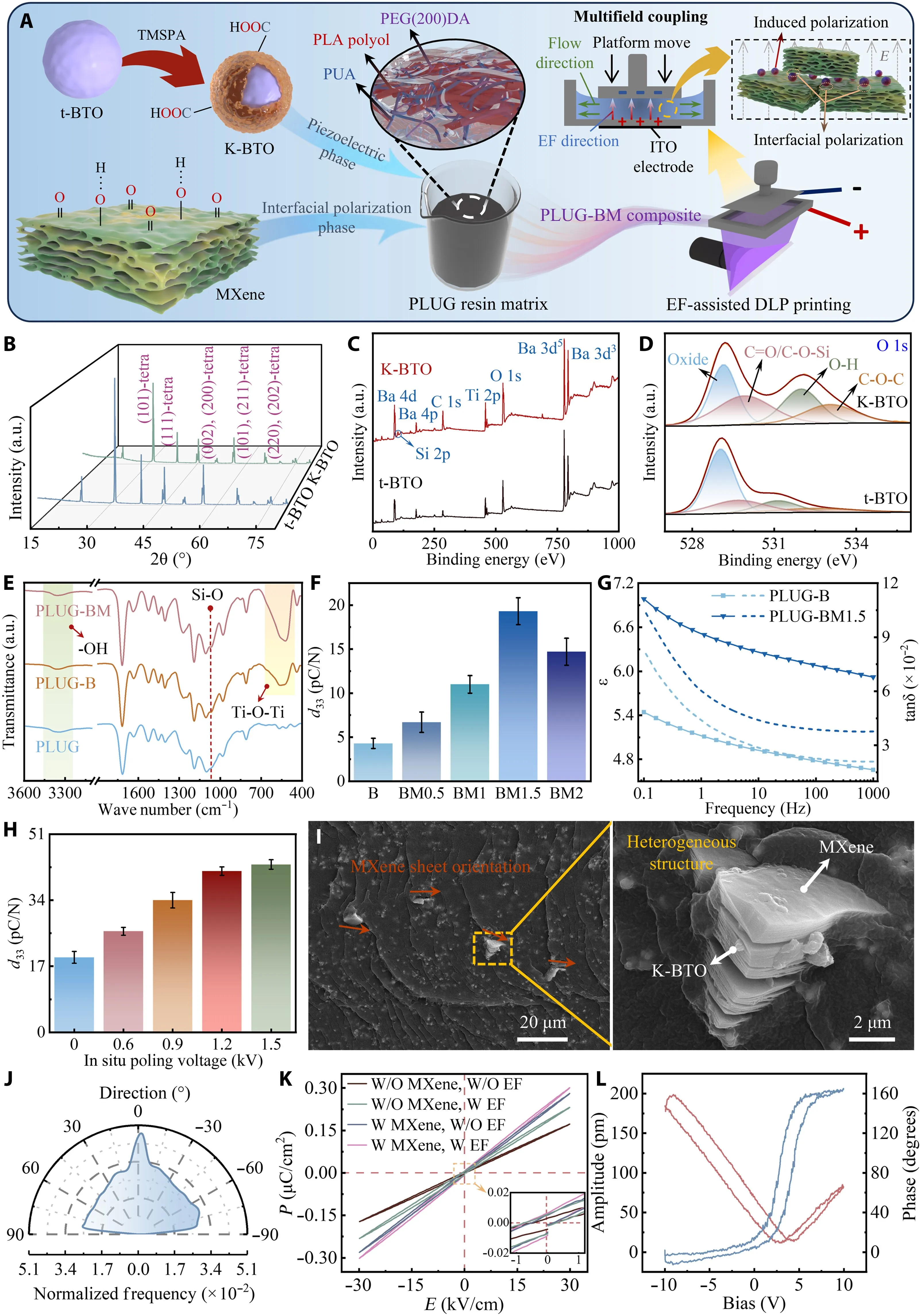 Preparation process and characterization of the K-BTO/MXene heterogeneous intercalation structure.
To improve mechanical performance, the team created a novel chiral helix-arch (CAH) metacell that coordinates compression, bending, and torsion deformation. Multiple metacells were then assembled into a Kagome lattice-inspired metamaterial (k-CAH) capable of absorbing energy while maintaining large recoverable deformation without buckling. The structure demonstrated a specific energy absorption of 0.18 J/g and up to 40% recoverable deformation.
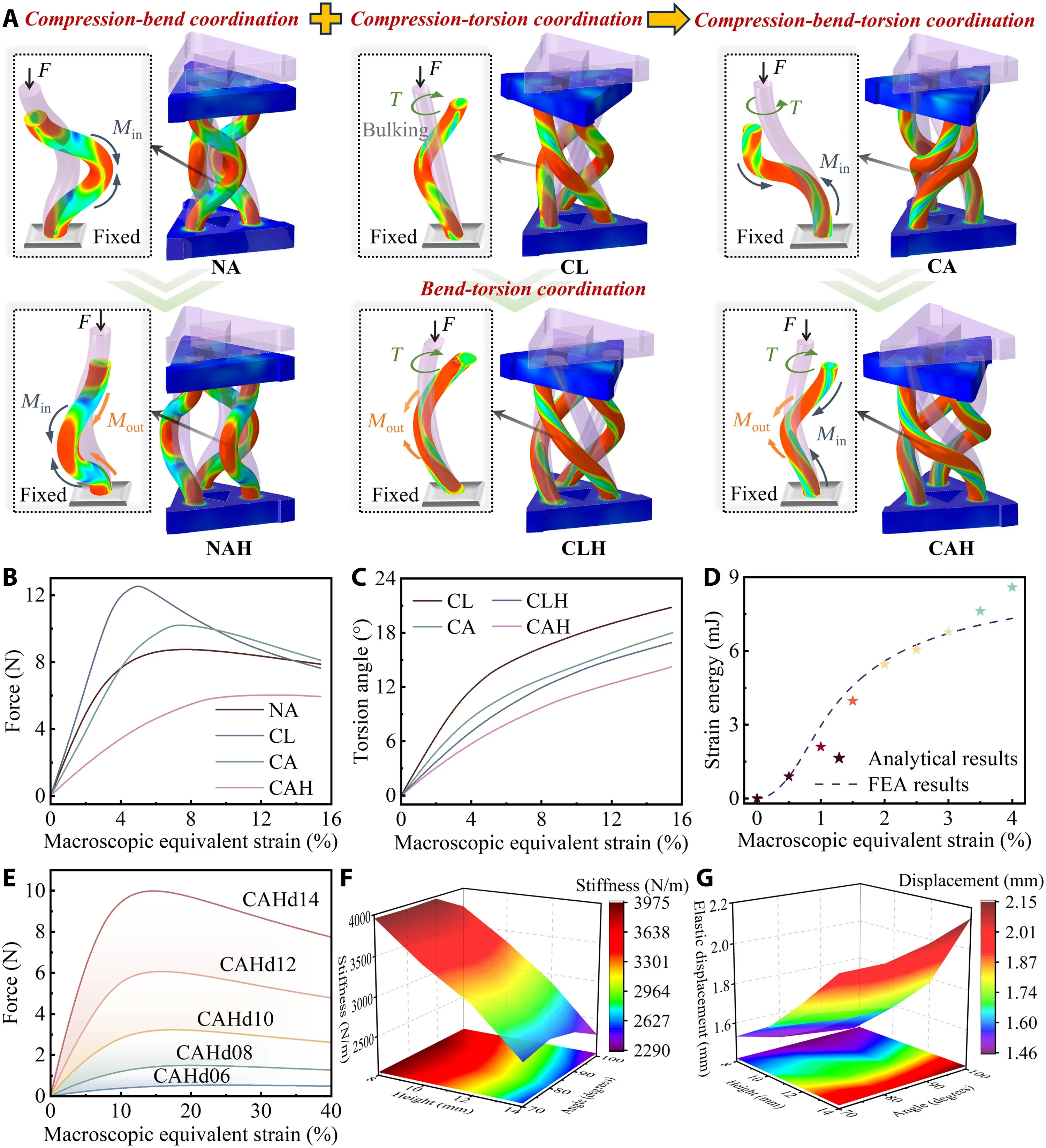 Compression-bend-torsion deformation mechanism and metacell optimization.
Unlike conventional piezoelectric materials that mainly respond to a single loading mode, the new architecture activates multiple piezoelectric response modes simultaneously. This geometry-driven approach amplifies local strain and improves electromechanical conversion efficiency, enabling effective sensing and energy harvesting even under low-frequency vibrations.
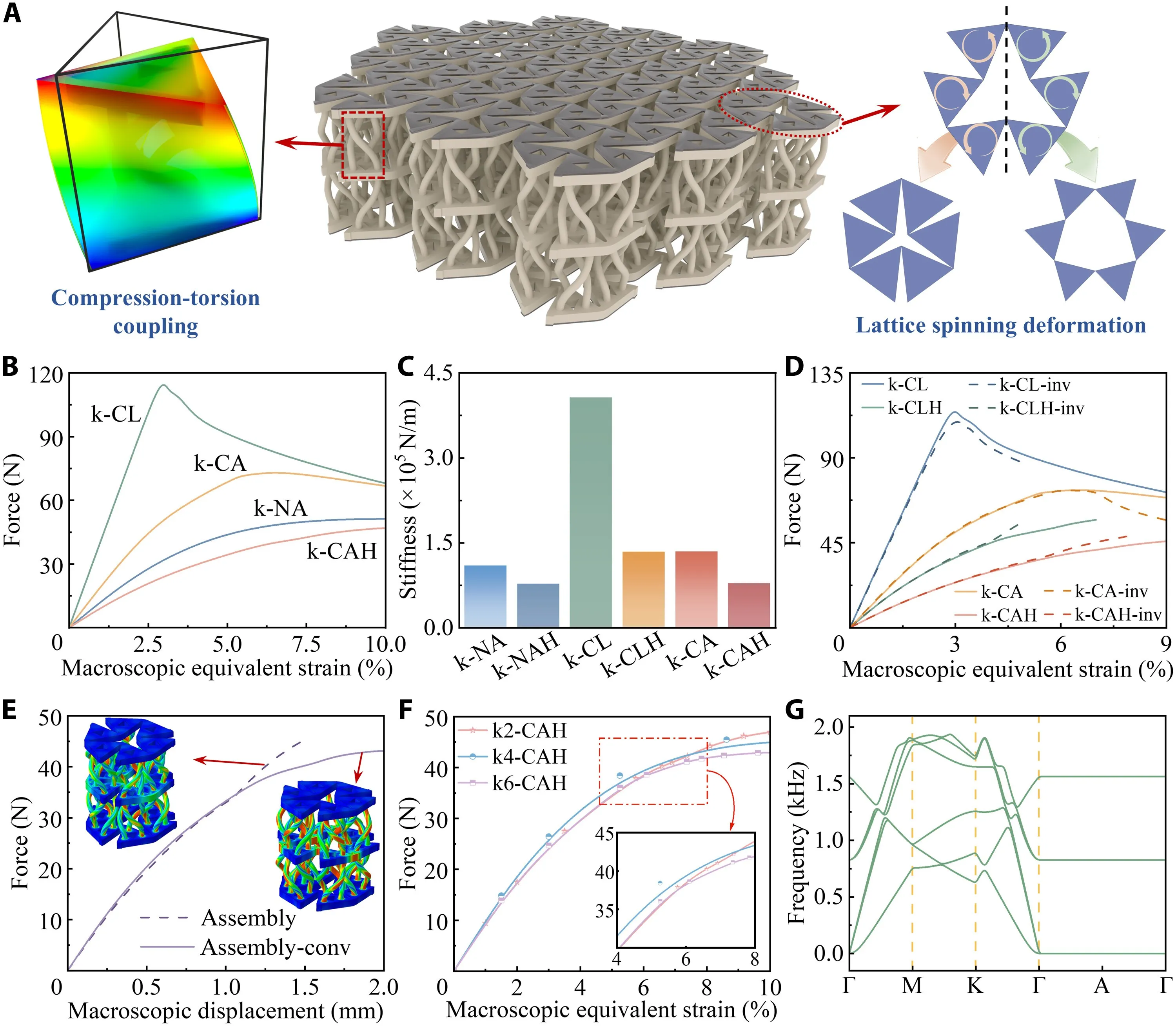 Mechanical simulation and deformation behavior of Kagome lattice-inspired metamaterials.
According to the researchers, the metamaterial can accurately detect real-time impacts without an external power source while also recycling vibration energy. The combination of mechanical buffering, energy absorption, self-powered sensing, and energy recycling could make the technology attractive for applications ranging from robotic platforms and autonomous vehicles to satellites, planetary rovers, and other intelligent engineering systems.
The work demonstrates how the integration of advanced materials, architected metamaterials, and 4D printing can transform structural components into multifunctional systems that not only protect equipment but also monitor and power themselves.

