


Abstract: The multinational MINIGRAPH project, funded by the European Innovation Council (EIC), has officially concluded. The research team successfully developed a long-lasting and stable ultra-thin graphene neural implantation system and a minimally invasive implantation scheme using a magnetic navigation robot. This breakthrough overcomes the limitations of traditional brain stimulation techniques, providing a high-precision and widely applicable new pathway for autonomic neurotherapy in Parkinson's disease.
On October 7th, Inbrain Neuroelectronics officially announced that the MINIGRAPH project, supported by the European Innovation Council (EIC), has completed all research and validation work and officially released its core research results. This multinational collaborative project focuses on novel minimally invasive neuromodulation technologies, with Parkinson's disease as the primary indication, and aims to create a next-generation safe, long-lasting, and scalable clinical brain-computer interface treatment system.
The project consortium, relying on its self-developed graphene thin-film electrode technology, developed an ultra-thin neural interface, implantable electronic devices, and supporting intelligent control software, building an integrated autonomic neurotherapy system. Accelerated aging tests have confirmed that this graphene neural electrode can operate stably for over ten years. A series of cell and molecular experiments have fully verified the material's biocompatibility and safety, and preclinical model trials have comprehensively validated the device's performance.
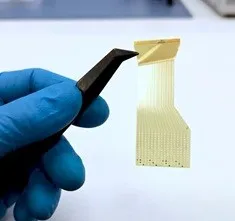
The project's biggest technological breakthrough is a novel magnetically guided robotic minimally invasive implantation system. By optimizing the magnetic carrier and robotic algorithms, the research team can implant probes into the cerebral cortex and deep tissues with sub-millimeter precision along straight or curved paths under X-ray imaging guidance, significantly improving surgical flexibility and accuracy. This technology has been validated through in vitro experiments and large animal models, demonstrating higher implantation efficiency and repeatability, completely breaking down the barriers of high barriers and operational difficulty inherent in traditional brain implantation surgery.
José Garrido, co-founder and chief scientific officer of Inbrain, stated that the widespread adoption of clinical brain-computer interfaces relies on the dual support of advanced equipment and standardized, precise implantation techniques. This project integrates core technologies from multiple fields to build a mature autonomous neurotherapy system that can accurately decode neural signals and target and regulate brain neural activity, making large-scale treatment of neurological diseases a reality.
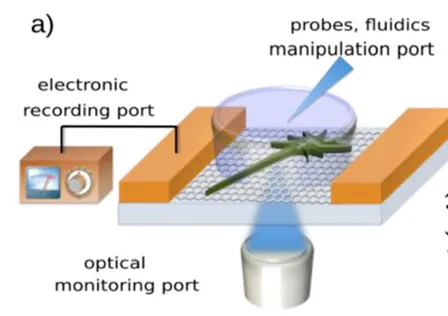
Matt Curren, co-founder of Nanoflex Robotics, also stated that the implementation of electromagnetic robotic precision implantation technology provides a completely new surgical approach for minimally invasive treatment of deep brain tissue, which will greatly expand the boundaries of clinical neurosurgical treatment.
It is understood that this project is coordinated by the Catalan Institute of Nanoscience and Nanotechnology, bringing together several top European research institutions. Currently, Inbrain continues to deepen its research into microrobotic neurosurgical technology and further promote the clinical application of neural implantation technology.

