


Summary: Researchers at the University of California San Diego and Toyota Research Institute of North America have developed a water-processable, fluorine-free battery binder that maintains lithium-ion battery performance while simplifying manufacturing and recycling. The technology could reduce energy consumption, toxic chemical use and battery recycling costs.
Researchers at the University of California San Diego (UC San Diego), in collaboration with Toyota Research Institute of North America, have developed a fluorine-free battery binder designed to make lithium-ion battery manufacturing and recycling more sustainable.
A battery binder acts like glue, holding electrode particles together and attaching them to metal current collectors. Conventional lithium-ion batteries commonly use fluorine-containing binders, such as polyvinylidene fluoride (PVDF), which typically require organic solvents and energy-intensive drying processes during electrode production. Solvent recovery and purification add further complexity and environmental costs.
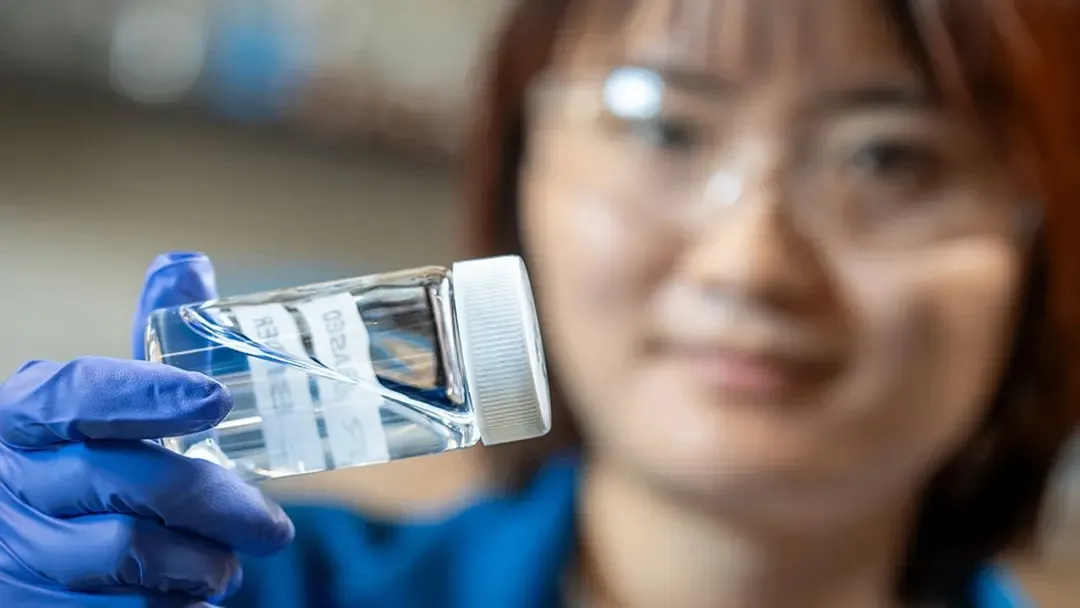
A new battery binder could cut toxic waste and energy use in lithium-ion battery production and recycling.
The newly developed binder can be processed using water instead of toxic organic solvents. This water-based electrode manufacturing approach could simplify production while reducing the need for specialized solvent-handling and recovery systems.
The technology also offers potential advantages for lithium-ion battery recycling. By soaking used electrodes in water, researchers can release the binder and recover valuable electrode materials without relying on harsh corrosive chemicals or high-temperature treatment. This approach could make it easier to reuse battery materials and support more efficient direct recycling.
Laboratory tests showed that batteries made with the new binder delivered initial electrochemical performance comparable to conventional PVDF-based electrodes. They also demonstrated improved capacity retention over extended charge-discharge cycling, suggesting that sustainability improvements need not come at the expense of battery performance.
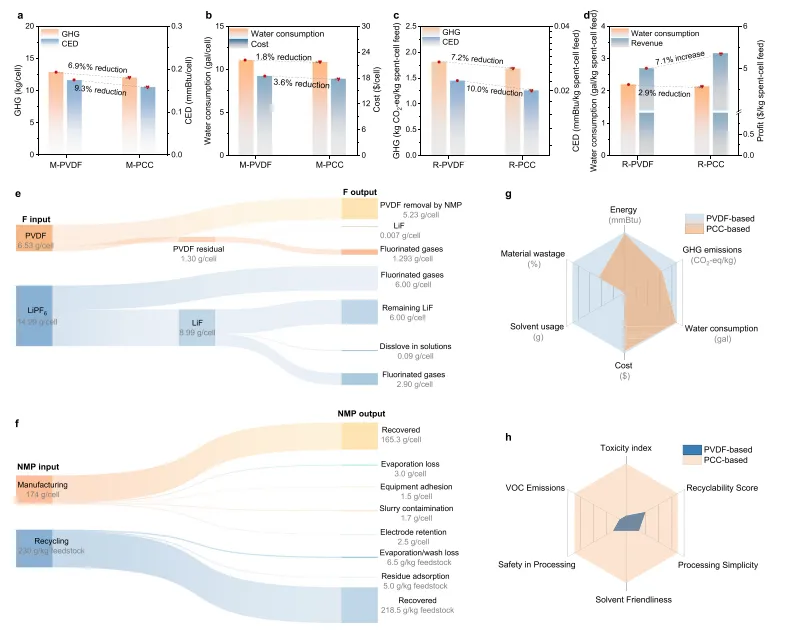
The research, published in Nature Communications on October 9, 2026, describes a fluorine-free polymer network designed to provide strong adhesion and electrochemical stability. The researchers also reported that the approach could be applied to a range of cathode and anode materials.
As demand for electric vehicles and energy storage continues to grow, sustainable battery technology will become increasingly important. By reducing hazardous solvent use, simplifying material recovery and potentially lowering energy consumption and recycling costs, this water-processable binder could help advance cleaner lithium-ion battery production and a more circular battery supply chain.
Further development and industrial-scale validation will be needed to determine its commercial viability across different battery chemistries and manufacturing processes.

