


Summary: Researchers have developed an ultrathin diamond-like carbon (DLC) coating that improves the stability and repeatability of silicon field-effect transistor (FET) biosensors. The technology enables reliable detection of C-reactive protein (CRP), a key inflammation biomarker associated with cardiovascular disease, and could support next-generation wearable health monitors and point-of-care diagnostics.
Silicon-based biosensors offer a promising route to real-time health monitoring, but maintaining their accuracy in biological fluids remains a major challenge. Prolonged exposure to electrolytes can cause instability at the sensor–liquid interface, leading to signal drift and reduced measurement reliability. A new approach using a nanometer-thin protective coating could help address this limitation.
Researchers working with silicon nanowire field-effect transistor (NW-FET) biosensors have introduced a diamond-like carbon layer, just 1–14 nanometers thick, over the silicon dioxide (SiO₂) dielectric at the liquid–solid interface. The coating is designed to protect the underlying structure from chemical degradation while preserving the electrical response required for sensitive biosensing.
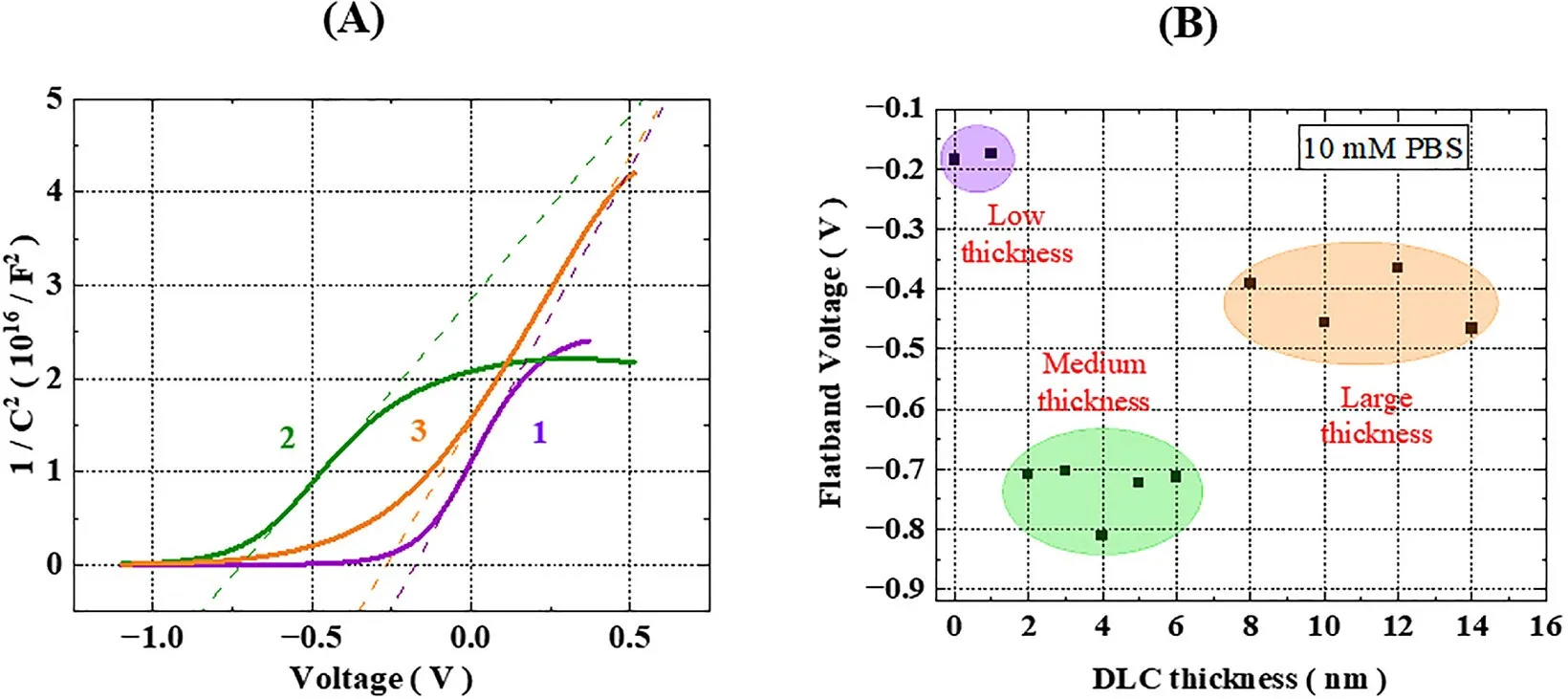
DLC is a dense, chemically resistant carbon material containing a high proportion of sp³-bonded carbon. In the reported experiments, the coating significantly improved the electrical stability of the sensor in phosphate-buffered saline (PBS), a solution commonly used to simulate biological environments. For a 5-nanometer DLC layer, the flat-band voltage relaxation time decreased from approximately 3.5 hours to around one hour compared with an uncoated SiO₂ structure. The voltage then remained substantially more stable.
Electrochemical impedance measurements provided further insight into the improvement. The Warburg admittance coefficient, which reflects ion-transport behavior at the interface, decreased from 41 to 5.9 µS·sⁿ after coating. The results suggest that DLC suppresses ion penetration and helps prevent the gradual formation of porous pathways that can undermine the stability of unprotected sensor structures.
Importantly, the protective layer did not eliminate the sensor's ability to respond to changes in its chemical environment. DLC-coated devices demonstrated a pH response of approximately 40 millivolts per pH unit and maintained repeatable measurements while cycling between pH 6 and 8. This indicates that the coating can improve interface stability without sacrificing the electrochemical sensitivity needed for biosensing.
The researchers also evaluated the technology in a clinically relevant application. Silicon nanowire FET biosensors functionalized with copper-free DBCO-modified C-reactive protein (CRP) aptamers detected CRP concentrations ranging from 1 to 1,000 nanograms per milliliter, with a reported sensitivity of approximately 100 millivolts per decade.
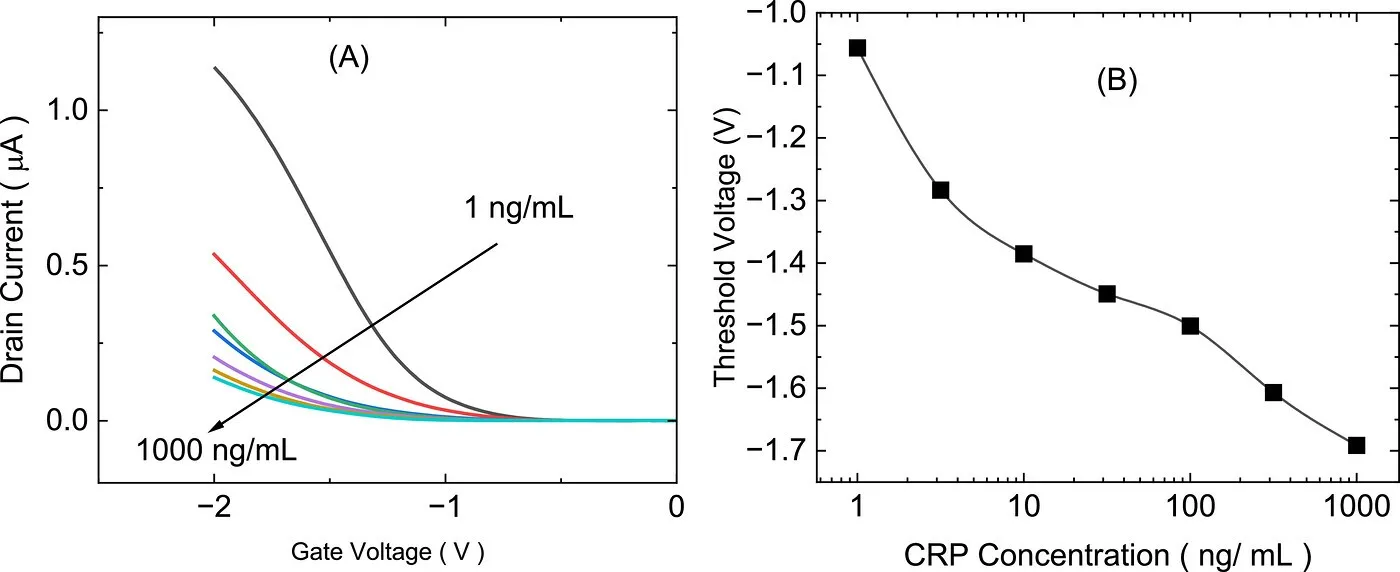
CRP is an inflammation biomarker used in cardiovascular risk assessment and clinical evaluation. Its levels can rise during acute inflammatory events, including myocardial infarction, although CRP detection alone cannot diagnose a heart attack.
By combining improved electrical stability with measurable biomarker responses, the DLC coating offers a potential materials-level solution to a longstanding challenge in silicon biosensor design. Its thin profile and compatibility with CMOS-oriented fabrication processes could make it suitable for further development in compact diagnostic devices, wearable health-monitoring systems and other applications requiring repeated measurements in complex biological fluids.
Further testing will be needed to establish long-term performance in real biological samples and determine how the technology performs under practical clinical conditions. Nevertheless, the findings suggest that a carbon layer only a few nanometers thick could help make silicon FET biosensors more stable and reproducible for future diagnostic applications.

