Differences Between Industrial Robotic Arms, Collaborative Robotic Arms and Humanoid Robotic Arms
With the rapid development of industrial robot technology, various robotic arms are increasingly widely used. However, many practitioners are unclear about the core differences and technical characteristics between these three main types: industrial robotic arms, collaborative robotic arms, and humanoid robotic arms. This article will analyze the technical parameters, performance differences, and application scenarios of these three types of robotic arms to help you make a more informed choice in your actual projects.
I. Industrial Robotic Arms: "High-Speed, High-Precision Craftsmen" in Precision Manufacturing
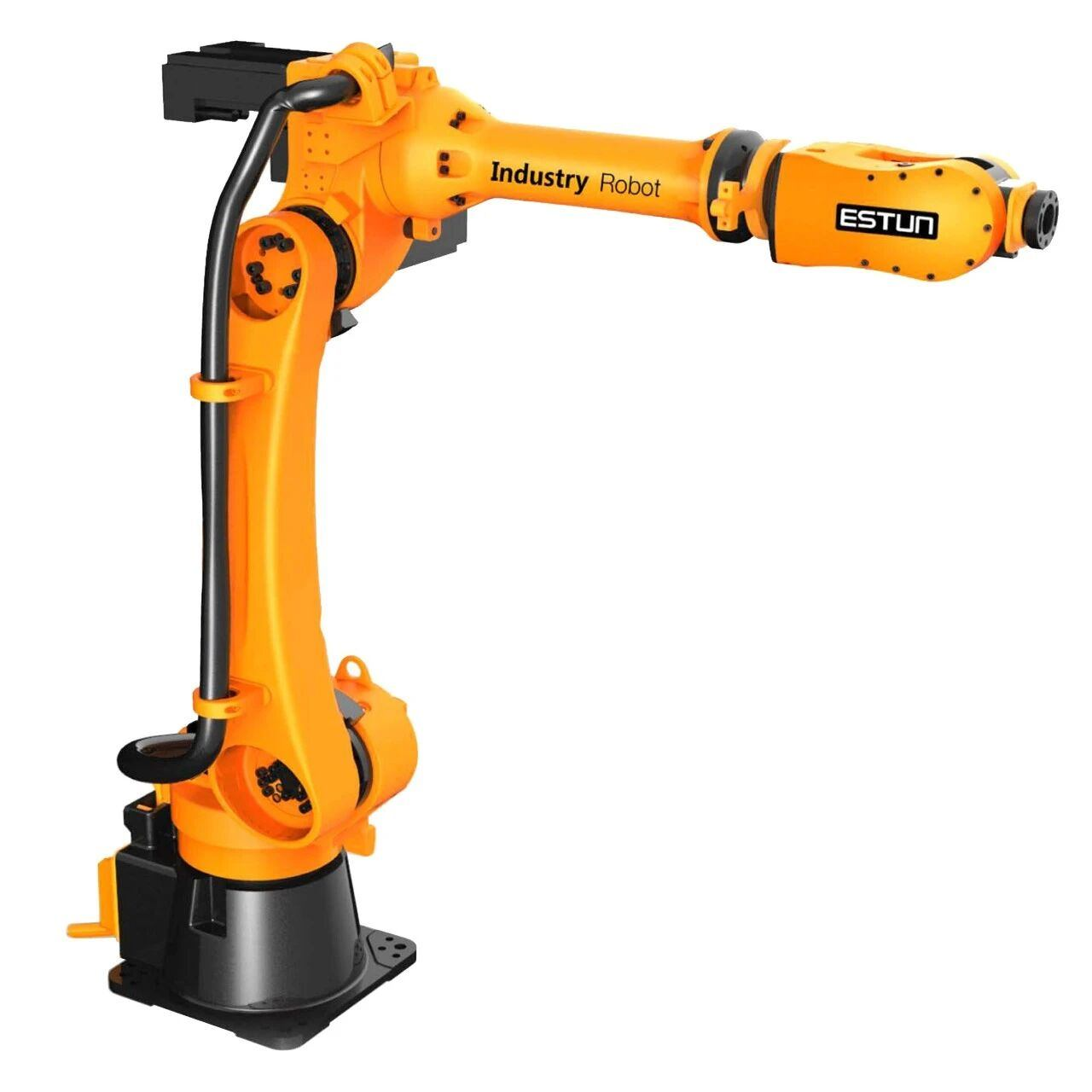
Industrial robotic arms are core equipment in modern manufacturing, designed specifically for high-intensity, high-precision, and highly repetitive industrial tasks.
Core Precision Indicators: Modern industrial robotic arms have achieved a repeatability accuracy of ±0.02mm, even less than half the diameter of a human hair, making them suitable for high-speed, high-precision assembly in the 3C industry.
Cycle Speed Performance: Industrial robots excel in cycle speed, with a maximum TCP speed of up to 5m/s.
Application Scenarios: Primarily used in standardized operations such as welding, painting, handling, and palletizing in the automotive manufacturing and electronics industries. Large six-axis robotic arms can handle workpieces weighing tens or even hundreds of kilograms, providing a core guarantee for high-speed production line operation.
II. Collaborative Robotic Arms: "Flexible Intelligent Assistants" for Human-Robot Collaboration
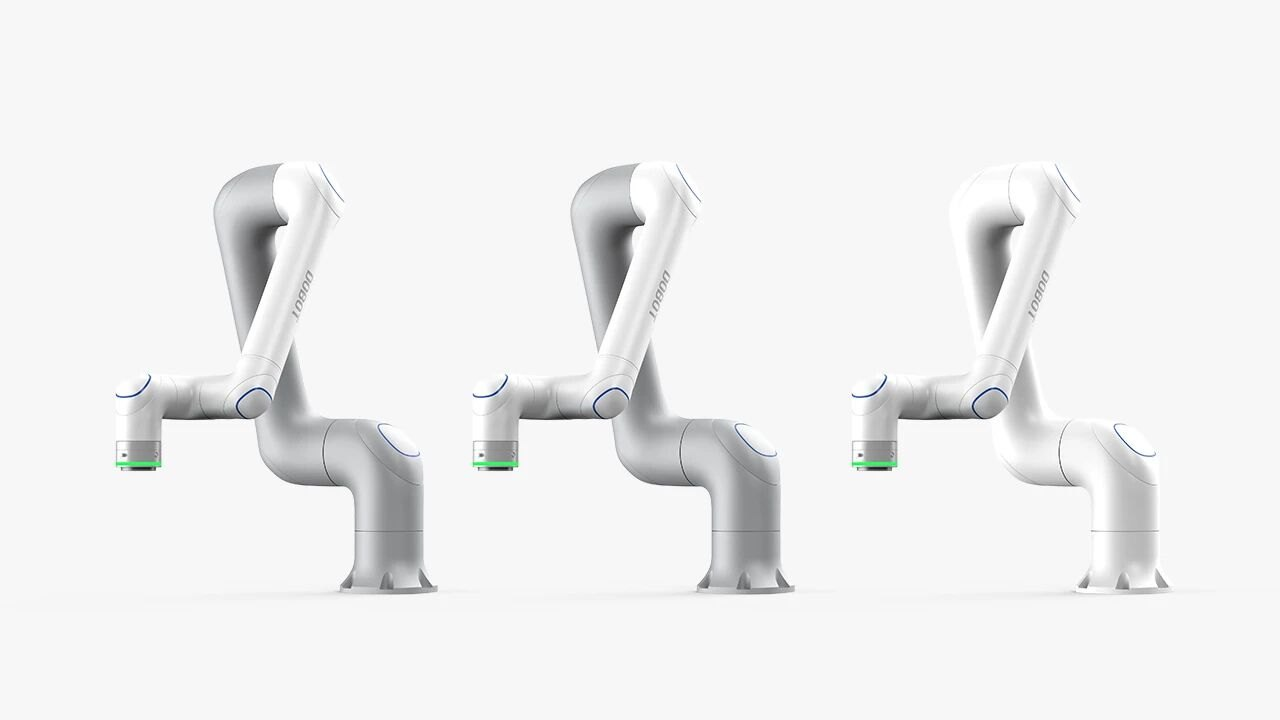
Collaborative robotic arms are designed to work alongside humans, compensating for the lack of flexibility in traditional industrial robots.
Precision and Speed Balance: The repeatability of collaborative robotic arms has also been significantly improved. Low-load collaborative robotic arms generally achieve repeatability within ±0.05mm, with some reaching ±0.02mm. Regarding cycle time, collaborative robots typically operate at speeds of around 1-2 m/s, but new-generation products are continuously increasing their maximum speed, significantly narrowing the gap with industrial robots.
Technological Upgrade Trends: By 2025, collaborative robots will not only improve in speed but also significantly enhance their adaptability to complex processes by integrating multi-dimensional perception systems such as 2D/3D vision cameras and six-dimensional force sensors.
Flexible Application Scenarios: Particularly suitable for the small-batch, multi-variety production needs of SMEs, such as precision component assembly and lightweight parts loading and unloading processes.
III. Humanoid Robotic Arms: The "Future Path" to General Intelligence
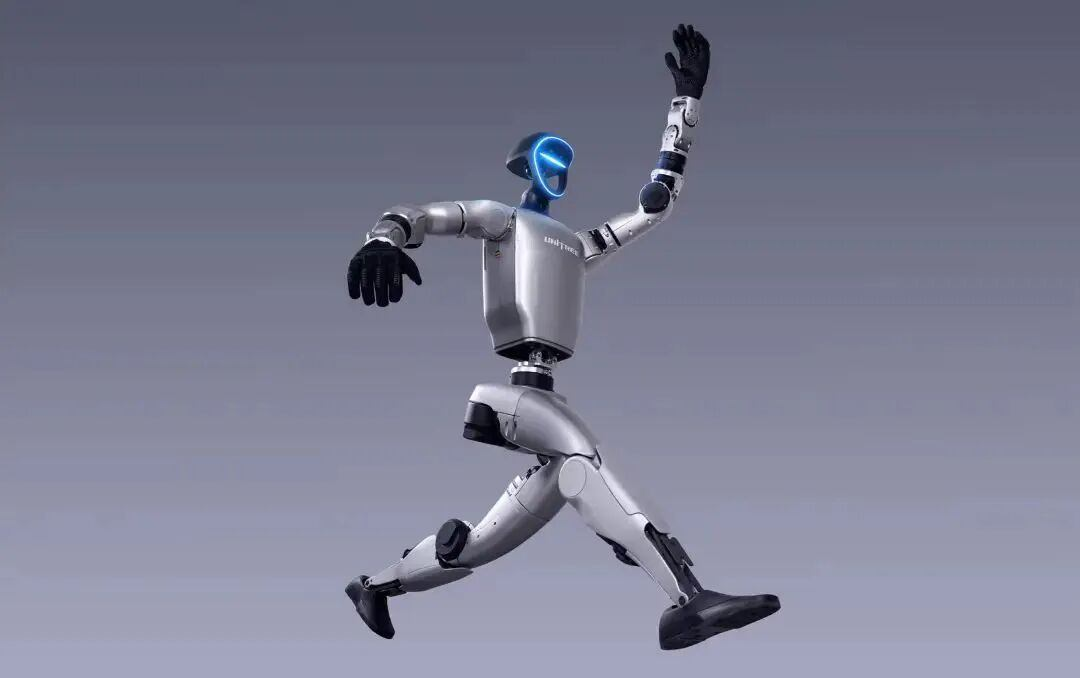
Humanoid robotic arms are designed to mimic human arms, aiming for broader adaptability and versatility, and are an important carrier of embodied intelligence.
Precision and Technical Characteristics: Humanoid robotic arms have relatively low precision requirements, with most repeatability accuracy within ±0.1mm. Their most prominent features are load-to-weight ratio and dexterity, boasting an extremely high load-to-weight ratio.
Beat Rate and Motion Performance: The beat rate of humanoid robotic arms is limited by overall balance and motion control. Currently, the focus is on dynamic grasping and coordinated whole-body movement rather than absolute speed.
Application Prospects and Challenges: At present, humanoid robotic arms mainly perform simple actions such as grasping, releasing, and hugging, but the long-term goal is to adapt to unstructured environments. In the future, a complete industrial chain will gradually form, encompassing the "brain—cerebellum—proboscis," overcoming key technological challenges related to humanoid robotic arms and dexterous hands.
IV. Comparison of Core Technical Parameters of the Three Types of Robotic Arms
The following table visually illustrates the differences in key performance parameters among the three types of robotic arms:
Performance Parameters | Industrial Robot Arm | Collaborative Robot Arm | Humanoid Robot Arm |
Repeat Positioning Accuracy | ±0.02mm (high-end models) | ±0.02mm (leading models) | ±0.1mm (current level) |
Cycle Speed | TCP speed up to 5 m/s | 1-2 m/s (standard) | Limited by overall balance, focusing on flexible control |
Load Capacity | Up to hundreds of kilograms | Max load exceeding 60kg (2025 trend) | 5-10kg (single arm), emphasizing payload-to-weight ratio |
Protection Class | IP67 (high-end models) | IP66/67 (suitable for complex environments) | Customized according to application scenarios |
Technical Trend | High speed & precision, specialization | Multi-dimensional perception, AI integration, flexibility | Embodied intelligence, versatility, modularization |
V. Technological Development Path and Market Trends
Industrial Robots: Towards "Ultra-Precision"
Industrial robots are developing towards higher precision and higher speed, with repeatability accuracy generally improving from ±0.1mm to ±0.02mm or even higher. Through optimization of high-performance control systems and servo drive systems, industrial robots are continuously improving in trajectory tracking accuracy and dynamic response speed, meeting the high-end demands of the 3C industry, precision manufacturing, and other sectors.
Collaborative Robots: Integrating Perception and Intelligent Decision-Making
Collaborative robots are evolving from single tools to multi-dimensional perceptive intelligent agents. Integrating multi-dimensional sensors such as vision, force, and touch, combined with AI technology, collaborative robots can adapt to more complex process scenarios. By 2025, collaborative robot companies will have made significant progress in complex processes such as teach-free welding, flexible grinding, and compliant assembly, greatly expanding the application boundaries.
Humanoid Robot Arms: The Path to Generalization and Modularization
Humanoid robotic arms are engineered for enhanced versatility and environmental adaptability, with modular design adopted as a core approach to cost reduction. Integrated joint technologies and embedded isomorphic multi-core control systems have laid the technical foundation for the mass production of ultra-lightweight humanoid robotic arms. The formation of a complete industrial chain covering the "brain-cerebellum-body" technical ecosystem in multiple regions has further accelerated the technological maturation of humanoid robotic arms.
VI. Application Scenarios Selection Guide
Choosing Industrial Robotic Arms: When the application requires high-precision, high-speed, and highly repetitive standardized tasks, industrial robotic arms should be chosen. Examples include automotive welding lines and precision assembly, where robots need to work continuously and have strict requirements for precision and cycle time.
Choosing Collaborative Robotic Arms: Suitable for human-robot co-operation and flexible production scenarios, especially in industries requiring frequent task switching such as 3C electronics and automotive parts. Collaborative robotic arms are flexible in deployment, require no safety fences, and can quickly adapt to changes in the production line.
Investing in Humanoid Robotic Arms: When the goal is long-term generalization ability and adaptation to unstructured environments, humanoid robotic arms can be considered. Currently, they are mainly suitable for research and exploration and pilot projects in specific scenarios, such as healthcare services and special operations.
Conclusion
Industrial robot arms, collaborative robotic arms, and humanoid robot arms represent three technological paths: specialization, collaboration, and generalization, respectively. In terms of precision, both industrial and collaborative robots have achieved a high level of ±0.02mm, while their cycle speeds differ—industrial robots prioritize extreme efficiency, collaborative robots balance safety and speed, and humanoid robots emphasize flexible control.
In the future, these three will form a complementary and coexisting ecosystem. Industrial robots will continue to dominate high-efficiency standardized production lines, collaborative robots will expand their boundaries in flexible manufacturing, and humanoid robots will gradually open up application scenarios in unstructured environments.
With the deep integration of AI big data models and robotics technology, robotic arms are leaping from "rule-boundary" to "quick and agile," and intelligence and autonomy will become the common direction for the development of all robotic arm technologies.