What Are the Different Types of Encoders? Linear, Rotary, and More
Encoders are a typical device used in sensors. They provide critical feedback about an object’s position or motion to the control system. This feedback enables the control system to determine whether the monitored object is moving or positioned correctly, and allows adjustments or actions to be taken based on the object’s motion and position.
This is extremely important for industrial control. Almost all motion-control applications rely on encoders, and servo systems are a classic example of core components that integrate encoder technology.
Encoders are commonly used to measure one or more specific parameters of an object, such as speed, position, and direction, or to provide counts related to the object’s motion. They are widely used across various industries. For example, in lithium battery winding equipment, encoders are used to acquire the real-time position of electrode sheets to enable high-speed flying cut operations.
Types of Encoders
In motion control applications, encoders can be classified in several different ways. The most common method is based on the type of motion being monitored, whether linear (straight-line) or rotational. The three most common types of encoders are linear encoders, rotary encoders, and angle encoders.
Linear Encoder

Linear encoders measure linear motion and use a sensor mounted on a moving component along a guide rail. They are typically used in applications that require precise linear feedback, such as CNC machining and motion stages.
Rotary Encoder
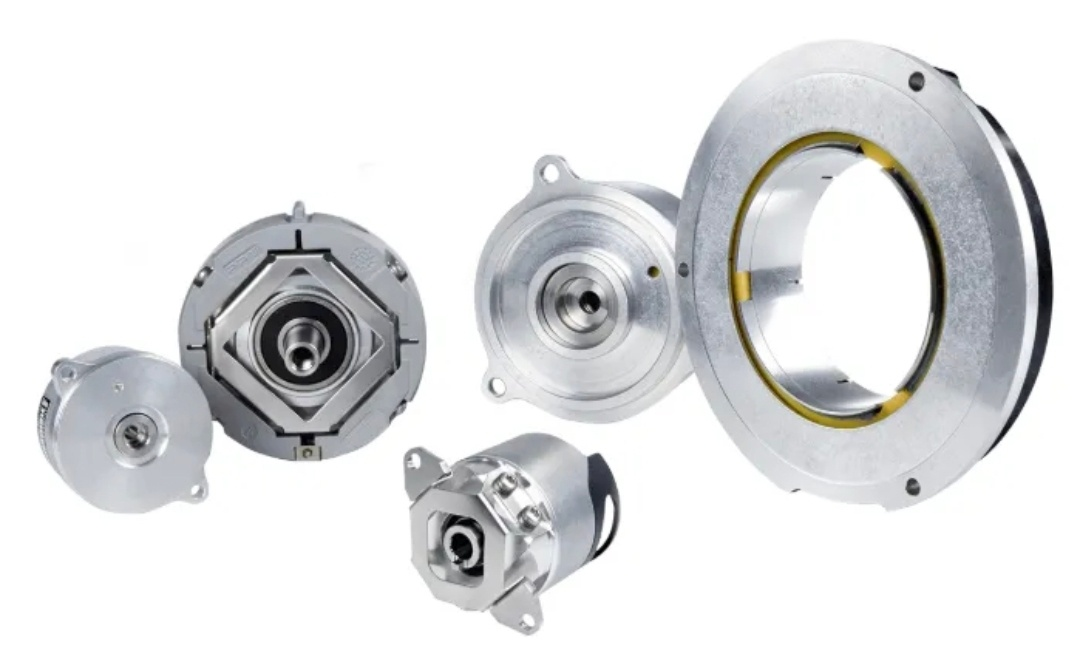
Rotary encoders measure rotational motion and are commonly used in systems that require speed control, such as servo motors. Key attributes of rotary encoders include positioning accuracy, speed stability, and bandwidth, all of which have a significant impact on motor performance.
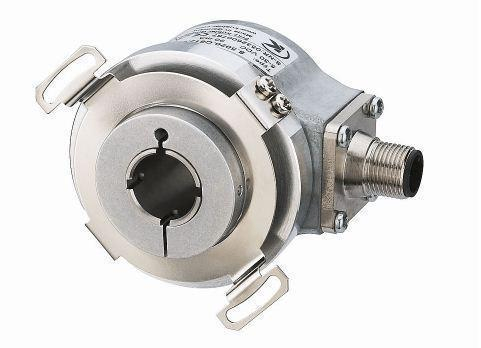
Rotary encoders may include a shaft or be designed as hollow-shaft encoders, allowing them to be mounted directly onto a rotating shaft (such as a motor shaft). Hollow-shaft encoders are available in various sizes and feature clamping or locking nut mounting options, making them suitable for installation in machine design applications. Flanges are used to locate the encoder and prevent it from rotating together with the moving shaft.
Angle Encoder
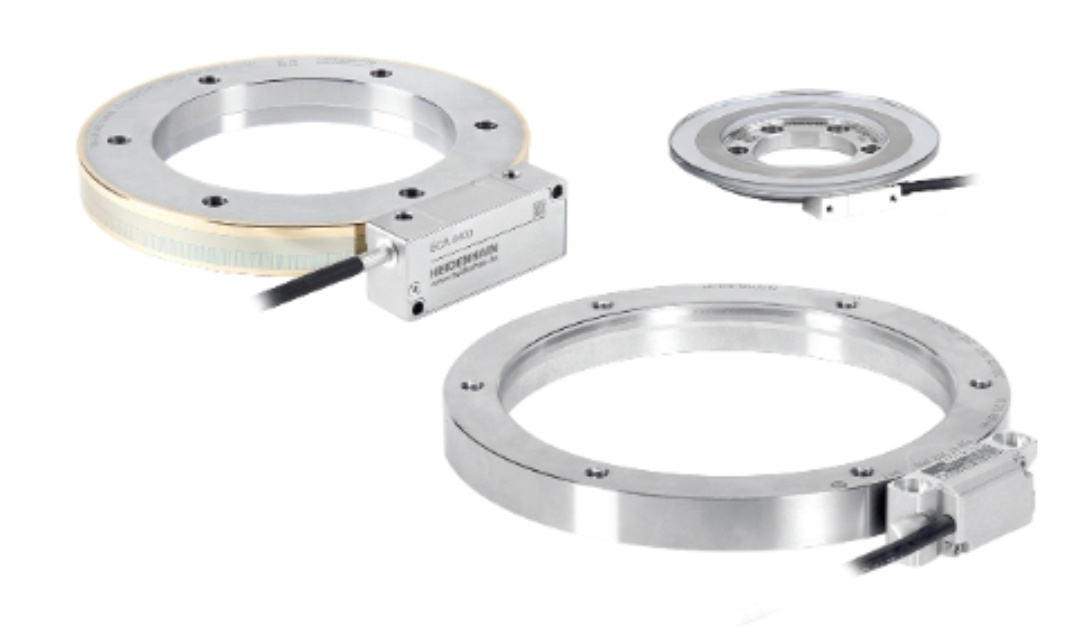
Angle encoders are also rotary devices, but they provide higher accuracy at lower rotational speeds. They are suitable for applications that require extremely high precision, such as semiconductor manufacturing.
How to Select the Right Encoder?
Selecting an encoder requires an understanding of the application’s environmental conditions and the desired performance level. When choosing an encoder, the following factors should be considered:
Is the motion being monitored linear or rotational?
Different types of motion require the corresponding type of encoder.What parameter is being measured: position or speed?
Is direction detection required?
This helps determine whether a single-channel encoder is sufficient or if a multi-channel encoder is needed.What specific environmental conditions will the encoder be exposed to?
This helps determine the most suitable sensing technology for the encoder. Potential exposure conditions include:Dust
Moisture
Caustic or corrosive chemicals
Shock
Vibration
Temperature extremes
In the event of a power loss, can the system tolerate re-homing or repositioning?
This helps determine whether an incremental encoder or an absolute encoder is required.What resolution is needed for the measurement?
Resolution should be calculated and evaluated based on the accuracy required by the specific application.What are the electrical requirements of the system?
Consider output interfaces such as point-to-point connections, fieldbus, or Ethernet-based interfaces.Mechanical packaging and design considerations for the application, including whether to choose a hollow-shaft encoder or a solid-shaft encoder, the type of locking mechanism, bore size, and whether a sealed or open encoder housing is more appropriate.