Gear Reducers: Principles, Types, and Industrial Applications
A gear reducer is an important mechanical device that plays a critical role in many industrial applications. As a power transmission component, it is commonly used between a prime mover (such as an electric motor) and a working machine. Its primary function is to reduce rotational speed while increasing output torque.
01. Working Principle
A gear reducer achieves speed reduction mainly through the meshing of a small gear with fewer teeth on the input shaft and a larger gear with more teeth on the output shaft.
The transmission ratio is equal to the ratio of input speed to output speed, and it is also equal to the ratio of the number of teeth on the driven gear to that on the driving gear.
The basic structure of a gear reducer includes transmission components (gears or worm gears), shafts, bearings, the housing, and auxiliary components. The combination of gears, shafts, and bearings forms a gear shaft assembly. The housing is a key structural component that supports and protects all internal parts and must provide sufficient strength and rigidity to withstand operational loads.
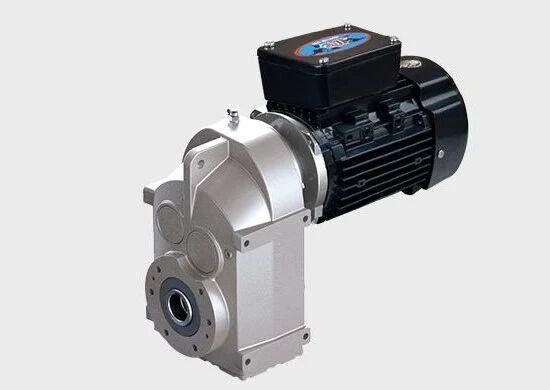
02. Classification by Transmission Type
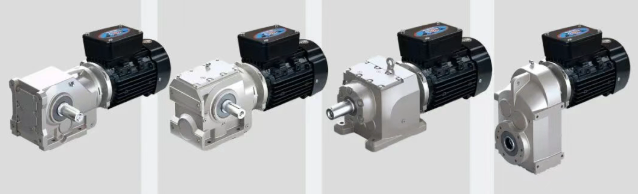
Gear Reducer
Features: High transmission efficiency, strong load capacity, compact structure, smooth operation, and long service life.
Gear reducers achieve speed reduction through the meshing of gears with different numbers of teeth. The high-speed rotation of the motor is transmitted through the input shaft to a small gear, which then drives a larger gear. Since the larger gear has more teeth, the rotational speed is reduced while torque is increased.
Main components include:
Housing: Provides structural support and protection, accommodates internal components, and ensures proper lubrication and sealing
Gear set: Includes the driving gear (small gear) and the driven gear (large gear), which are the core elements of speed reduction
Shafts: Support and fix the gears while transmitting torque
Bearings: Reduce friction and wear, ensuring smooth shaft rotation
Lubrication and sealing system: Ensures adequate lubrication and prevents oil leakage and contamination
Gear reducers are widely used in industrial equipment such as lifting machinery, metallurgical equipment, mining machinery, chemical processing equipment, and food processing machinery.
Worm Gear Reducer
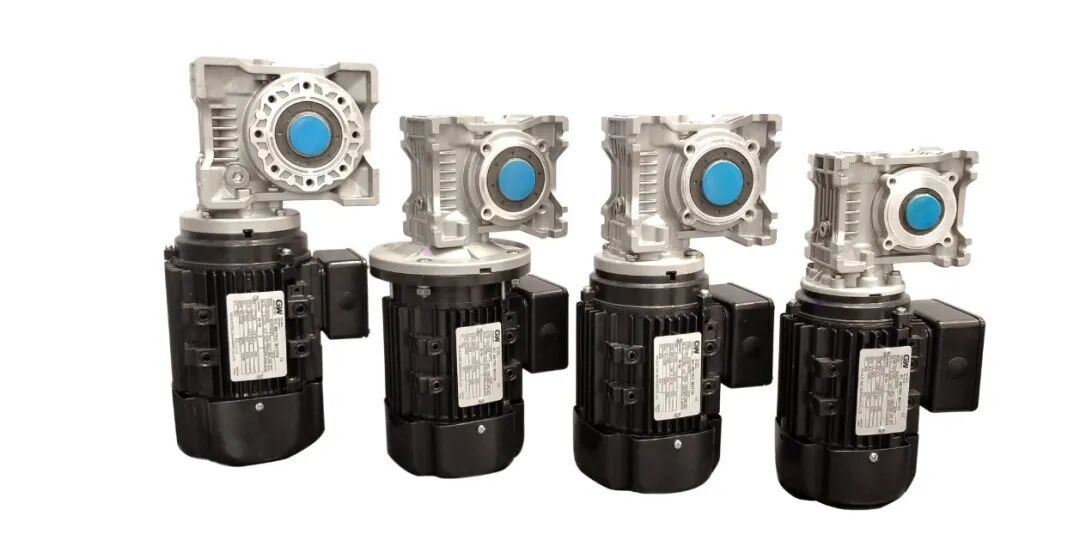
Features: Large transmission ratio, compact structure, smooth and stable operation.
Worm gear reducers rely on the meshing between a worm and a worm wheel. The worm resembles a screw with a large lead angle, while the worm wheel is a specially shaped gear. When the worm rotates, its helical surface drives the worm wheel, transmitting motion and achieving speed reduction.
Structurally, a worm gear reducer typically consists of a housing, worm, worm wheel, shafts, bearings, and oil seals. The housing provides support and protection; the worm and worm wheel are the key reduction components; shafts transmit torque; bearings reduce friction; and oil seals prevent lubricant leakage and contamination.
Worm gear reducers are commonly used in lifting equipment, mining machinery, and construction machinery, especially in applications requiring high reduction ratios, limited installation space, and smooth operation.
Planetary Gear Reducer
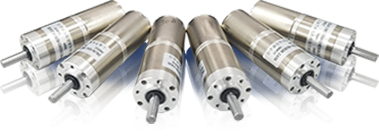
Features: Compact structure, small size, light weight; high load capacity; high transmission efficiency; high precision; smooth operation and low noise.
Planetary gear reducers operate based on planetary gear transmission principles. The system consists of a sun gear, multiple planet gears, an internal ring gear, and a planet carrier. Power is input through the sun gear, while the planet gears rotate around it and simultaneously spin on their own axes, transmitting power through the planet carrier.
Because multiple planet gears share the load, planetary gear reducers can transmit high torque. Compared with other reducer types, they offer a wider range of transmission ratios and can achieve multi-stage reduction. Their compact and efficient design allows high reduction ratios and torque output within limited space.
Planetary gear reducers are widely used in industrial robots, CNC machine tools, automated production lines, aerospace systems, and medical devices where high precision, load capacity, and efficiency are required.
03. Classification by Gear Shape
Cylindrical gear reducer
Bevel gear reducer
Bevel–cylindrical gear reducer
04. Classification by Shaft Arrangement
Parallel-shaft (spread-type) reducer
Split-flow reducer
Coaxial reducer
Conclusion
Although different types of gear reducers—such as gear reducers, worm gear reducers, and planetary gear reducers—vary in structure and operating principles, they all follow the same fundamental concepts of speed reduction and torque amplification.
In practical applications, selecting a suitable gear reducer requires consideration of multiple factors, including transmission ratio, output torque, speed, efficiency, precision, and reliability. Proper selection and design based on specific operating conditions are essential to ensure stable operation and long service life.