Brushed or Brushless Motors? How to Identify Them and Choose the Right One
Electric motors are indispensable power devices in modern life and are widely used in household appliances, power tools, electric vehicles, drones, and many other applications. As motor technology has evolved, brushed motors and brushless motors have become the two dominant solutions on the market. Each has its own strengths and limitations, making them suitable for different use cases.
So, which is better—brushed or brushless motors? And how can you tell whether a motor is brushed or brushless? This article provides a clear technical comparison and practical identification methods.
1. Basic Working Principles of Brushed and Brushless Motors
1.1 How a Brushed Motor Works
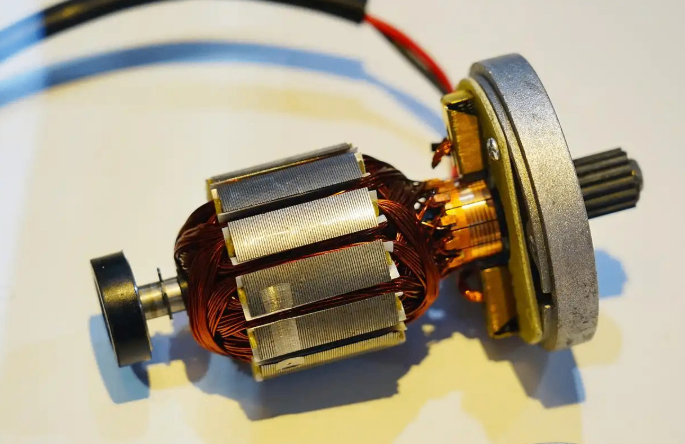
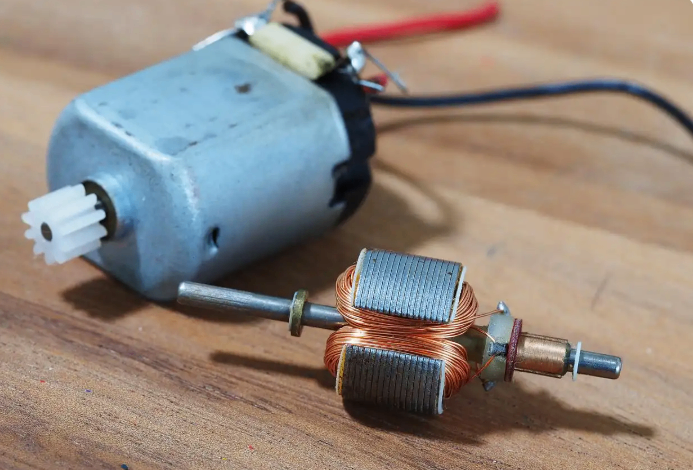
A brushed motor is a traditional DC motor. Its main components include the stator (stationary part, usually permanent magnets or field windings), rotor (rotating coils), commutator, and carbon brushes.
The working principle is as follows:
Current supply: Electrical current flows through the brushes and commutator into the rotor windings, generating an electromagnetic field.
Magnetic interaction: The electromagnetic field of the rotor interacts with the stator’s magnetic field, producing torque that causes rotation.
Mechanical commutation: The brushes and commutator periodically reverse the current direction, ensuring continuous rotation.
While essential, the brushes and commutator create friction, leading to wear and energy loss.
1.2 How a Brushless Motor Works
A brushless motor—commonly referred to as a Brushless DC Motor (BLDC)—replaces mechanical commutation with electronic control. Its main components include the stator windings, a permanent-magnet rotor, and an electronic speed controller (ESC).
The operating process includes:
Electronic commutation: The controller detects rotor position using Hall sensors or sensorless algorithms and energizes the stator coils in sequence.
Magnetic drive: The rotating magnetic field interacts with the rotor’s permanent magnets, causing rotation.
By eliminating brushes and commutators, brushless motors achieve higher efficiency and reliability through fully electronic control.
2. Performance Comparison: Brushed vs. Brushless Motors
2.1 Efficiency and Performance
Brushed Motors
Lower efficiency due to friction and electrical losses (typically 60%–80%).
Simple speed control via voltage adjustment, but limited precision.
Suitable for low-speed, high-torque applications, with reduced efficiency at high speeds.
Brushless Motors
Higher efficiency (85%–95%) thanks to the absence of mechanical friction.
Precise speed and torque control via electronic controllers.
Stable performance at high speeds, ideal for applications such as drones.
Conclusion: Brushless motors clearly outperform brushed motors in efficiency and controllability.
2.2 Service Life and Maintenance
Brushed Motors
Shorter lifespan due to brush and commutator wear (typically 1,000–3,000 hours).
Require regular maintenance, including brush replacement.
Higher noise levels and occasional sparking.
Brushless Motors
Much longer service life, often exceeding 10,000 hours.
Minimal maintenance, mainly limited to bearings and controllers.
Quieter and smoother operation.
Conclusion: Brushless motors offer superior longevity and lower maintenance costs.
2.3 Cost and Manufacturing Complexity
Brushed Motors
Simple structure and mature manufacturing processes.
Lower production and system cost.
Minimal control circuitry required.
Brushless Motors
Higher cost due to electronic controllers and sensors.
More complex system design and manufacturing.
Conclusion: Brushed motors are more cost-effective for budget-sensitive applications.
2.4 Typical Applications
Brushed Motors
Toys, low-cost power tools, fans, blenders.
Short-term or intermittent-use devices.
Brushless Motors
Electric vehicles, drones, industrial robots, premium home appliances.
Applications requiring long operating hours, high speed, or precision control.
2.5 Electromagnetic Interference and Safety
Brushed Motors
Brush contact may generate sparks and electromagnetic interference (EMI).
Potential safety risks in flammable environments.
Brushless Motors
Minimal EMI due to electronic commutation.
Spark-free operation improves safety and reliability.
3. Advantages and Disadvantages Summary
Brushed Motors
Advantages
Low cost
Simple control
Easy to manufacture
Disadvantages
Lower efficiency
Shorter lifespan
Higher noise and EMI
Brushless Motors
Advantages
High efficiency and energy savings
Long lifespan
Low noise and precise control
Disadvantages
Higher initial cost
Requires electronic controllers
More complex setup
4. How to Identify a Brushed or Brushless Motor
4.1 Visual Inspection
Brushed motors often have visible brush caps or access points and a commutator inside.
Brushless motors are more compact, lack brush structures, and usually connect to an external controller with three or more wires.
4.2 Operating Sound and Sparking
Brushed motors may produce noticeable friction noise and visible sparks.
Brushless motors run smoothly and quietly with no sparking.
4.3 Wiring and Control System
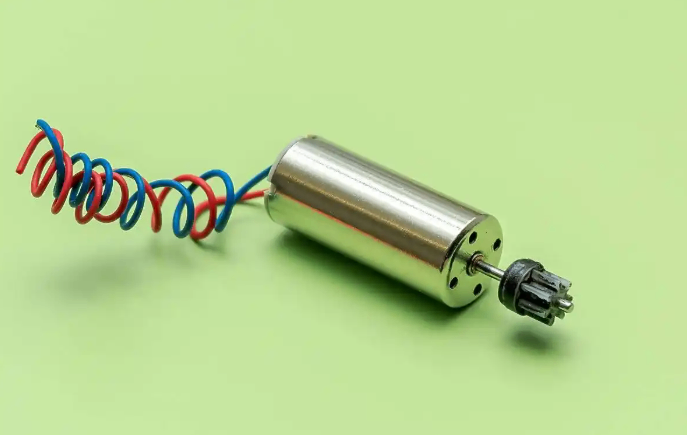
Brushed motors typically have two power wires.
Brushless motors usually have three or more phase wires connected to an ESC.
4.4 Product Labels and Documentation
Labels may indicate “Brushed DC Motor” or “Brushless DC Motor (BLDC)”.
Brushless motors are commonly highlighted in high-end products.
4.5 Multimeter Testing or Disassembly
Brushed motors show stable resistance across two terminals.
Brushless motors exhibit different resistance values across multiple terminals and lack brush structures internally.
Note: Disassembly requires technical expertise to avoid damage.
5. Market Trends and Buying Recommendations
5.1 Market Overview
Brushed motors remain common in low-cost devices, while brushless motors dominate high-performance products such as electric bicycles, drones, vacuum cleaners, and new-energy vehicles. As technology advances and costs decrease, brushless motors are increasingly adopted in consumer appliances.
5.2 Selection Guidelines
Based on budget:
Limited budget or short-term use → Brushed motor
Long-term use or high efficiency → Brushless motor
Based on application:
Low-speed, high-torque tasks → Brushed motor
High-speed, high-precision tasks → Brushless motor
Check brand and support:
Choose reputable manufacturers and ensure spare parts availability.
Review specifications:
Pay attention to power, speed, efficiency, and controller quality.
Conclusion
There is no universal “best” motor—only the most suitable one for a given application. By balancing performance requirements, cost, and usage scenarios, users can select the optimal motor type to achieve both reliable operation and long-term economic value.