How to Choose the Right Industrial Motor: The 4 Key Selection Factors
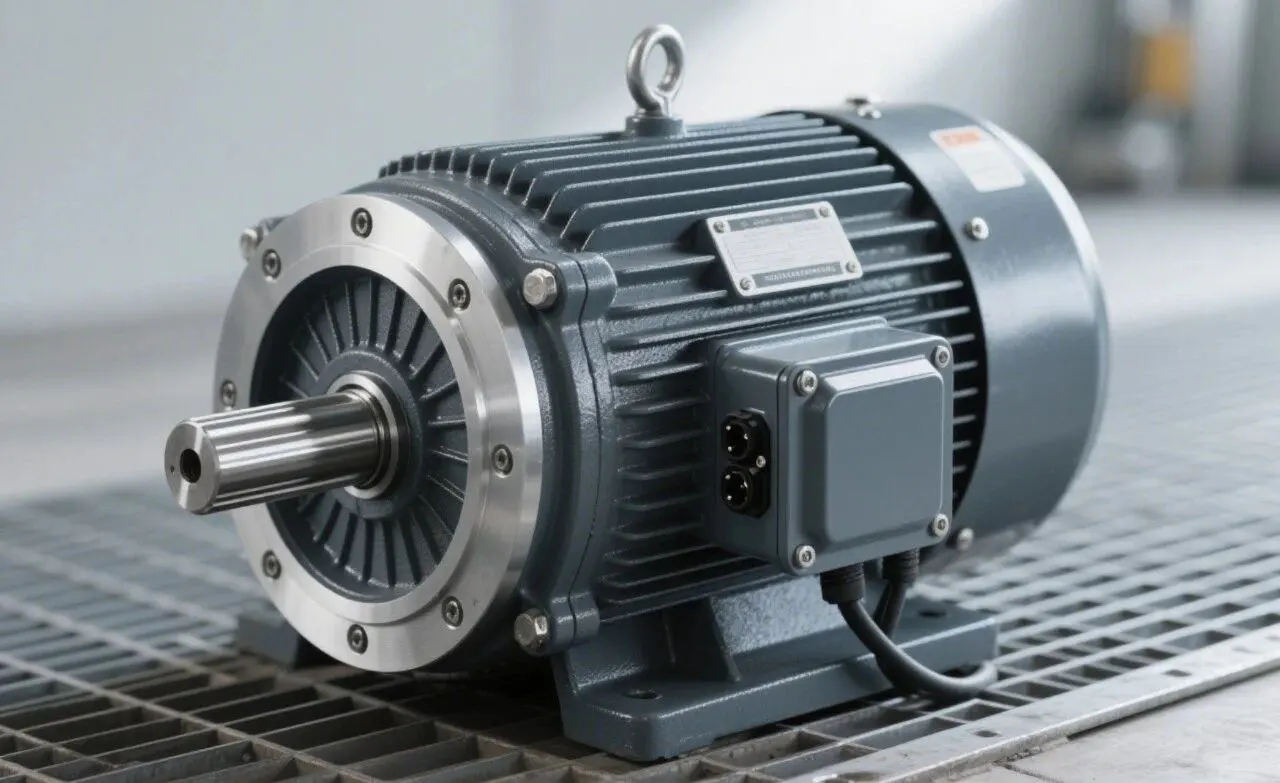
Electric motors play a crucial role in improving the level of industrial automation. This article discusses how to choose the right industrial motor and the key factors to consider when integrating it into a system.
Electric motors are known as the "heart" of industrial automation. They play a vital role in driving mechanical operations in manufacturing processes. They efficiently convert electrical energy into mechanical motion, making them key components in robot systems for precise control and stable operation.
Although the latest trends in manufacturing focus primarily on IoT, artificial intelligence (AI), and digital twin technologies, motors remain the foundation for executing core tasks. On automotive assembly lines, robots equipped with motors precisely perform tasks like welding and painting, while the food industry relies on specially designed wash motors to meet strict hygiene requirements in wet environments like beverage processing and bottling.
01. Types of Industrial Motors
Motors play a key role in ensuring the consistency and efficiency of tasks such as assembly, packaging, and material handling. They also help expand production scales and maintain quality, which is particularly important in a competitive industrial environment. Generally, motors can be categorized into the following main types:
DC Motors are powered by direct current and are suitable for applications requiring continuous and controlled motion. They have a simple structure and easy speed control, making them an ideal choice for various industrial automation tasks.
AC Motors are powered by alternating current and are known for their efficiency and reliability. They are typically used in high-power, constant-speed applications such as pumps, compressors, and conveyors.
Servo Motors utilize a closed-loop control system with position feedback to maintain the desired position or speed in real time. These are especially suitable for high-precision tasks such as CNC machining, robotics, and automatic inspection systems.
Stepper Motors rotate in discrete steps without the need for position feedback, offering precise control over position and speed. They are ideal for applications requiring precise positioning and simpler designs than servo motors, such as 3D printing and medical devices.
02. Growth of Brushless Motors in Industrial Applications
Technological advancements and the increasing demand for efficient and reliable systems have driven the rise in the use of brushless motors. As the name suggests, brushless motors replace the mechanical drive function of brushed motors with an electronic driver. The electronic controller generates a variable current that powers the magnetic field, resulting in rotational motion.
Brushless DC motors are typically used in applications like drones and conveyors, where control and efficiency are crucial. Brushless AC motors are commonly used in HVAC systems and electric vehicles, where reducing complexity and extending lifespan are key considerations.
03. Comparison of Motor Types
Each type of motor has its own distinct advantages. DC motors are known for their simple speed control and high torque at low speeds, making them ideal for applications requiring precise control, such as electric vehicles. In contrast, AC motors are widely used in various applications due to their excellent durability and efficiency, particularly in systems like conveyors that require continuous operation.
Motor selection is influenced by the specific needs of the application. For example, servo systems typically feature a compact design and lightweight structure and can consume power precisely based on demand, making them very suitable for energy-saving applications. Additionally, servo motors are ideal for multi-axis control systems, such as robotic arms, which require complex motion and precise coordination.
Step motors, on the other hand, may offer better cost-effectiveness compared to other motor types. However, they require precise programming to avoid losing steps and compensate for the lack of built-in feedback. Step motors are widely used in industrial robotics because they provide precise control and are easy to integrate, making them ideal for applications involving multi-axis motion.
04. Four Key Factors for Choosing the Right Motor
No matter the application, businesses rely on motors to run reliably and effectively. When selecting your next industrial motor, consider the following four factors:
Performance Requirements
Understand the specific performance needs of the application and determine which features need to be prioritized when choosing a motor. For example, high-speed operations require motors with quick response times, precise tasks need high accuracy, and heavy-duty applications require high torque.Successfully meeting these requirements plays a significant role in achieving business goals such as productivity, energy efficiency, scalability, and maintenance costs. For instance, efficient motors can reduce energy consumption, while reliable and accurate motors can improve product quality and reduce downtime.
Environmental Conditions
Factors like temperature, humidity, and exposure to dust or chemicals will determine your motor choice. For applications in harsh environments, such as foundries or chemical plants, motors with robust enclosures and environmental resistance are essential. Matching the motor's specifications and design to the environmental conditions is critical for optimal performance. Key environmental factors to consider include:Motors have a rated temperature, and exceeding this value could lead to overheating and premature failure. High temperatures may decrease efficiency and could require additional cooling measures. In cold environments, motors may face challenges related to lubrication and rigidity.
Motors in humid environments may require special coatings or housings to prevent water ingress and corrosion. Electrical connections could also be impacted, leading to electrical failures.
Motors running in dusty or polluted environments may require sealed housings and proper ventilation to prevent particles from causing wear or damage.
Some environments subject motors to excessive vibration or impact. Motors chosen for these environments must be designed to withstand such mechanical stress.
At high altitudes, lower air density can affect cooling efficiency. Motors located at higher elevations may need adjustments to maintain proper cooling and sustained performance.
Power Supply and Voltage
Matching the motor's power supply requirements to the available voltage is crucial. An inadequate power supply can lead to poor performance or damage, while an excess can shorten the motor's lifespan. Key power-related factors to consider include:Voltage and current compatibility: Motors operate within specific voltage and current ranges. Mismatched voltage can lead to inefficiency, overheating, or failure.
Rated power and capacity: The motor's rated power indicates its ability to convert electrical energy. Matching it with the power supply prevents overloading or underutilization.
Frequency (AC motors): AC motors operate at specific frequencies. Matching the power supply frequency is vital for efficient synchronous operation.
Starting and running conditions: The motor’s startup conditions depend on the power supply. Selecting a motor with appropriate characteristics prevents issues during initial operation.
Compatibility with control systems: For applications requiring high precision, such as motion control or 3D printing, the motor must be compatible with its power control system requirements.
Efficiency and energy consumption: Matching the motor to the power supply is essential for improving energy efficiency, which is key to minimizing operating costs and ensuring sustainability.
Safety: Understanding the power supply requirements is vital for implementing adequate safety measures. Motors running on higher DC voltages may need additional precautions compared to those running at lower voltages.
Cost
Budget constraints will affect the type and quality of motors manufacturers can choose. Although high-quality motors may come with higher upfront costs, they can lead to long-term savings through improved efficiency and reduced maintenance costs. Balancing initial investment with long-term benefits is critical.Understanding the total cost of ownership (TCO) helps make an informed decision within budget limits. TCO analysis considers the motor's lifecycle costs. Maintenance costs are a factor, as motors with lower maintenance requirements (such as brushless DC motors) may offer long-term savings and lower TCO. When motor choices align with the budget, it is also important to evaluate potential long-term energy savings. Specially designed or customized motors tend to be more expensive. Evaluating the necessity of all features within the budget is key to making wise decisions.
05. Motor and Control System Integration
Ensuring compatibility with existing control systems is crucial for seamless motor integration and operation. For manufacturing enterprises implementing Industry 4.0, integrating motors with intelligent control systems is vital for effective data-driven decision-making and predictive maintenance. The following nine key strategies can help integrate motors into control systems:
Understand the specifications and requirements of the current control system, including communication protocols and feedback mechanisms.
Seek guidance from motor and control system manufacturers to address compatibility issues and receive advice.
It is crucial to select motors with standardized communication interfaces (such as PROFINET, Modbus, EtherNet/IP, or EtherCAT) to ensure system compatibility.
Ensure that the motor's communication protocol aligns with the control system's supported protocols, including Industry 4.0 or other related requirements.
Confirm that the motor's feedback mechanism (such as encoders) is compatible with the control system's ability to interpret and use feedback data.
Address potential issues in motor-control system interaction.
If a separate controller is required, consider the communication protocol and command signals, ensuring compatibility with the existing control system. Motors controlled by PLCs enhance adaptability to various control systems, enabling seamless integration.
If necessary, consider updating or upgrading the control system to support modern motor technologies, improving overall system efficiency and longevity.
The best motor is the one that meets the application's needs. From the simplicity of DC motors to the precision of servo motors, each type has its advantages. Careful consideration of business-specific factors is crucial for successful deployment.