Advantages of Frameless Torque Motors in Humanoid Robots
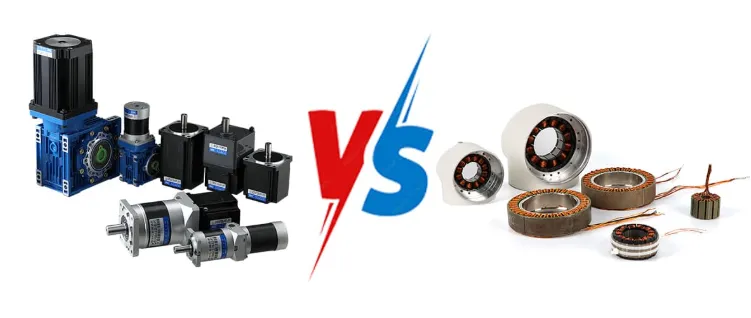
Frameless torque motors have become the preferred choice for humanoid robot joints because their structural features and performance parameters match the key requirements of humanoid robots: compact size, high precision, high dynamic response, and lightweight. By removing the motor casing and integrating direct-drive design, frameless motors solve the limitations of traditional framed or geared motors. The advantages can be summarized in six core areas:
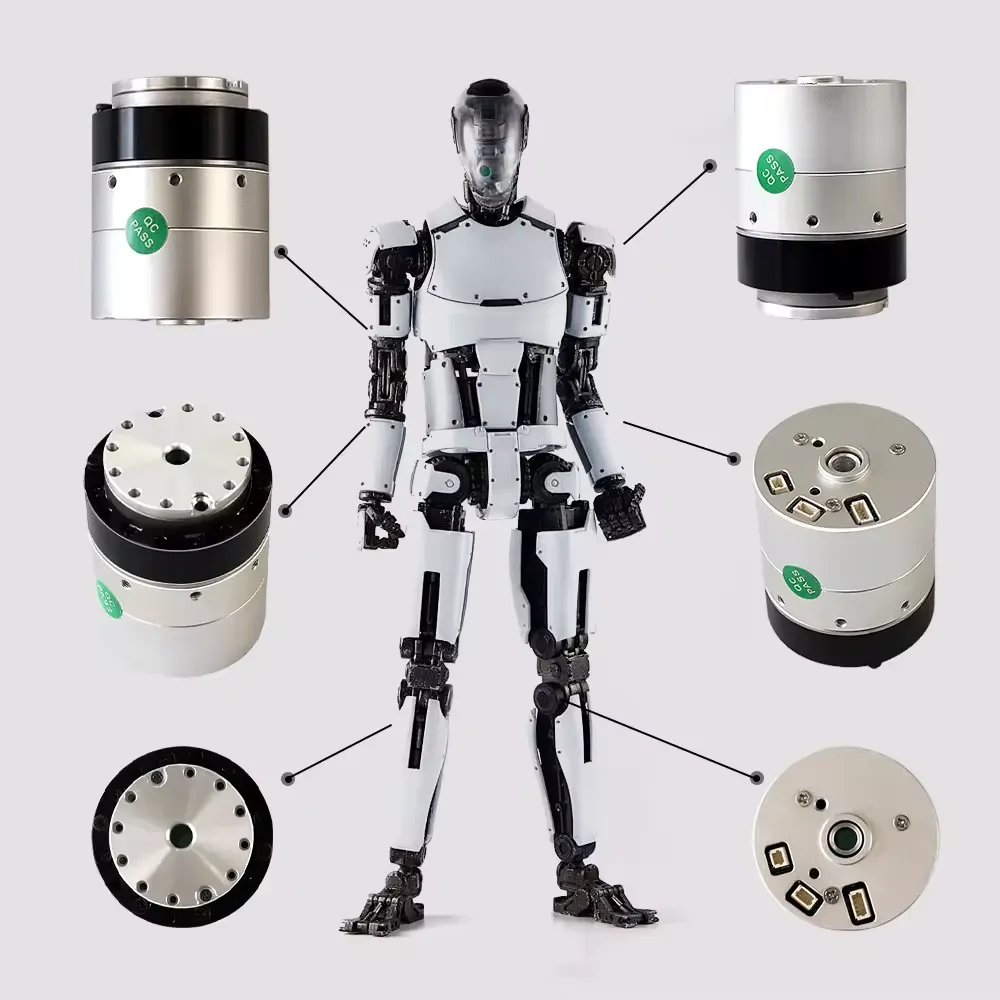
1. Extremely Compact – Fits Narrow Joint Spaces
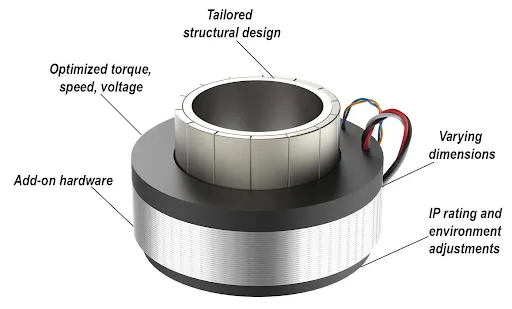
Humanoid robot joints (shoulder, elbow, wrist, knee) have very limited space, usually 50–150 mm in diameter and less than 30 mm in axial length. Traditional motors with casings cannot fit. Frameless motors remove redundant structures:
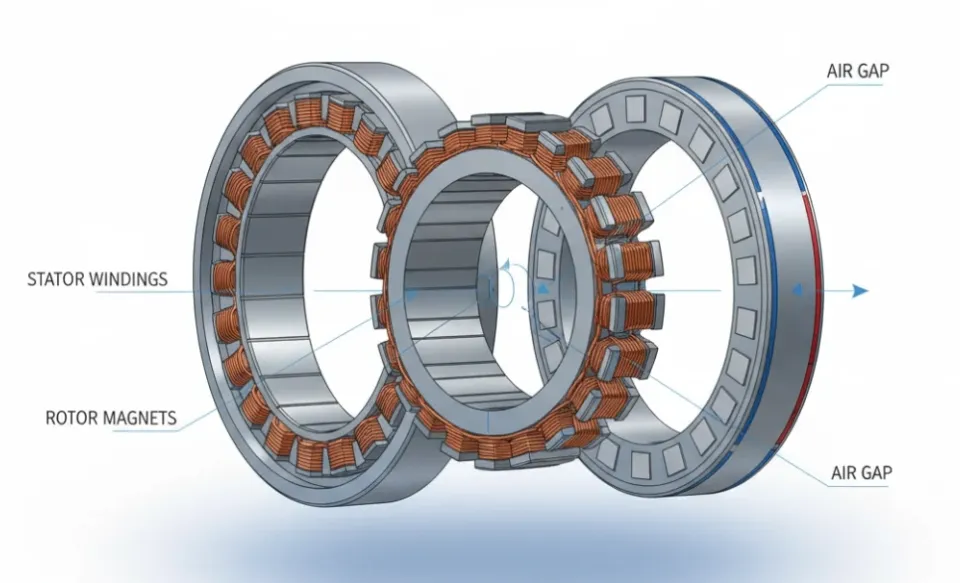
No casing, no built-in bearings, only stator and rotor.
Can integrate directly into the joint housing, using the joint’s own bearings for support.
Volume is 30–50% smaller than same-power framed motors.
Supports hollow shaft designs, allowing wiring, cooling pipes, or reduction output shafts to pass through.
 | Example: Wrist and finger joints in humanoid robots require rotation and force control in diameters<30 mm.="" frameless="" motors="" are="" the="" only="" viable="" option.=""> |
2. Direct-Drive – High Precision and Safety
| Humanoid robots need: | Frameless motors provide direct-drive, eliminating gear backlash: |
|
|
Traditional motors with gear reductions introduce backlash (>0.1°), causing walking instability and inaccurate grasping.
3. High Torque Density – Lightweight Yet Powerful
Humanoid robots need strong torque but low weight:
Frameless motors optimize electromagnetic design and remove casing.
Torque density: 15–30 N·m/kg, 1.5–2× higher than framed motors.
Example: 100 mm diameter, 0.8 kg motor outputs 15 N·m, enough for a knee joint; equivalent framed motor >1.2 kg.
Benefit: Reduces joint weight, increases payload ratio, or improves battery life.
4. Low Inertia & High Dynamic Response – Fast Movements and Balance
Humanoid robots perform frequent, high-speed motions:
Frameless rotor has 60–70% inertia of a framed motor.
Faster acceleration/deceleration (mechanical time constant 1–2 ms).
Reduced transmission inertia improves control response by 30%.
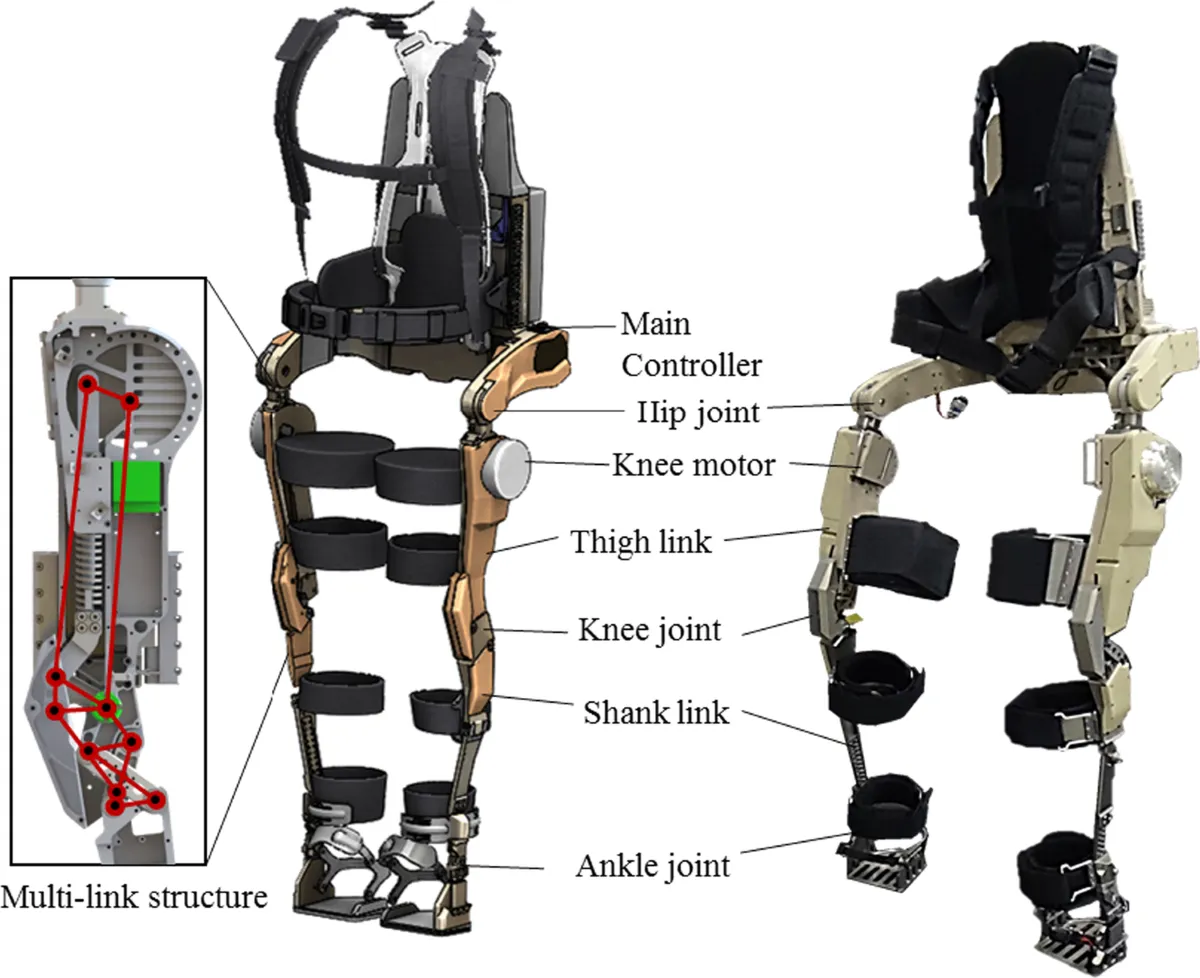
Example: Knee joint can switch from bend to straighten in 0.2 seconds during stair climbing or jumping.
5. Efficient Cooling – Reliable Long-Term Operation
Humanoid robots often work 8–12 hours continuously:
Frameless motor stator can directly attach to the metal joint housing for heat dissipation.
Cooling efficiency 50–80% higher than framed motors.
Supports water/oil cooling through hollow shafts.
Maintains temperature<40°c 8="" under="" full="" load="" for="">
Traditional motors can overheat, causing torque loss and weak movement.
6. High Integration – Simplified Joint Design and Lower Development Cost
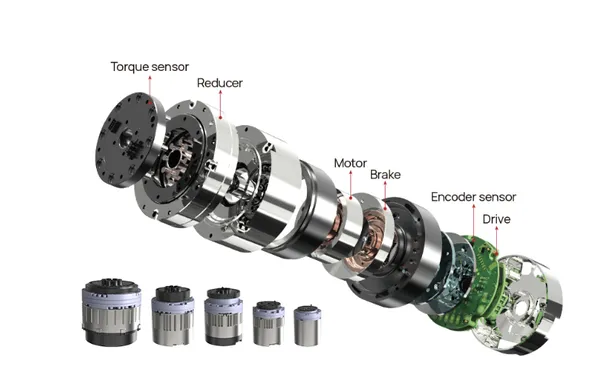
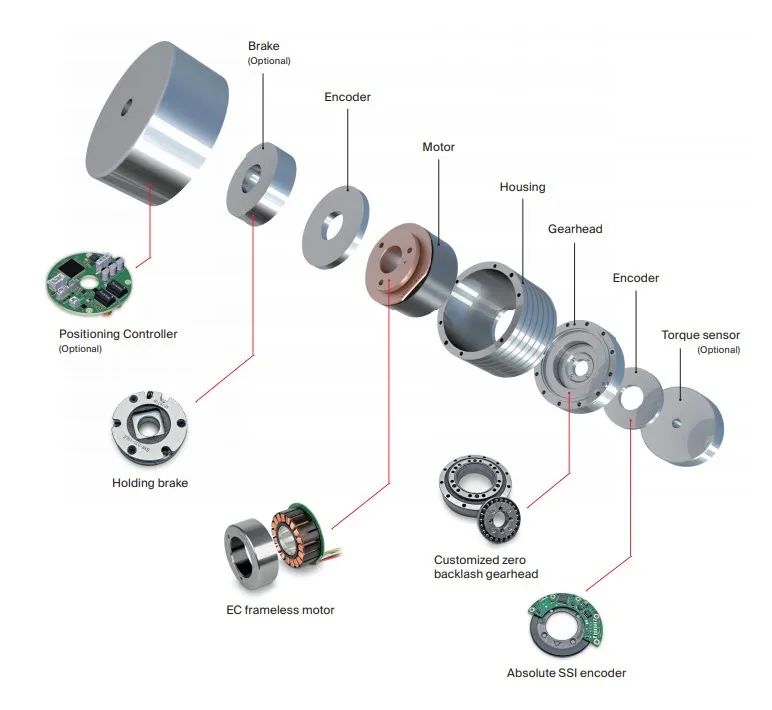
Joints require multiple components: motor, reducer, encoder, torque sensor, brake.
Frameless motors integrate into the joint housing.
Fewer parts (20–30% less than traditional design), lower assembly errors.
Modular solutions with motor + reducer + sensor reduce development cycle 40–60%.
Conclusion:
Frameless torque motors are the optimal solution for humanoid robot joints. They meet all key requirements: compact, precise, responsive, lightweight, and reliable. Without them, humanoid robot joints cannot achieve human-like motion, strength, or safety.