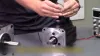
Why do robot joints need dual encoders?
Can you believe it? The motor says it’s there—but the robot joint may not be. That’s why high-performance joints use dual encoders: one on the motor side for rotor feedback, precise commutation, and speed control; one on the output side to measure where the joint actually turned. It catches backlash, elastic deformation, and load errors, while an absolute output encoder keeps position after power-off—no re-homing needed. Motor-side = power accuracy. Output-side = result accuracy.
For more robotics insights, robot components, science news, and tech tutorials, check out Eriksen — a platform for robots and their parts, and much more.
Learning
All Comments (0)